Human Keratin, type II cytoskeletal 6A(KRT6A) ELISA kit
-
中文名稱:人角蛋白II型細胞骨架6A(KRT6A)酶聯(lián)免疫試劑盒
-
貨號:CSB-EL012561HU
-
規(guī)格:96T/48T
-
價格:¥3600/¥2500
-
其他:

產品詳情
-
產品描述:人角蛋白II型細胞骨架6A(KRT6A)酶聯(lián)免疫試劑盒(CSB-EL012561HU)為雙抗夾心法ELISA試劑盒,定量檢測血清、血漿、組織勻漿、細胞裂解物樣本中的KRT6A含量。KRT6A是一個靶點,在生物體內它屬于角蛋白相關基因,角蛋白在維持細胞結構和功能方面發(fā)揮重要作用。目前研究可能聚焦于其在細胞增殖、分化等生理過程中的機制,以及其在疾病如某些皮膚病發(fā)生發(fā)展中的作用。試劑盒檢測范圍為0.156 ng/mL-10 ng/mL,適用于基礎醫(yī)學研究中KRT6A蛋白在皮膚疾病模型、腫瘤微環(huán)境分析、細胞應激反應等場景的動態(tài)監(jiān)測,可配合基因編輯、藥物干預等實驗方案開展分子機制探索,為上皮細胞生物學研究提供可靠的定量分析工具。本品僅用于科研,不用于臨床診斷,產品具體參數(shù)及操作步驟詳見產品說明書。
-
別名:CK-6A ELISA Kit; CK-6D ELISA Kit; CK6A ELISA Kit; CK6C ELISA Kit; CK6D ELISA Kit; Cytokeratin-6A ELISA Kit; Cytokeratin-6D ELISA Kit; K2C6A_HUMAN ELISA Kit; K6A ELISA Kit; K6C ELISA Kit; K6D ELISA Kit; keratin 6A ELISA Kit; Keratin ELISA Kit; Keratin; type II cytoskeletal 6A ELISA Kit; Keratin-6A ELISA Kit; Krt6a ELISA Kit; KRT6C ELISA Kit; KRT6D ELISA Kit; type II cytoskeletal 6A ELISA Kit; Type-II keratin Kb6 ELISA Kit
-
縮寫:KRT6A
-
Uniprot No.:
-
種屬:Homo sapiens (Human)
-
樣本類型:serum, plasma, tissue homogenates, cell lysates
-
檢測范圍:0.156 ng/mL-10 ng/mL
-
靈敏度:0.039 ng/mL
-
反應時間:1-5h
-
樣本體積:50-100ul
-
檢測波長:450 nm
-
研究領域:Signal Transduction
-
測定原理:quantitative
-
測定方法:Sandwich
-
精密度:
Intra-assay Precision (Precision within an assay): CV%<8% Three samples of known concentration were tested twenty times on one plate to assess. Inter-assay Precision (Precision between assays): CV%<10% Three samples of known concentration were tested in twenty assays to assess. -
線性度:
To assess the linearity of the assay, samples were spiked with high concentrations of human KRT6A in various matrices and diluted with the Sample Diluent to produce samples with values within the dynamic range of the assay. Sample Serum(n=4) 1:1 Average % 87 Range % 82-91 1:2 Average % 84 Range % 80-88 1:4 Average % 103 Range % 98-108 1:8 Average % 90 Range % 85-94 -
回收率:
The recovery of human KRT6A spiked to levels throughout the range of the assay in various matrices was evaluated. Samples were diluted prior to assay as directed in the Sample Preparation section. Sample Type Average % Recovery Range Serum (n=5) 98 94-103 EDTA plasma (n=4) 94 90-100 -
標準曲線:
These standard curves are provided for demonstration only. A standard curve should be generated for each set of samples assayed. 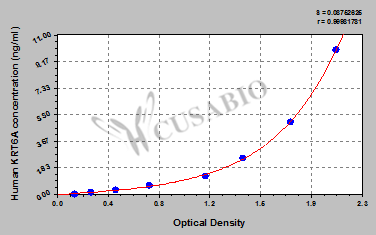
ng/ml OD1 OD2 Average Corrected 10 2.098 2.102 2.100 1.955 5 1.721 1.793 1.757 1.612 2.5 1.382 1.421 1.402 1.257 1.25 1.090 1.150 1.120 0.975 0.625 0.695 0.714 0.705 0.560 0.312 0.459 0.436 0.448 0.303 0.156 0.267 0.262 0.265 0.120 0 0.142 0.147 0.145 -
數(shù)據(jù)處理:
-
貨期:3-5 working days
產品評價

相關產品
靶點詳情
-
功能:Epidermis-specific type I keratin involved in wound healing. Involved in the activation of follicular keratinocytes after wounding, while it does not play a major role in keratinocyte proliferation or migration. Participates in the regulation of epithelial migration by inhibiting the activity of SRC during wound repair.
-
基因功能參考文獻:
- Manipulating K6a phosphorylation or ubiquitin-proteasome system (UPS) activity may provide opportunities to harness the innate immunity of epithelia against infection. PMID: 29191848
- Several missense polymorphisms in KRT6A, KRT6B and KRT6C that lead to a higher risk for dental caries. PMID: 29357356
- KRT6A genetic mutation is associate with the development of Pachyonychia Congenita in patients in Australia. PMID: 27041546
- we here describe a family with pachyonychia congenita K6a, manifesting atypical symptoms of impaired wound healing and cheilitis. PMID: 24708461
- Keratin-derived antimicrobial peptides (KDAMPs) and their synthetic analogs exhibit antimicrobial activity against bacterial pathogens. PMID: 23006328
- Genotype-phenotype correlations among PC patients with codon-125 mutation in KRT16 were established, while the phenotypes caused by the IVS8-2A>C mutation in KRT6A need further studies to confirm the rare feature of fissured tongue PMID: 22668561
- We observed a higher likelihood of oral leukokeratosis in individuals harboring KRT6A mutations. PMID: 22264670
- Phenotypic differences exist between KRT6A and KRT16 mutations support adoption of a new classification system. PMID: 22098151
- This report is the first case of pachyonychia congenita with laryngeal obstruction in which the gene mutation has been established (a deletional mutation in keratin 6a). PMID: 21554383
- Focal palmoplantar keratoderma is associated with mutations in keratin K6c in 3 families. 2 unrelated families have Asn172 del and the other has a deletion of AA 462-470. Review. PMID: 20470930
- these data highlight the possibility of a physiological role for K6/K16 heterodimers in keratinocyte cell migration, in addition to the heterodimer's known functions in cell differentiation and mechanical resilience. PMID: 20403371
- The mutation of 521T--> C in the K6A gene is the causing mutation in pachyonychia congenita type I. PMID: 20140871
- Mutations Y465H and N171D of the KRT16A gene were detected in the sporadic pachyonychia congenita cases. PMID: 19806570
- Four new missense and five known mutations in K6a, one new deletion and three previously identified missense mutations in K16, plus one known mutation in K17 are reported in pachyonychia congenita. PMID: 17719747
- PC-1 is due to mutations of the KRT16 gene or its expression partner KRT6A, wheres PC-2 is caused by mutations in the KRT17 or KRT6B genes. PMID: 18489596
- Three novel and four recurrent keratin 6A (KRT6A) mutations were found in Chinese patients with pachyonychia congenita type 1 PMID: 19416275
- Rapamycin selectively inhibits expression of an inducible keratin (K6a) in human keratinocytes and improves symptoms in pachyonychia congenita patients. PMID: 19699613
顯示更多
收起更多
-
相關疾病:Pachyonychia congenita 3 (PC3)
-
蛋白家族:Intermediate filament family
-
組織特異性:Expressed in the corneal epithelium (at protein level).
-
數(shù)據(jù)庫鏈接:
Most popular with customers
-
Human Transforming Growth factor β1,TGF-β1 ELISA kit
Detect Range: 23.5 pg/ml-1500 pg/ml
Sensitivity: 5.8 pg/ml
-
-
-
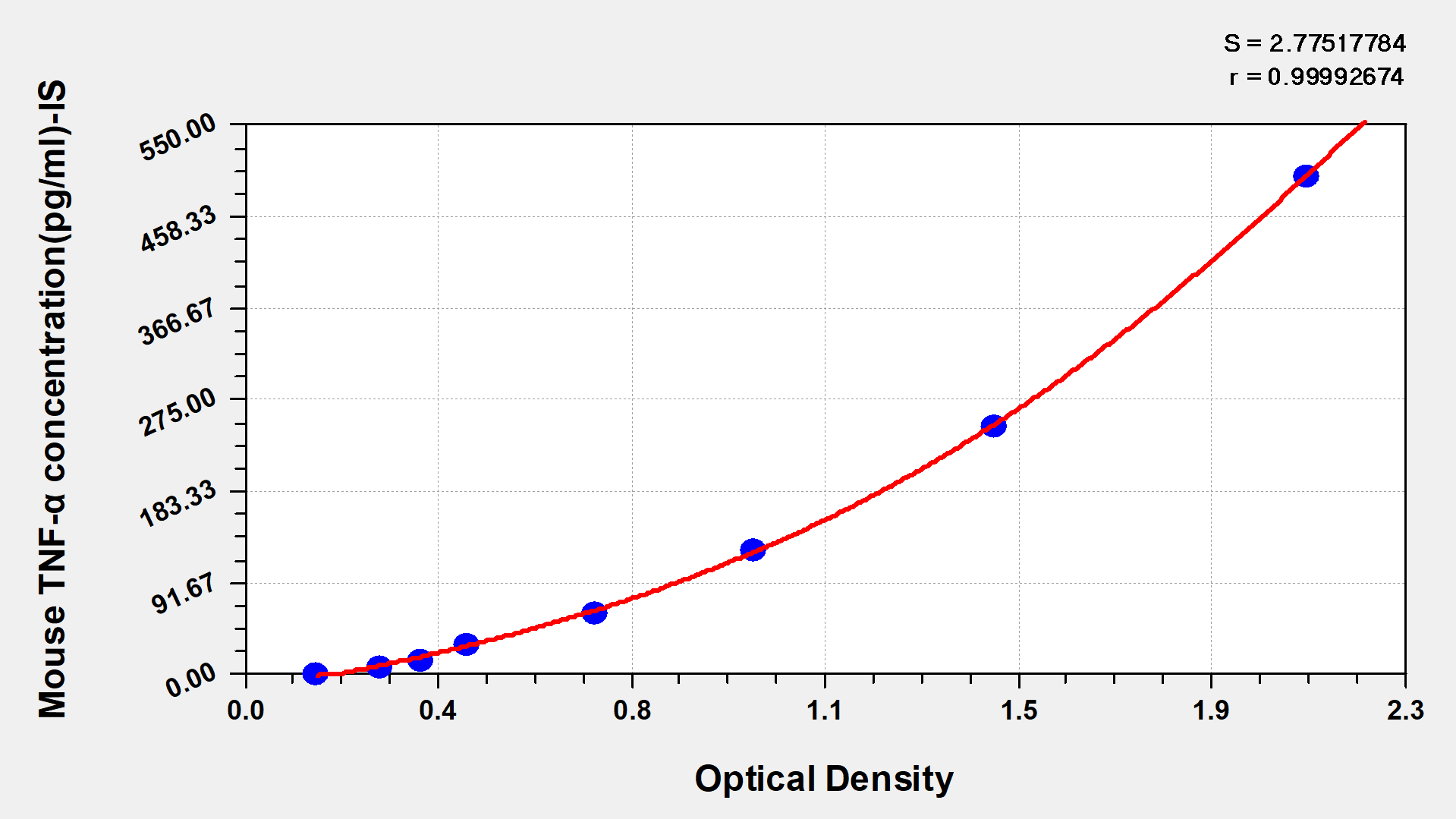
Mouse Tumor necrosis factor α,TNF-α ELISA Kit
Detect Range: 7.8 pg/ml-500 pg/ml
Sensitivity: 1.95 pg/ml
-
-
-
-