Recombinant Yellow fever virus Genome polyprotein, partial
-
中文名稱:Recombinant Yellow fever virus Genome polyprotein ,partial
-
貨號:CSB-YP897059YAAP
-
規(guī)格:
-
來源:Yeast
-
其他:
-
中文名稱:Recombinant Yellow fever virus Genome polyprotein ,partial
-
貨號:CSB-EP897059YAAP
-
規(guī)格:
-
來源:E.coli
-
其他:
-
中文名稱:Recombinant Yellow fever virus Genome polyprotein ,partial
-
貨號:CSB-EP897059YAAP-B
-
規(guī)格:
-
來源:E.coli
-
共軛:Avi-tag Biotinylated
E. coli biotin ligase (BirA) is highly specific in covalently attaching biotin to the 15 amino acid AviTag peptide. This recombinant protein was biotinylated in vivo by AviTag-BirA technology, which method is BriA catalyzes amide linkage between the biotin and the specific lysine of the AviTag.
-
其他:
-
中文名稱:Recombinant Yellow fever virus Genome polyprotein ,partial
-
貨號:CSB-BP897059YAAP
-
規(guī)格:
-
來源:Baculovirus
-
其他:
-
中文名稱:Recombinant Yellow fever virus Genome polyprotein ,partial
-
貨號:CSB-MP897059YAAP
-
規(guī)格:
-
來源:Mammalian cell
-
其他:
產(chǎn)品詳情
-
純度:>85% (SDS-PAGE)
-
基因名:N/A
-
Uniprot No.:
-
別名:; Genome polyprotein [Cleaved into: Capsid protein C; Core protein); Protein prM; Peptide pr; Small envelope protein M; Matrix protein); Envelope protein E; Non-structural protein 1; NS1); Non-structural protein 2A; NS2A); Non-structural protein 2A-alpha; NS2A-alpha); Serine protease subunit NS2B; Flavivirin protease NS2B regulatory subunit; Non-structural protein 2B); Serine protease NS3; EC 3.4.21.91; EC 3.6.1.15; EC 3.6.4.13; Flavivirin protease NS3 catalytic subunit; Non-structural protein 3); Non-structural protein 4A; NS4A); Peptide 2k; Non-structural protein 4B; NS4B); RNA-directed RNA polymerase NS5; EC 2.1.1.56; EC 2.1.1.57; EC 2.7.7.48; Non-structural protein 5)]
-
種屬:Yellow fever virus (strain Trinidad/TRINID79A/1979) (YFV)
-
蛋白長度:Partial
-
蛋白標簽:Tag?type?will?be?determined?during?the?manufacturing?process.
The tag type will be determined during production process. If you have specified tag type, please tell us and we will develop the specified tag preferentially. -
產(chǎn)品提供形式:Lyophilized powder
Note: We will preferentially ship the format that we have in stock, however, if you have any special requirement for the format, please remark your requirement when placing the order, we will prepare according to your demand. -
復溶:We recommend that this vial be briefly centrifuged prior to opening to bring the contents to the bottom. Please reconstitute protein in deionized sterile water to a concentration of 0.1-1.0 mg/mL.We recommend to add 5-50% of glycerol (final concentration) and aliquot for long-term storage at -20℃/-80℃. Our default final concentration of glycerol is 50%. Customers could use it as reference.
-
儲存條件:Store at -20°C/-80°C upon receipt, aliquoting is necessary for mutiple use. Avoid repeated freeze-thaw cycles.
-
保質(zhì)期:The shelf life is related to many factors, storage state, buffer ingredients, storage temperature and the stability of the protein itself.
Generally, the shelf life of liquid form is 6 months at -20°C/-80°C. The shelf life of lyophilized form is 12 months at -20°C/-80°C. -
貨期:Delivery time may differ from different purchasing way or location, please kindly consult your local distributors for specific delivery time.Note: All of our proteins are default shipped with normal blue ice packs, if you request to ship with dry ice, please communicate with us in advance and extra fees will be charged.
-
注意事項:Repeated freezing and thawing is not recommended. Store working aliquots at 4°C for up to one week.
-
Datasheet :Please contact us to get it.
產(chǎn)品評價

靶點詳情
-
功能:Plays a role in virus budding by binding to the cell membrane and gathering the viral RNA into a nucleocapsid that forms the core of a mature virus particle. During virus entry, may induce genome penetration into the host cytoplasm after hemifusion induced by the surface proteins. Can migrate to the cell nucleus where it modulates host functions.; Inhibits RNA silencing by interfering with host Dicer.; Prevents premature fusion activity of envelope proteins in trans-Golgi by binding to envelope protein E at pH6.0. After virion release in extracellular space, gets dissociated from E dimers.; Acts as a chaperone for envelope protein E during intracellular virion assembly by masking and inactivating envelope protein E fusion peptide. prM is the only viral peptide matured by host furin in the trans-Golgi network probably to avoid catastrophic activation of the viral fusion activity in acidic Golgi compartment prior to virion release. prM-E cleavage is inefficient, and many virions are only partially matured. These uncleaved prM would play a role in immune evasion.; May play a role in virus budding. Exerts cytotoxic effects by activating a mitochondrial apoptotic pathway through M ectodomain. May display a viroporin activity.; Binds to host cell surface receptor and mediates fusion between viral and cellular membranes. Envelope protein is synthesized in the endoplasmic reticulum in the form of heterodimer with protein prM. They play a role in virion budding in the ER, and the newly formed immature particle is covered with 60 spikes composed of heterodimer between precursor prM and envelope protein E. The virion is transported to the Golgi apparatus where the low pH causes dissociation of PrM-E heterodimers and formation of E homodimers. prM-E cleavage is inefficient, and many virions are only partially matured. These uncleaved prM would play a role in immune evasion.; Involved in immune evasion, pathogenesis and viral replication. Once cleaved off the polyprotein, is targeted to three destinations: the viral replication cycle, the plasma membrane and the extracellular compartment. Essential for viral replication. Required for formation of the replication complex and recruitment of other non-structural proteins to the ER-derived membrane structures. Excreted as a hexameric lipoparticle that plays a role against host immune response. Antagonizing the complement function. Binds to the host macrophages and dendritic cells. Inhibits signal transduction originating from Toll-like receptor 3 (TLR3).; Component of the viral RNA replication complex that functions in virion assembly and antagonizes the host immune response.; Required cofactor for the serine protease function of NS3. May have membrane-destabilizing activity and form viroporins.; Displays three enzymatic activities: serine protease, NTPase and RNA helicase. NS3 serine protease, in association with NS2B, performs its autocleavage and cleaves the polyprotein at dibasic sites in the cytoplasm: C-prM, NS2A-NS2B, NS2B-NS3, NS3-NS4A, NS4A-2K and NS4B-NS5. NS3 RNA helicase binds RNA and unwinds dsRNA in the 3' to 5' direction. Also plays a role in virus assembly.; Regulates the ATPase activity of the NS3 helicase activity. NS4A allows NS3 helicase to conserve energy during unwinding.; Functions as a signal peptide for NS4B and is required for the interferon antagonism activity of the latter.; Induces the formation of ER-derived membrane vesicles where the viral replication takes place. Inhibits interferon (IFN)-induced host STAT1 phosphorylation and nuclear translocation, thereby preventing the establishment of cellular antiviral state by blocking the IFN-alpha/beta pathway.; Replicates the viral (+) and (-) RNA genome, and performs the capping of genomes in the cytoplasm. NS5 methylates viral RNA cap at guanine N-7 and ribose 2'-O positions. Besides its role in RNA genome replication, also prevents the establishment of cellular antiviral state by blocking the interferon-alpha/beta (IFN-alpha/beta) signaling pathway. IFN-I induces binding of NS5 to host IFN-activated transcription factor STAT2, preventing its transcriptional activity. Host TRIM23 is the E3 ligase that interacts with and polyubiquitinates NS5 to promote its binding to STAT2 and trigger IFN-I signaling inhibition.
-
亞細胞定位:[Capsid protein C]: Virion. Host nucleus. Host cytoplasm, host perinuclear region. Host cytoplasm.; [Peptide pr]: Secreted.; [Small envelope protein M]: Virion membrane; Multi-pass membrane protein. Host endoplasmic reticulum membrane; Multi-pass membrane protein.; [Envelope protein E]: Virion membrane; Multi-pass membrane protein. Host endoplasmic reticulum membrane; Multi-pass membrane protein.; [Non-structural protein 1]: Secreted. Host endoplasmic reticulum membrane; Peripheral membrane protein; Lumenal side.; [Non-structural protein 2A]: Host endoplasmic reticulum membrane; Multi-pass membrane protein.; [Serine protease subunit NS2B]: Host endoplasmic reticulum membrane; Multi-pass membrane protein.; [Serine protease NS3]: Host endoplasmic reticulum membrane; Peripheral membrane protein; Cytoplasmic side.; [Non-structural protein 4A]: Host endoplasmic reticulum membrane; Multi-pass membrane protein.; [Non-structural protein 4B]: Host endoplasmic reticulum membrane; Multi-pass membrane protein.; [RNA-directed RNA polymerase NS5]: Host endoplasmic reticulum membrane; Peripheral membrane protein; Cytoplasmic side. Host nucleus.
-
蛋白家族:Class I-like SAM-binding methyltransferase superfamily, mRNA cap 0-1 NS5-type methyltransferase family
Most popular with customers
-
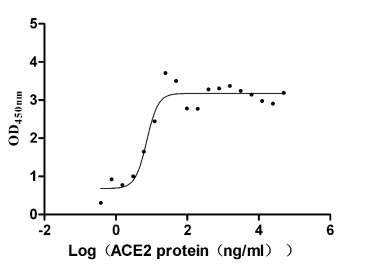
Recombinant Macaca fascicularis Angiotensin-converting enzyme (ACE2), partial (Active)
Express system: Mammalian cell
Species: Macaca fascicularis (Crab-eating macaque) (Cynomolgus monkey)
-
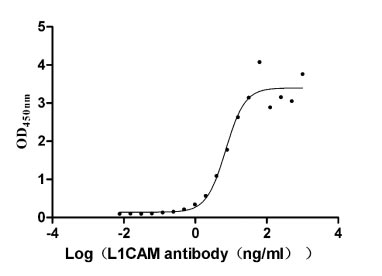
Recombinant Human Neural cell adhesion molecule L1 (L1CAM), partial (Active)
Express system: Mammalian cell
Species: Homo sapiens (Human)
-
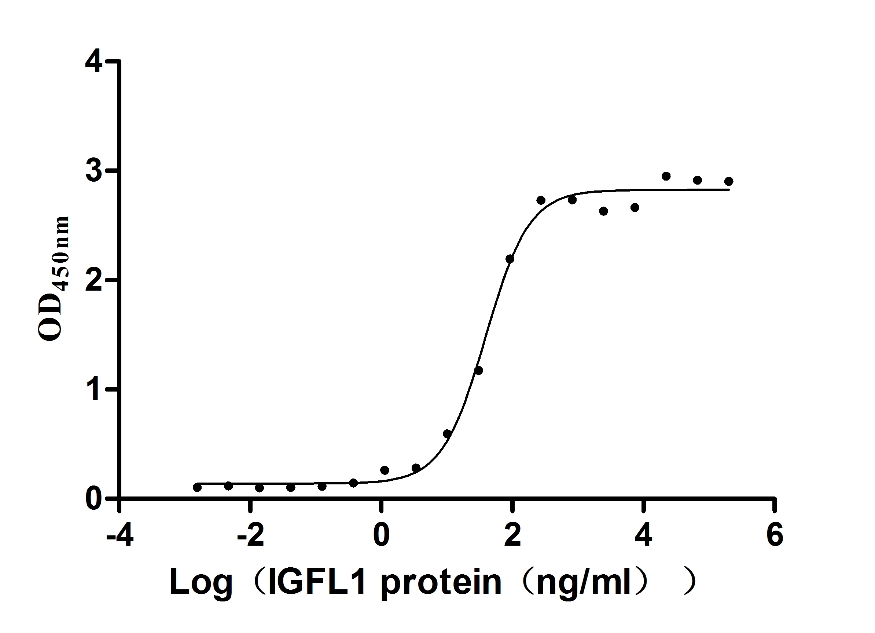
Recombinant Human Insulin growth factor-like family member 1 (IGFL1) (Active)
Express system: Mammalian cell
Species: Homo sapiens (Human)
-

Recombinant Human Intestinal-type alkaline phosphatase (ALPI) (Active)
Express system: Mammalian cell
Species: Homo sapiens (Human)
-
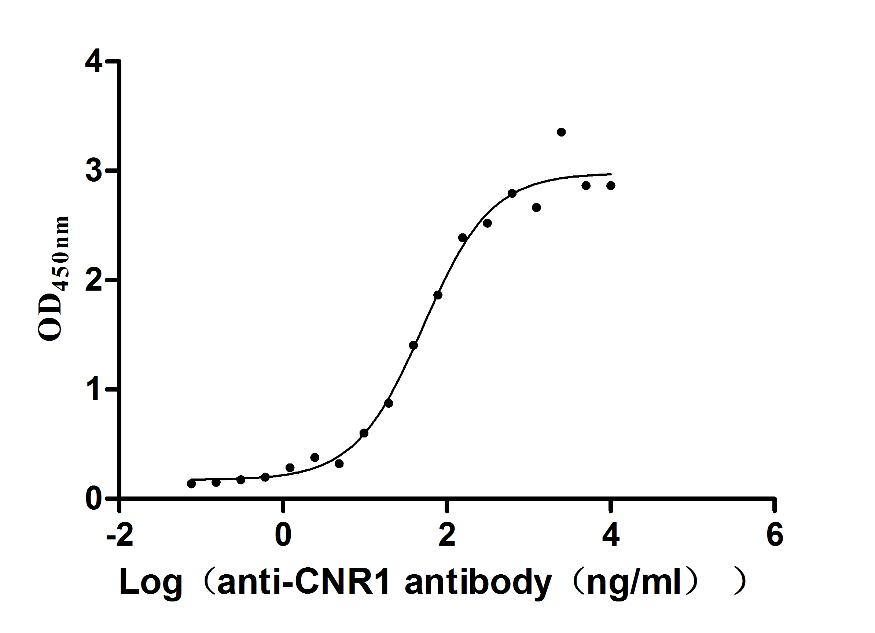
Recombinant Human Cannabinoid receptor 1 (CNR1)-VLPs (Active)
Express system: Mammalian cell
Species: Homo sapiens (Human)
-
f4-AC1.jpg)
Recombinant Human Claudin-6 (CLDN6)-VLPs, Fluorescent (Active)
Express system: Mammalian cell
Species: Homo sapiens (Human)
-
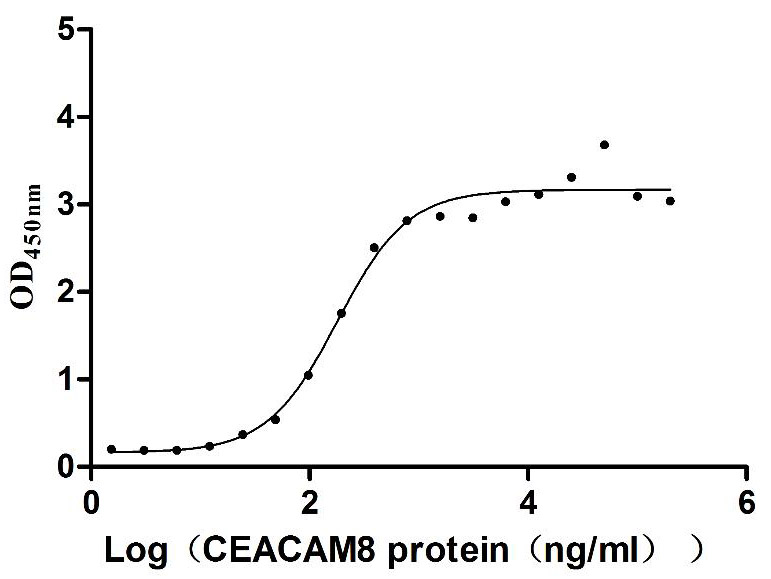
Recombinant Human Carcinoembryonic antigen-related cell adhesion molecule 6 (CEACAM6) (Active)
Express system: Mammalian cell
Species: Homo sapiens (Human)
-
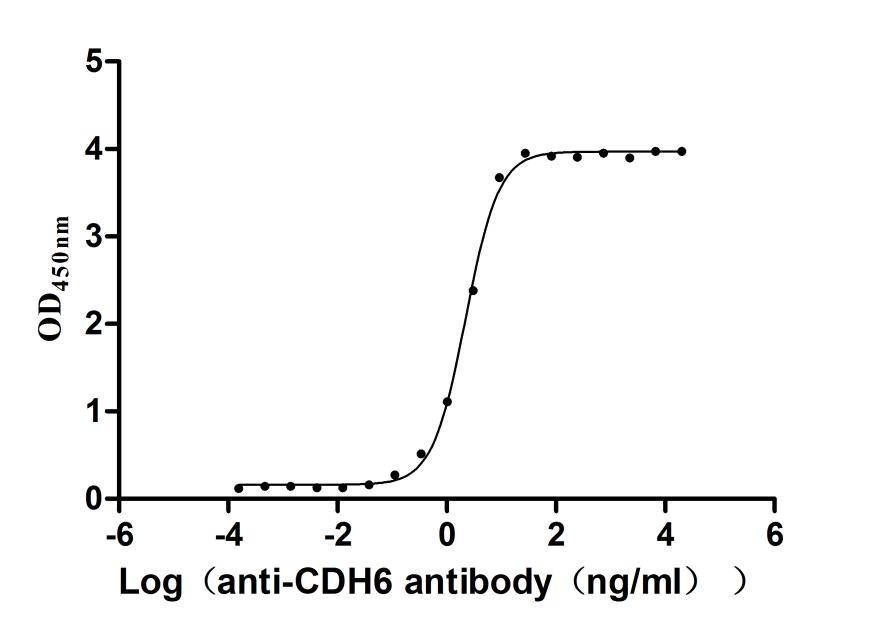
Recombinant Macaca fascicularis Cadherin 6(CDH6),partial (Active)
Express system: Mammalian cell
Species: Macaca fascicularis (Crab-eating macaque) (Cynomolgus monkey)