Recombinant Mouse Zinc transporter 3 (Slc30a3), partial
-
中文名稱:小鼠Slc30a3重組蛋白
-
貨號:CSB-YP021568MO1
-
規格:
-
來源:Yeast
-
其他:
-
中文名稱:小鼠Slc30a3重組蛋白
-
貨號:CSB-EP021568MO1
-
規格:
-
來源:E.coli
-
其他:
-
中文名稱:小鼠Slc30a3重組蛋白
-
貨號:CSB-EP021568MO1-B
-
規格:
-
來源:E.coli
-
共軛:Avi-tag Biotinylated
E. coli biotin ligase (BirA) is highly specific in covalently attaching biotin to the 15 amino acid AviTag peptide. This recombinant protein was biotinylated in vivo by AviTag-BirA technology, which method is BriA catalyzes amide linkage between the biotin and the specific lysine of the AviTag.
-
其他:
-
中文名稱:小鼠Slc30a3重組蛋白
-
貨號:CSB-BP021568MO1
-
規格:
-
來源:Baculovirus
-
其他:
-
中文名稱:小鼠Slc30a3重組蛋白
-
貨號:CSB-MP021568MO1
-
規格:
-
來源:Mammalian cell
-
其他:
產品詳情
-
純度:>85% (SDS-PAGE)
-
基因名:Slc30a3
-
Uniprot No.:
-
別名:Slc30a3; Znt3; Zinc transporter 3; ZnT-3; Solute carrier family 30 member 3
-
種屬:Mus musculus (Mouse)
-
蛋白長度:Partial
-
蛋白標簽:Tag?type?will?be?determined?during?the?manufacturing?process.
The tag type will be determined during production process. If you have specified tag type, please tell us and we will develop the specified tag preferentially. -
產品提供形式:Lyophilized powder
Note: We will preferentially ship the format that we have in stock, however, if you have any special requirement for the format, please remark your requirement when placing the order, we will prepare according to your demand. -
復溶:We recommend that this vial be briefly centrifuged prior to opening to bring the contents to the bottom. Please reconstitute protein in deionized sterile water to a concentration of 0.1-1.0 mg/mL.We recommend to add 5-50% of glycerol (final concentration) and aliquot for long-term storage at -20℃/-80℃. Our default final concentration of glycerol is 50%. Customers could use it as reference.
-
儲存條件:Store at -20°C/-80°C upon receipt, aliquoting is necessary for mutiple use. Avoid repeated freeze-thaw cycles.
-
保質期:The shelf life is related to many factors, storage state, buffer ingredients, storage temperature and the stability of the protein itself.
Generally, the shelf life of liquid form is 6 months at -20°C/-80°C. The shelf life of lyophilized form is 12 months at -20°C/-80°C. -
貨期:Delivery time may differ from different purchasing way or location, please kindly consult your local distributors for specific delivery time.Note: All of our proteins are default shipped with normal blue ice packs, if you request to ship with dry ice, please communicate with us in advance and extra fees will be charged.
-
注意事項:Repeated freezing and thawing is not recommended. Store working aliquots at 4°C for up to one week.
-
Datasheet :Please contact us to get it.
產品評價

相關產品
靶點詳情
-
功能:Involved in accumulation of zinc in synaptic vesicles.
-
基因功能參考文獻:
- ZnT3-/- mice showed reduced colchicine-induced dentate granule cell death. PMID: 29048371
- the ZnT3 null state removed synaptic zinc, it rather increased free zinc in the cytosol of brain cells, which appeared to increase MMP-9 activity and BDNF levels. The present results suggest that zinc dyshomeostasis during the critical period of brain development may be a possible contributing mechanism for ASD. PMID: 27352957
- Study showed a behavioral phenotype specifically for female ZnT3 knockout (KO) mice. Comparing results to previous studies, it appears that there may be sex-specific effects of eliminating ZnT3. Female ZnT3 KO mice exhibit abnormalities in locomotion and at skilled motor learning, but study was unable to detect spatial or fear learning deficits previously described in male ZnT3 KO mice. PMID: 28012850
- Regarding rs11126936, the serum zinc concentration was lower in CC homozygotes (0.75 +/- 0.31 mg/L) than in A carriers (0.89 +/- 0.28 mg/L, P = .016). PMID: 25249019
- ZnT3 null mice lack the transporter responsible for stocking synaptic vesicles, although they do have a zinc veneer, albeit diminished compared to wild-type animals. PMID: 23077720
- Dietary or ZnT3-dependent Zn(2+) stores, and intracellular Zn(2+) release from rhodopsin recycling are suggested to be involved in light-induced retinal degeneration. PMID: 23274584
- Fundamental changes occur in the expression of proteins and genes important in neurotransmission and are different in the absence of vesicular zinc in ZnT3-deficient knockout mice. PMID: 21871936
- This study demonistrated that zinc transporter-3 regulate the Zinc in brain. PMID: 21911210
- Zinc transporters of the Slc30a/ZnT and Slc39a/Zip families play crucial roles in cell functions, mediating zinc influx to and efflux from the lumen of the secretory pathway, constitutively or in a cell-specific manner. (Review) PMID: 21670538
- Deprivation of oxygen and glucose-SD produced large FluoZin-3 increases that propagated with the event, and signals were abolished in tissues from ZnT3 knockout animals lacking synaptic Zn(2+) PMID: 20978516
- ZnT3 is important for zinc homeostasis modulating presynaptic MAPK signaling and is required for hippocampus-dependent memory PMID: 21245308
- The results of this study suggested that ZnT3 protein is involved in the Abeta aggregation in the cerebellum of the AbetaPP/PS1 mouse. PMID: 20164588
- Age-dependent loss of transsynaptic Zn(2+) movement leads to cognitive loss, and since extracellular beta-amyloid is aggregated by this pool of Zn(2+), the genetic ablation of ZnT3 may represent a phenocopy for the synaptic and memory deficits of AD. PMID: 20130173
- In hippocampal slices from zinc transporter 3 knockout mice, there was greater attenuation of GABA(A)-mediated inhibitory postsynaptic potentials during tetanic stimulation compared with slices from wild-type animals. PMID: 12535956
- ZnT3 and zinc ions are present in a subpopulation of TH-positive, NPY-negative neurons in the rodent superior cervical ganglia. PMID: 12895501
- ZnT3 synaptic vesicles content was reduced in AP-3-deficient neurons. PMID: 14657250
- In transgenic mouse models of Alzheimer's disease synaptic ZnT3 activity may promote cerebral amyloid angiopathy by indirectly raising exchangeable Zn2+ concentrations in the perivascular spaces of the brain PMID: 15056725
- Expression of zinc transporter ZnT3 in mouse choroid epithelial cells suggests that the choroid plexus plays an important role in regulation of zinc homeostasis in the brain. PMID: 15257151
- Adrenalectomy causes reduction in vesicular zinc concentration and a downregulation of ZnT3 proteins in the hippocampal region, suggesting that ZnT3 is responsible for transport of zinc ions into a pool of synaptic vesicles in zinc-enriched terminals. PMID: 15755519
- The barrel-like pattern detected by ZnT3 immunohistochemistry was visble for the first time at postnatal 14 day in the mice. PMID: 15982526
- The ZNT3 protein evidently controls not only the "stainability" but also the actual mass of zinc in mossy-fiber synaptic vesicles. This work thus confirms the metal-transporting role of the ZNT3 protein in the brain. PMID: 17712179
- the progressive increase of ZNT3 immunostaining in the temporal lobe epileptic hippocampus may relate to the increased levels of vesicular zinc ions during seizure PMID: 18406010
- Knock-down of the ZnT-3 gene lowers insulin secretion in vitro and affects in vivo glucose metabolism after streptozotocin treatment. PMID: 19492079
- SLC30A3 (ZnT3) oligomerization by dityrosine bonds regulates its subcellular localization and metal transport capacity PMID: 19521526
顯示更多
收起更多
-
亞細胞定位:Cytoplasmic vesicle, secretory vesicle, synaptic vesicle membrane; Multi-pass membrane protein. Cell junction, synapse, synaptosome. Late endosome membrane; Multi-pass membrane protein. Lysosome membrane; Multi-pass membrane protein. Cytoplasmic vesicle, secretory vesicle, synaptic vesicle.
-
蛋白家族:Cation diffusion facilitator (CDF) transporter (TC 2.A.4) family, SLC30A subfamily
-
組織特異性:Brain and testis. In the brain, most abundant in hippocampus and cerebral cortex. In the testis, expression is restricted to germ cells and is highest in pachytene spermatocytes and round spermatids.
-
數據庫鏈接:
Most popular with customers
-
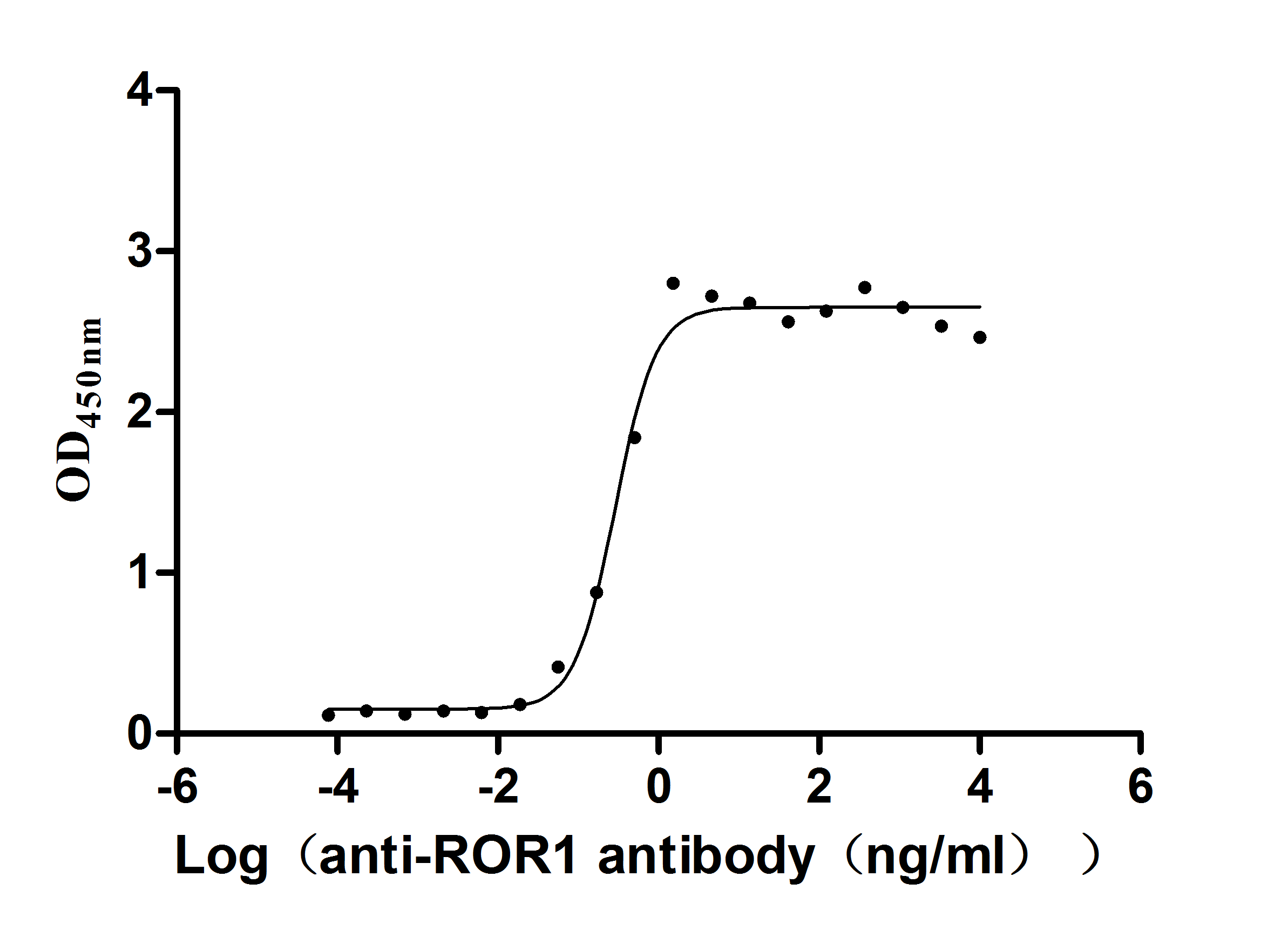
Express system: Mammalian cell
Species: Homo sapiens (Human)
-
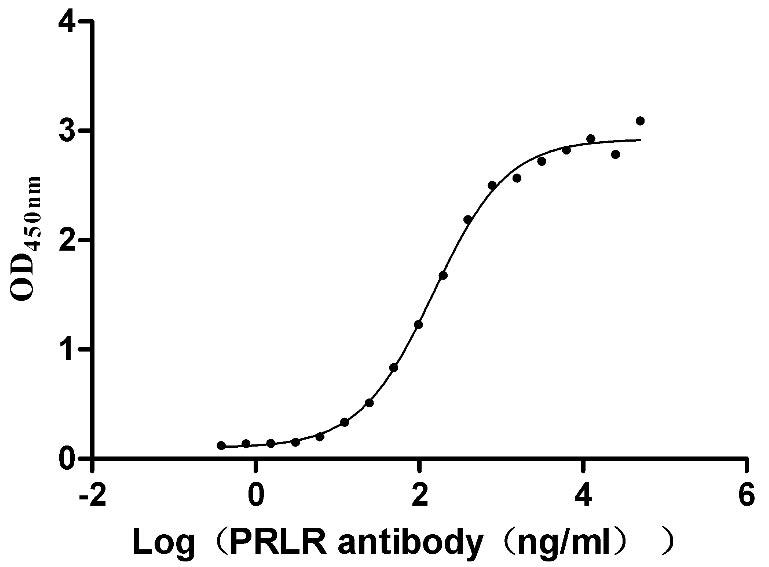
Recombinant Human Prolactin receptor (PRLR), partial (Active)
Express system: Mammalian cell
Species: Homo sapiens (Human)
-
-AC1.jpg)
Recombinant Human Angiopoietin-2 (ANGPT2) (Active)
Express system: Mammalian cell
Species: Homo sapiens (Human)
-

Recombinant Rat Intestinal-type alkaline phosphatase 1 (Alpi) (Active)
Express system: Mammalian cell
Species: Rattus norvegicus (Rat)
-
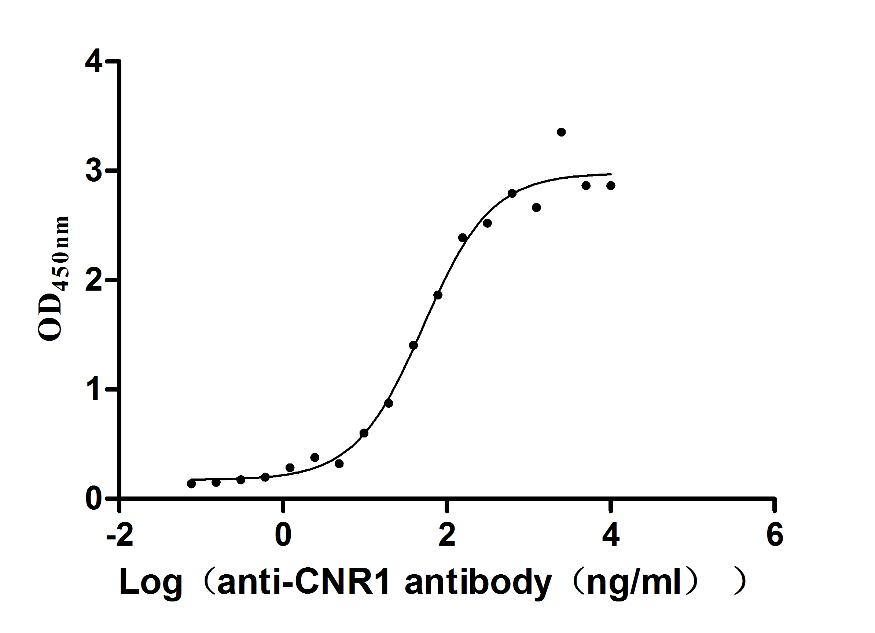
Recombinant Human Cannabinoid receptor 1 (CNR1)-VLPs (Active)
Express system: Mammalian cell
Species: Homo sapiens (Human)
-
-AC1.jpg)
Recombinant Mouse Claudin-18.2 (Cldn18.2)-VLPs (Active)
Express system: Mammalian cell
Species: Mus musculus (Mouse)
-
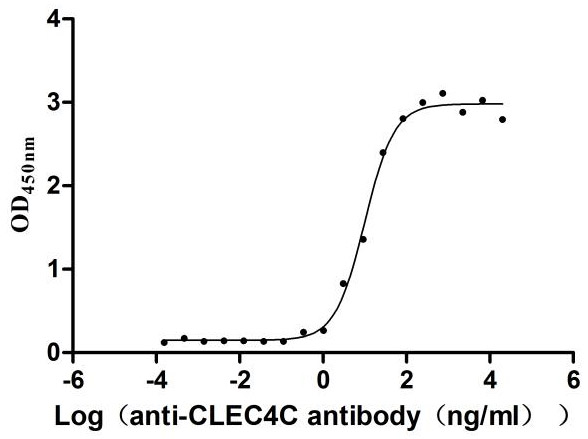
Recombinant Human C-type lectin domain family 4 member C (CLEC4C), partial (Active)
Express system: Mammalian cell
Species: Homo sapiens (Human)
-
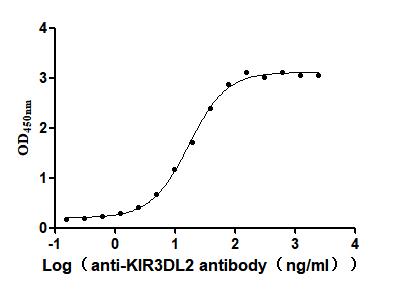
Recombinant Human Killer cell immunoglobulin-like receptor 3DL2 (KIR3DL2), partial (Active)
Express system: Mammalian cell
Species: Homo sapiens (Human)