Recombinant Mouse Potassium channel subfamily K member 2 (Kcnk2), partial
-
中文名稱:小鼠Kcnk2重組蛋白
-
貨號:CSB-YP012070MO1
-
規(guī)格:
-
來源:Yeast
-
其他:
-
中文名稱:小鼠Kcnk2重組蛋白
-
貨號:CSB-EP012070MO1
-
規(guī)格:
-
來源:E.coli
-
其他:
-
中文名稱:小鼠Kcnk2重組蛋白
-
貨號:CSB-EP012070MO1-B
-
規(guī)格:
-
來源:E.coli
-
共軛:Avi-tag Biotinylated
E. coli biotin ligase (BirA) is highly specific in covalently attaching biotin to the 15 amino acid AviTag peptide. This recombinant protein was biotinylated in vivo by AviTag-BirA technology, which method is BriA catalyzes amide linkage between the biotin and the specific lysine of the AviTag.
-
其他:
-
中文名稱:小鼠Kcnk2重組蛋白
-
貨號:CSB-BP012070MO1
-
規(guī)格:
-
來源:Baculovirus
-
其他:
-
中文名稱:小鼠Kcnk2重組蛋白
-
貨號:CSB-MP012070MO1
-
規(guī)格:
-
來源:Mammalian cell
-
其他:
產(chǎn)品詳情
-
純度:>85% (SDS-PAGE)
-
基因名:Kcnk2
-
Uniprot No.:
-
別名:Kcnk2; Potassium channel subfamily K member 2; Outward rectifying potassium channel protein TREK-1; TREK-1 K(+ channel subunit; Two pore potassium channel TPKC1
-
種屬:Mus musculus (Mouse)
-
蛋白長度:Partial
-
蛋白標(biāo)簽:Tag?type?will?be?determined?during?the?manufacturing?process.
The tag type will be determined during production process. If you have specified tag type, please tell us and we will develop the specified tag preferentially. -
產(chǎn)品提供形式:Lyophilized powder
Note: We will preferentially ship the format that we have in stock, however, if you have any special requirement for the format, please remark your requirement when placing the order, we will prepare according to your demand. -
復(fù)溶:We recommend that this vial be briefly centrifuged prior to opening to bring the contents to the bottom. Please reconstitute protein in deionized sterile water to a concentration of 0.1-1.0 mg/mL.We recommend to add 5-50% of glycerol (final concentration) and aliquot for long-term storage at -20℃/-80℃. Our default final concentration of glycerol is 50%. Customers could use it as reference.
-
儲存條件:Store at -20°C/-80°C upon receipt, aliquoting is necessary for mutiple use. Avoid repeated freeze-thaw cycles.
-
保質(zhì)期:The shelf life is related to many factors, storage state, buffer ingredients, storage temperature and the stability of the protein itself.
Generally, the shelf life of liquid form is 6 months at -20°C/-80°C. The shelf life of lyophilized form is 12 months at -20°C/-80°C. -
貨期:Delivery time may differ from different purchasing way or location, please kindly consult your local distributors for specific delivery time.Note: All of our proteins are default shipped with normal blue ice packs, if you request to ship with dry ice, please communicate with us in advance and extra fees will be charged.
-
注意事項:Repeated freezing and thawing is not recommended. Store working aliquots at 4°C for up to one week.
-
Datasheet :Please contact us to get it.
產(chǎn)品評價

相關(guān)產(chǎn)品
靶點詳情
-
功能:Ion channel that contributes to passive transmembrane potassium transport. Reversibly converts between a voltage-insensitive potassium leak channel and a voltage-dependent outward rectifying potassium channel in a phosphorylation-dependent manner. In astrocytes, forms mostly heterodimeric potassium channels with KCNK1, with only a minor proportion of functional channels containing homodimeric KCNK2. In astrocytes, the heterodimer formed by KCNK1 and KCNK2 is required for rapid glutamate release in response to activation of G-protein coupled receptors, such as F2R and CNR1.
-
基因功能參考文獻(xiàn):
- Data demonstrate that inhibition of TWIK-related K(+) channel-1 (TREK-1) protects mice from cognitive impairment induced by anesthesia and TREK-1 is a potential therapeutic target against memory impairment induced by volatile anesthetics. PMID: 29042297
- data reveal a druggable K2P site that stabilizes the C-type gate 'leak mode' and provide direct evidence for K2P selectivity filter gating PMID: 28693035
- Hyperoxia treatment of TREK-1/TREK-2/TRAAK-deficient mice is associated with a reduction in surfactant proteins PMID: 28839101
- TREK-1 deficiency promoted neurons and oligodendrocytes apoptosis, aggravated demyelination and retarded motor recovery following spinal cord injury. PMID: 28192611
- essential for normal sinoatrial node cell excitability PMID: 27098968
- Formation of TREK-1/TREK-2 channels was also demonstrated in native dorsal root ganglion neurons indicating that heterodimerization may provide greater diversity of leak K(+) conductances also in native tissues. PMID: 27129242
- Trek1 expression facilitates the restoration of intestinal epithelial barrier functions in an allergic environment. PMID: 25683610
- Data suggest that porosome-associated proteins SNAP25, TREK-1, syntaxin-1A, and Gai3 exhibit stability and functionality such that isolated proteins can be reconstituted as insulin-secreting porosomes in cell membrane of live cells. PMID: 26523491
- Data indicate that arginine vasopressin (AVP) and corticotropin-releasing hormone (CRH) show additive effects on the suppression of the potassium channel subfamily K member 2 TREK-1 current via protein kinase C. PMID: 26248219
- In TREK1-deficient mice, brain endothelial cells displayed an inflammatory phenotype. PMID: 24557892
- provide new insight into membrane targeting of TREK-1 in the heart and establish a broader role for beta(IV)-spectrin in organizing functional membrane domains critical for normal heart function PMID: 24445605
- TREK-1 channels significantly contribute to the responsiveness of Grueneberg ganglion neurons to cool temperatures. PMID: 24101433
- direct activation of the TREK-1 K(+) channel, acting downstream from the mu opioid receptor, might have strong analgesic effects without opioid-like adverse effects PMID: 24346231
- TREK-M inhibits neuronal firing by hyperpolarizing the resting membrane potential and decreasing input resistance. Delivery of TREK-M could reduce the duration of status epilepticus and reduce neuronal death. PMID: 24299204
- TREK1 knockout mice exhibit altered retinal waves. PMID: 23390312
- TREK-1 is directly sensitive to membrane tension. PMID: 23897808
- study analyzed the role of TWIK-related potassium channel-1 (TREK1)in endothelial cells and the blood-brain barrier(BBB); blocking TREK1 increased leukocyte transmigration; TREK1 activation had the opposite effect; results suggest an ion channel expressed by endothelial cells at the BBB regulates immune cell trafficking into the inflamed CNS PMID: 23933981
- Polycystins protect renal epithelial cells against apoptosis in response to mechanical stress, and this function is mediated through the opening of stretch-activated K(2P) channels. PMID: 22832196
- Trek-1 deficiency decreased IL-6 secretion from mouse and human alveolar epithelial cells at both transcriptional and translational levels PMID: 23275623
- Ultrastructural analyses demonstrate that TREK-1 is preferentially localized at cell body and processes, whereas Best1 is mostly found in microdomains of astrocytes near synapses. PMID: 23021213
- This review presented that the TERK-1 knockout mice show a correlation between 5-HT firing rate and PMID: 23089640
- A mechanism for signal transduction within K(2P)2.1 (TREK-1) in which there is a clear crosstalk between the C-type gate and intracellular Ct domain. PMID: 22728824
- Mice that did not express TREK-1 had lower decompression sickness resistance and were more likely to develop neurological symptoms PMID: 22323654
- TREK-1 was expressed and could be detected on smooth muscle cells surrounding intrapulmonary airways and blood vessels. PMID: 21822716
- Popdc1 and Popdc2 proteins interact with the potassium channel TREK-1, which leads to increased cell surface expression and enhanced current density PMID: 22354168
- Expression of Trek-1 was significantly downregulated in cultured cells and lungs of mice exposed to hyperoxia.In MLE-12 cells Trek-1 defficiency resulted in increased cell proliferation and upregulation of PCNA and decrease of IL-6 and RANTES secretion. PMID: 21949155
- TREK-1-expressing cells are more prevalent in lumbosacral than thoracolumbar ganglia in both bladder- and colon-dorsal root ganglia neurons. PMID: 21549810
- Our results define a unique gating mechanism shared by K2P family members such as TREK-1 and suggest that their diverse sensory properties are achieved by coupling different molecular sensors to a conserved core gating apparatus. PMID: 21765396
- Our data suggest that uterine excitability and contractility during pregnancy is regulated by the expression of SDK/TREK-1 channels. PMID: 21224218
- Data suggest that the current is mediated via TWIK-related K(+) channel (TREK)-1 channels. PMID: 21343252
- Report thermodynamic analysis of mouse TREK-1 gating and functional testing of several deletion mutants and compare to structural models. PMID: 21057213
- TREK-1 expression does not provide brain protection after traumatic brain injury. PMID: 21157470
- inhibition of TREK1 current by fluoxetine is found to be accompanied by dissociation of the C-terminal domain from the membrane. PMID: 21262820
- Data identify a splice variant of TREK1 expressed in the brain, which encodes a heavily truncated TREK1 protein retaining a single transmembrane domain, having no channel activity itself but reduced TREK1 whole cell current amplitude. PMID: 20605797
- Conclude that regulation of arterial diameter is not altered in mice lacking TREK-1. PMID: 20357027
- Results describe the antidepressant effects of spadin, a secreted peptide derived from the propeptide generated by the maturation of the neurotensin receptor 3 (NTSR3/Sortilin) and acting through TREK-1 inhibition. PMID: 20405001
- TREK channels may represent the AMPK-inhibited background K(+) channels that mediate activation of glomus cells by hypoxia. PMID: 19840997
- protonation of the E306 residue tunes the TREK-1 mechanical setpoint and thus sets lipid sensitivity PMID: 12065410
- TREK-1 is involved in neuroprotection and general anesthesia. PMID: 15175651
- The TREK-1 channel protein was immunodetected in both nerve fibers and nerve cell bodies in the vestibular ganglion, both afferent fibers and nerve calyces innervating type I hair cells in the utricle and cristae. PMID: 15261098
- TREK-1, TREK-2, and TRAAK are lysophosphatidic acid-operated K+ channels PMID: 15572365
- Results demonstrate that membrane phospholipids, including PIP(2), control channel gating and transform TREK-1 into a leak potassium conductance. PMID: 15577940
- TREK-1 markedly alters the cytoskeletal network and induces the formation of actin- and ezrin-rich membrane protrusions. PMID: 15976821
- receptor- and kinase-induced inhibition of TREK-1 background potassium channels is mediated by sequential phosphorylation PMID: 16006563
- primary observation is that the mechanosensitive K2P channels TREK-1 and TRAAK desensitize; desensitization and its regulation by chemical messengers is predicted to condition the physiological role of K2P channels PMID: 16636285
- Results demonstrate that TREK-1 qualifies as one of the molecular sensors involved in pain perception. PMID: 16675954
- The association of AKAP150 with TREK channels integrates them into a postsynaptic scaffold where both G-protein-coupled membrane receptors and TREK-1 dock simultaneously. PMID: 17110924
- Deletion of TREK1 in mice leads to an important alteration in vasodilation of mesenteric arteries induced by acetylcholine and bradykinin. PMID: 17347672
- selective expression and activation of TREK-1 in brain collaterals could play a significant role in the protective mechanisms of polyunsaturated fatty acids against stroke by providing residual circulation during ischemia. PMID: 17556656
- the reduced sensitivity of glutamate and GABA release to inhibition by halothane in TREK-1 KO nerve terminals correlates with the reduced anaesthetic potency of halothane in TREK-1 KO mice PMID: 17828284
顯示更多
收起更多
-
亞細(xì)胞定位:[Isoform 1]: Cell membrane; Multi-pass membrane protein.; [Isoform 2]: Cell membrane; Multi-pass membrane protein.
-
蛋白家族:Two pore domain potassium channel (TC 1.A.1.8) family
-
組織特異性:Detected in hippocampus astrocytes (at protein level). High expression in brain and lung. Also detected in kidney, heart and skeletal muscle. Not detected in liver. In the brain, highest expression in olfactory bulb, hippocampus and cerebellum.
-
數(shù)據(jù)庫鏈接:
Most popular with customers
-
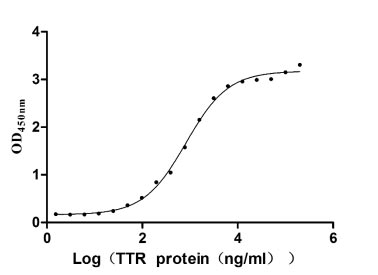
Recombinant Human Retinol-binding protein 4 (RBP4) (Active)
Express system: Mammalian cell
Species: Homo sapiens (Human)
-
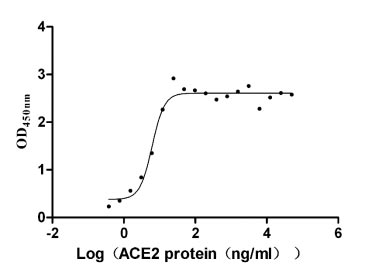
Recombinant Paguma larvata Angiotensin-converting enzyme 2 (ACE2), partial (Active)
Express system: Mammalian cell
Species: Paguma larvata (Masked palm civet)
-
-AC1.jpg)
Recombinant Human HLA class II histocompatibility antigen gamma chain (CD74), partial (Active)
Express system: Mammalian cell
Species: Homo sapiens (Human)
-
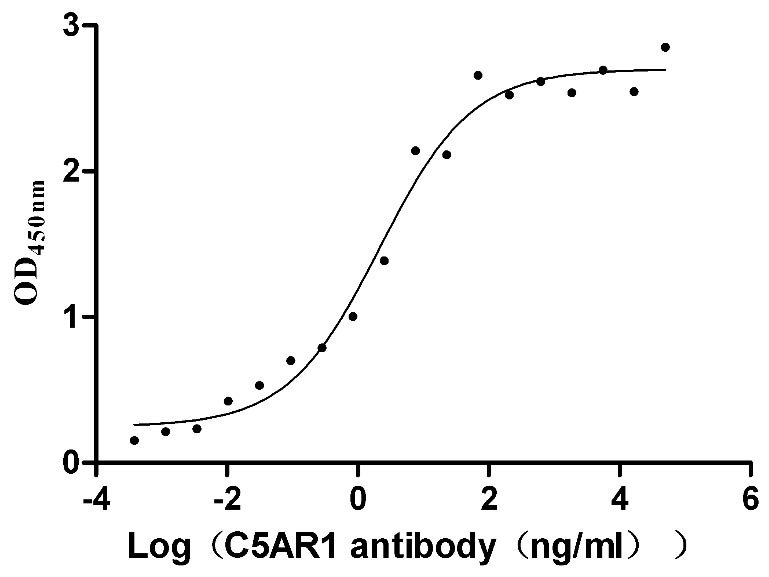
Recombinant Human C5a anaphylatoxin chemotactic receptor 1 (C5AR1)-VLPs (Active)
Express system: Mammalian cell
Species: Homo sapiens (Human)
-
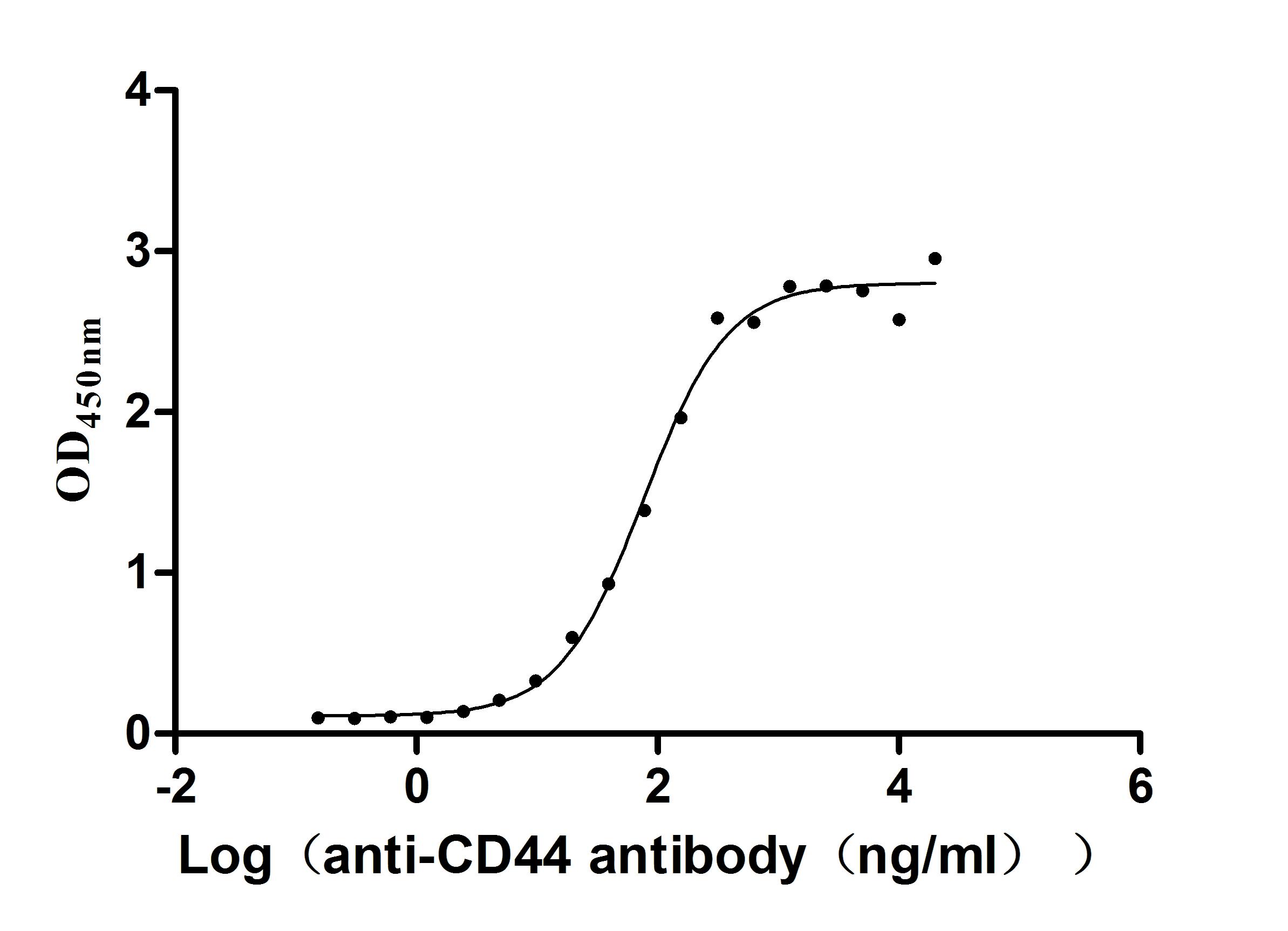
Recombinant Macaca fascicularis CD44 antigen (CD44), partial (Active)
Express system: Mammalian cell
Species: Macaca fascicularis (Crab-eating macaque) (Cynomolgus monkey)
-
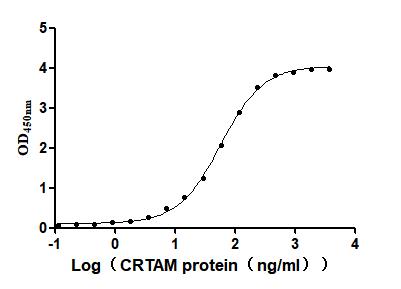
Recombinant Mouse Cytotoxic and regulatory T-cell molecule (Crtam), partial (Active)
Express system: Mammalian cell
Species: Mus musculus (Mouse)
-
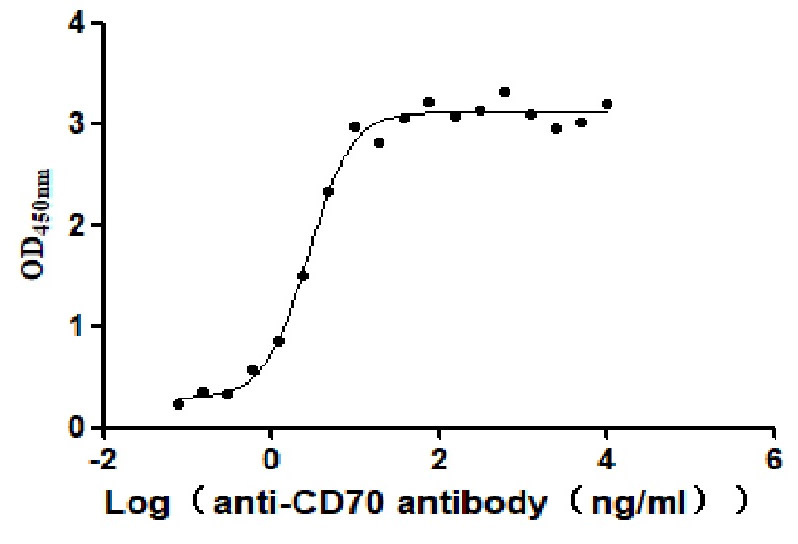
Recombinant Human CD70 antigen (CD70), partial (Active)
Express system: Mammalian cell
Species: Homo sapiens (Human)
-
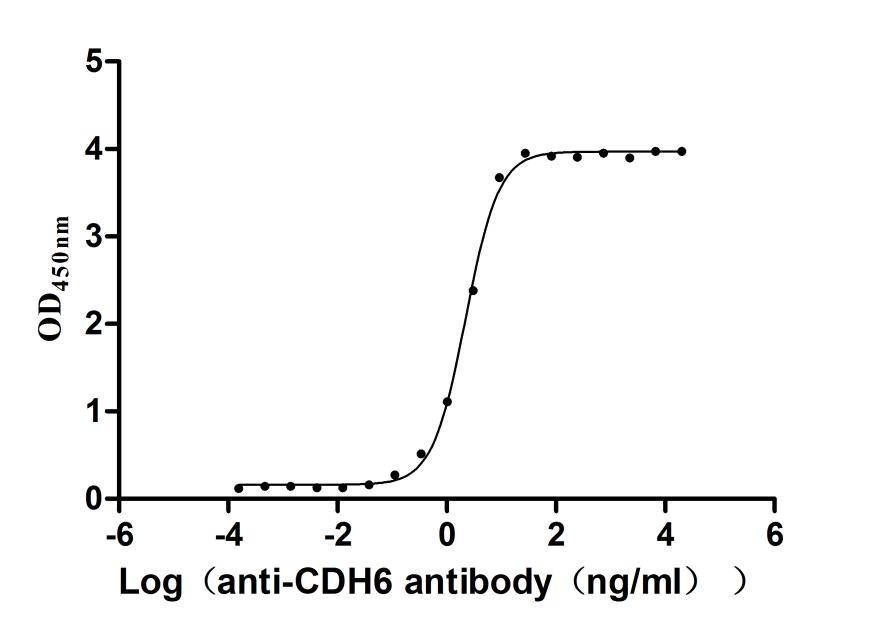
Recombinant Macaca fascicularis Cadherin 6(CDH6),partial (Active)
Express system: Mammalian cell
Species: Macaca fascicularis (Crab-eating macaque) (Cynomolgus monkey)