Recombinant Human Transmembrane protease serine 3 (TMPRSS3), partial
-
中文名稱:人TMPRSS3重組蛋白
-
貨號(hào):CSB-YP023925HU1
-
規(guī)格:
-
來源:Yeast
-
其他:
-
中文名稱:人TMPRSS3重組蛋白
-
貨號(hào):CSB-EP023925HU1
-
規(guī)格:
-
來源:E.coli
-
其他:
-
中文名稱:人TMPRSS3重組蛋白
-
貨號(hào):CSB-EP023925HU1-B
-
規(guī)格:
-
來源:E.coli
-
共軛:Avi-tag Biotinylated
E. coli biotin ligase (BirA) is highly specific in covalently attaching biotin to the 15 amino acid AviTag peptide. This recombinant protein was biotinylated in vivo by AviTag-BirA technology, which method is BriA catalyzes amide linkage between the biotin and the specific lysine of the AviTag.
-
其他:
-
中文名稱:人TMPRSS3重組蛋白
-
貨號(hào):CSB-BP023925HU1
-
規(guī)格:
-
來源:Baculovirus
-
其他:
-
中文名稱:人TMPRSS3重組蛋白
-
貨號(hào):CSB-MP023925HU1
-
規(guī)格:
-
來源:Mammalian cell
-
其他:
產(chǎn)品詳情
-
純度:>85% (SDS-PAGE)
-
基因名:TMPRSS3
-
Uniprot No.:
-
別名:TMPRSS3; ECHOS1; TADG12; UNQ323/PRO382; Transmembrane protease serine 3; Serine protease TADG-12; Tumor-associated differentially-expressed gene 12 protein
-
種屬:Homo sapiens (Human)
-
蛋白長(zhǎng)度:Partial
-
蛋白標(biāo)簽:Tag?type?will?be?determined?during?the?manufacturing?process.
The tag type will be determined during production process. If you have specified tag type, please tell us and we will develop the specified tag preferentially. -
產(chǎn)品提供形式:Lyophilized powder
Note: We will preferentially ship the format that we have in stock, however, if you have any special requirement for the format, please remark your requirement when placing the order, we will prepare according to your demand. -
復(fù)溶:We recommend that this vial be briefly centrifuged prior to opening to bring the contents to the bottom. Please reconstitute protein in deionized sterile water to a concentration of 0.1-1.0 mg/mL.We recommend to add 5-50% of glycerol (final concentration) and aliquot for long-term storage at -20℃/-80℃. Our default final concentration of glycerol is 50%. Customers could use it as reference.
-
儲(chǔ)存條件:Store at -20°C/-80°C upon receipt, aliquoting is necessary for mutiple use. Avoid repeated freeze-thaw cycles.
-
保質(zhì)期:The shelf life is related to many factors, storage state, buffer ingredients, storage temperature and the stability of the protein itself.
Generally, the shelf life of liquid form is 6 months at -20°C/-80°C. The shelf life of lyophilized form is 12 months at -20°C/-80°C. -
貨期:Delivery time may differ from different purchasing way or location, please kindly consult your local distributors for specific delivery time.Note: All of our proteins are default shipped with normal blue ice packs, if you request to ship with dry ice, please communicate with us in advance and extra fees will be charged.
-
注意事項(xiàng):Repeated freezing and thawing is not recommended. Store working aliquots at 4°C for up to one week.
-
Datasheet :Please contact us to get it.
產(chǎn)品評(píng)價(jià)

相關(guān)產(chǎn)品
靶點(diǎn)詳情
-
功能:Probable serine protease that plays a role in hearing. Acts as a permissive factor for cochlear hair cell survival and activation at the onset of hearing and is required for saccular hair cell survival. Activates ENaC (in vitro).
-
基因功能參考文獻(xiàn):
- TMPRSS3 contributed to gastric cancer progression via activation of the PI3K/Akt/ERK signaling pathway. PMID: 30142546
- Pathogenic variants in the TMPRSS3 gene in a cohort of 2247 subjects with sensorineural hearing loss represented 13 different rare TMPRSS3 variants, nine of which were novel. PMID: 28566687
- knockdown of TMPRSS3 inhibits proliferation, migration, and invasion in human nasopharyngeal carcinoma cells through the inactivation of the PI3K/Akt signaling pathway. This study suggests that TMPRSS3 may be a potential therapeutic target for the treatment of nasopharyngeal carcinoma PMID: 28409556
- For those with a combination of severely pathogenic TMPRSS3 variants, rapid aggravation of the residual hearing should be anticipated and treated accordingly. Our confirmation of the genotype-phenotype correlation of the TMPRSS3 gene may pave the way for the establishment of a personalized auditory rehabilitation. PMID: 29072634
- Our results indicate that mutations in TMPRSS3 account for about 4.6% (7/151) of Chinese autosomal recessive nonsyndromic hearing loss cases lacking mutations in SLC26A4 or GJB2 and that the recurrent TMPRSS3 mutation p.Ala306Thr is likely to be a founder mutation. PMID: 28695016
- Given that a previous paper suggested TMPRSS3 and GJB2 genes as responsible for a digenic form of hearing loss, our data support and reinforce this hypothesis. PMID: 28263784
- In conclusion, TMPRSS3 and TNFRSF11B may have potential prognostic value to be used as tumor biomarkers in breast cancer patients. PMID: 28260080
- different combinations of TMPRSS3 mutations led to different hearing impairment phenotypes (DFNB8/DFNB10) in the Chinese family. PMID: 28246597
- TMPRSS3 mutations seem to be an important cause of autosomal recessive nonsyndromic hearing loss in Slovenia resulting in rather uniform phenotype with profound congenital hearing loss. PMID: 26036852
- Study demonstrated that TMPRSS3 contributes to ovarian cancer cell proliferation, invasion and metastasis, probably via activation of the ERK1/2 signaling pathway. PMID: 26531004
- TMPRSS3 expression is an independent prognostic factor for breast cancer patients. Bioinformatic analysis of potential TMPRSS3 binding proteins revealed that TMPRSS3 could be a key regulator of cancer pathways. PMID: 26191247
- Low expression levels of hepsin and TMPRSS3 are associated with poor breast cancer survival PMID: 26014348
- Single nucleotide polymorphisms in TMPRSS3 (rs3814903 and rs11203200) are significantly associated with breast cancer risk. PMID: 25029565
- homozygous mutation TMPRSS3: c.535G>A causes prelingual hearing loss in this Tibetan family PMID: 25474651
- The prevalence of TMPRSS3 mutations among Korean postlingual hearing loss is 8.3 %. The p.A306T variant of TMPRSS3 is the common founder allele in Koreans. A novel variant, p.T248M of TMPRSS3, was predicted to have milder pathogenicity. PMID: 24526180
- Description of the spectrum of mutations in TMPRSS3 in 374 families with autosomal recessive, non-syndromic hearing loss from India. PMID: 24416283
- Association between TMPRSS3 genotypes and phenotype variants in autosomal recessive nonsyndromic hearing loss. PMID: 23958653
- Six TMPRSS3 variants were found to cosegregate in 10 consanguineous Pakistani families with autosomal recessive non-syndromic hearing impairment. PMID: 21534946
- Data imply that TMPRSS3-A/D overexpression in EOC is probably due to hypomethylation of their control region. PMID: 22446619
- TMPRSS3 gene is not a major contributor to non-syndromic deafness in the Moroccan population. PMID: 22382023
- Our data suggest that not only the protein truncating mutation p.T70fs has a severe effect but also the amino acid substitutions p.Ala306Thr and p.Val199Met. PMID: 21786053
- TMPRSS3 mutations contribute to fewer than 1% of nonsyndromic childhood deafness in Caucasians. PMID: 11907649
- The TMPRSS3 protein mutated in deafness DFNB8/10 activates the epithelial sodium channel (ENaC) in vitro PMID: 12393794
- Disruption of the proteolytic activity of TMPRSS3 is tightly correlated with the pathogenesis of hearing loss. PMID: 12920079
- Identification of mutations in TMPRSS3 in Pakistani families with recessive, nonsyndromic congenital deafness. PMID: 15447792
- The mutant TMPRSS3 harboring the novel R216L missense mutation within the predicted cleavage site of the protein fails to undergo proteolytic cleavage and is unable to activate ENaC. PMID: 16021470
- The identification of two novel pathogenic TMPRSS3 mutations (c.646C-->T - R216C; c.916G-->A - A306T) is described in four affected siblings of German origin with postlingual hearing loss, treated by bilateral cochlear implantation with good results. PMID: 17551081
- TMPRSS3 mutations are not a common cause of hereditary deafness, but the elucidation of its function is nevertheless important for better understanding of hearing [review] PMID: 17981648
- missense mutations in autosomal recessive sensorineural deafness PMID: 11462234
顯示更多
收起更多
-
相關(guān)疾?。?/div>Deafness, autosomal recessive, 8 (DFNB8)亞細(xì)胞定位:Endoplasmic reticulum membrane; Single-pass type II membrane protein.蛋白家族:Peptidase S1 family組織特異性:Expressed in many tissues including fetal cochlea. Isoform T is found at increased levels in some carcinomas.數(shù)據(jù)庫鏈接:
Most popular with customers
-
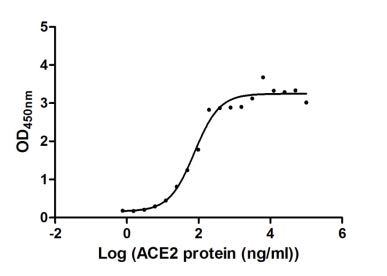
Recombinant Human Angiotensin-converting enzyme 2 (ACE2), partial (Active)
Express system: Mammalian cell
Species: Homo sapiens (Human)
-
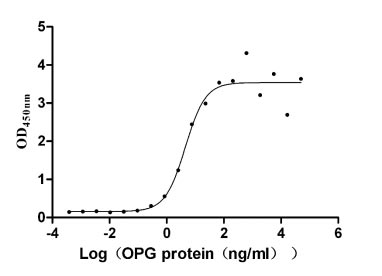
Recombinant Human Tumor necrosis factor receptor superfamily member 11B (TNFRSF11B) (Active)
Express system: Mammalian cell
Species: Homo sapiens (Human)
-
-AC1.jpg)
Recombinant Human Claudin-18.2 (CLDN18.2)-VLPs (Active)
Express system: Mammalian cell
Species: Homo sapiens (Human)
-
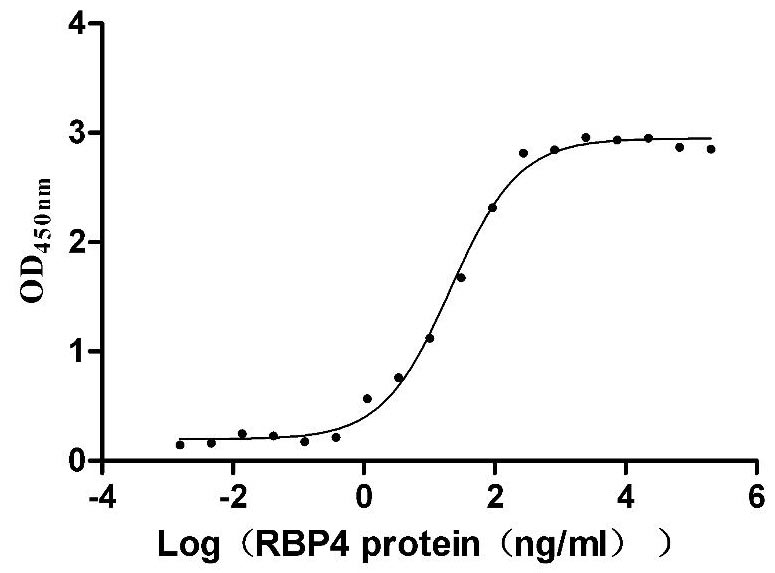
Recombinant Mouse Transthyretin (Ttr) (Active)
Express system: Mammalian cell
Species: Mus musculus (Mouse)
-
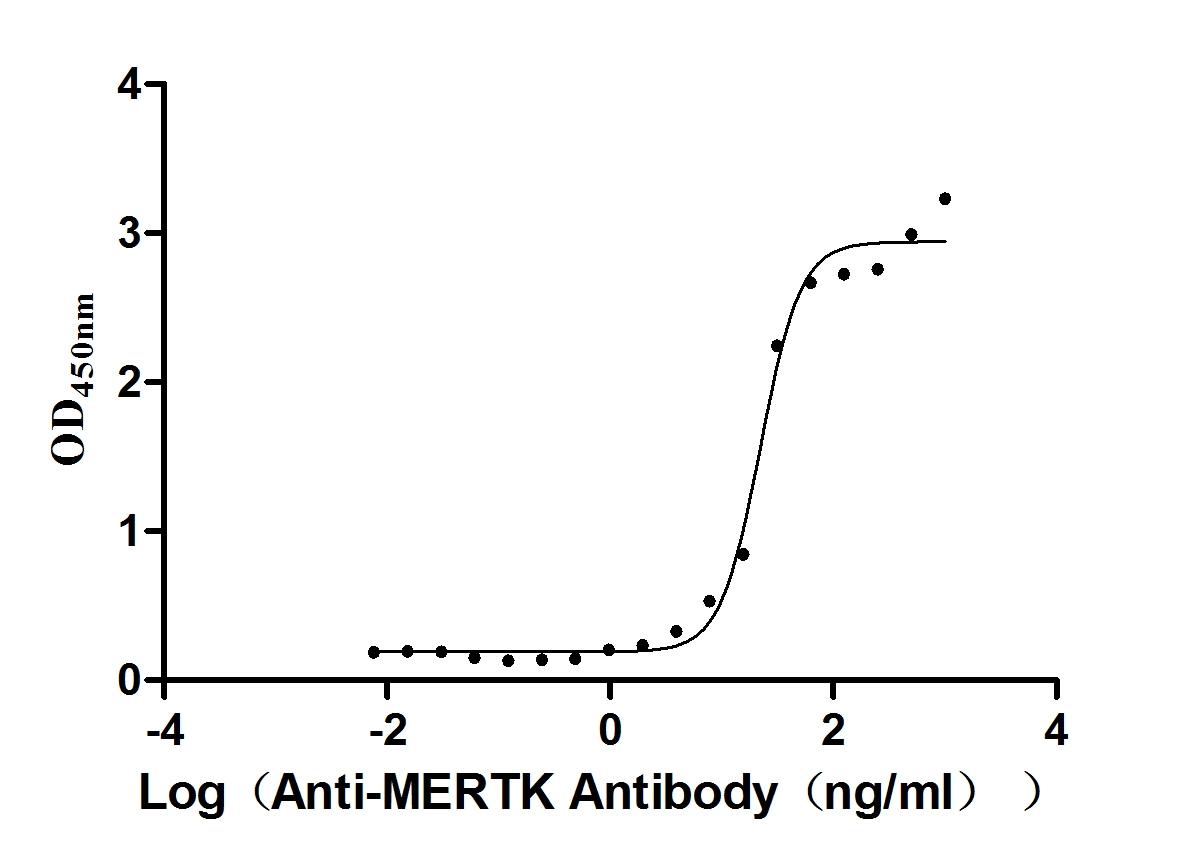
Recombinant Mouse Tyrosine-protein kinase Mer (Mertk), partial (Active)
Express system: Mammalian cell
Species: Mus musculus (Mouse)
-
Recombinant Mouse Cell adhesion molecule 1 (Cadm1), partial (Active)
Express system: Mammalian cell
Species: Mus musculus (Mouse)
-
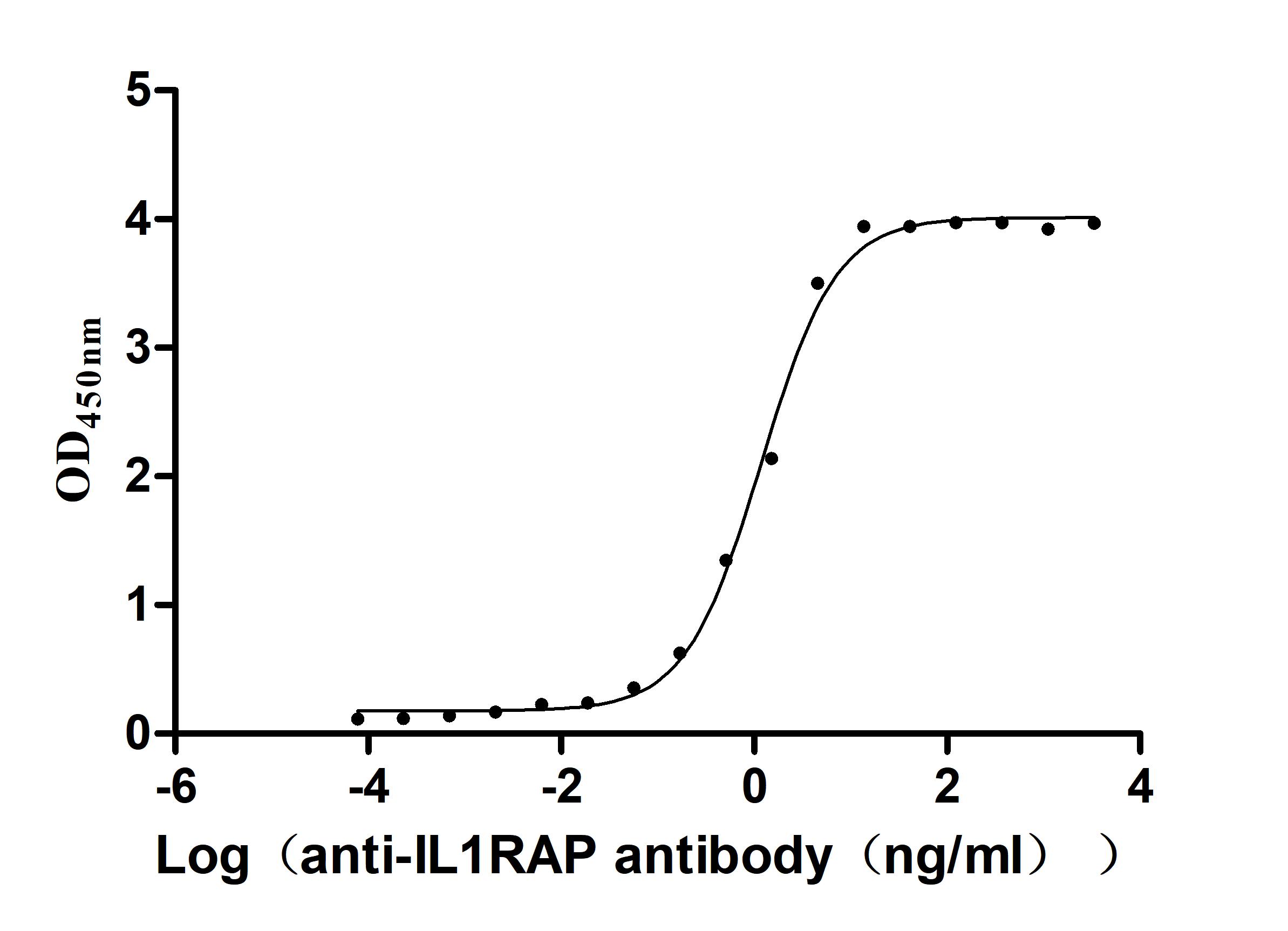
Recombinant Human Interleukin-1 receptor accessory protein (IL1RAP), partial (Active)
Express system: Mammalian cell
Species: Homo sapiens (Human)