Recombinant Human Alpha-tectorin (TECTA), partial
-
中文名稱:人TECTA重組蛋白
-
貨號:CSB-EP023370HU-B
-
說明書:
-
規格:
-
來源:E.coli
-
共軛:Avi-tag Biotinylated
E. coli biotin ligase (BirA) is highly specific in covalently attaching biotin to the 15 amino acid AviTag peptide. This recombinant protein was biotinylated in vivo by AviTag-BirA technology, which method is BriA catalyzes amide linkage between the biotin and the specific lysine of the AviTag.
-
其他:
產品詳情
-
純度:>85% (SDS-PAGE)
-
基因名:TECTA
-
Uniprot No.:
-
別名:TECTA; Alpha-tectorin
-
種屬:Homo sapiens (Human)
-
蛋白長度:Partial
-
蛋白標簽:Tag?type?will?be?determined?during?the?manufacturing?process.
The tag type will be determined during production process. If you have specified tag type, please tell us and we will develop the specified tag preferentially. -
產品提供形式:Lyophilized powder Warning: in_array() expects parameter 2 to be array, null given in /www/web/cusabio_cn/public_html/caches/caches_template/default/content/show_product_protein.php on line 662
Note: We will preferentially ship the format that we have in stock, however, if you have any special requirement for the format, please remark your requirement when placing the order, we will prepare according to your demand. -
復溶:We recommend that this vial be briefly centrifuged prior to opening to bring the contents to the bottom. Please reconstitute protein in deionized sterile water to a concentration of 0.1-1.0 mg/mL.We recommend to add 5-50% of glycerol (final concentration) and aliquot for long-term storage at -20℃/-80℃. Our default final concentration of glycerol is 50%. Customers could use it as reference.
-
儲存條件:Store at -20°C/-80°C upon receipt, aliquoting is necessary for mutiple use. Avoid repeated freeze-thaw cycles.
-
保質期:The shelf life is related to many factors, storage state, buffer ingredients, storage temperature and the stability of the protein itself.
Generally, the shelf life of liquid form is 6 months at -20°C/-80°C. The shelf life of lyophilized form is 12 months at -20°C/-80°C. -
貨期:Delivery time may differ from different purchasing way or location, please kindly consult your local distributors for specific delivery time.Note: All of our proteins are default shipped with normal blue ice packs, if you request to ship with dry ice, please communicate with us in advance and extra fees will be charged.
-
注意事項:Repeated freezing and thawing is not recommended. Store working aliquots at 4°C for up to one week.
-
Datasheet :Please contact us to get it.
產品評價

靶點詳情
-
功能:One of the major non-collagenous components of the tectorial membrane. The tectorial membrane is an extracellular matrix of the inner ear that covers the neuroepithelium of the cochlea and contacts the stereocilia bundles of specialized sensory hair cells. Sound induces movement of these hair cells relative to the tectorial membrane, deflects the stereocilia and leads to fluctuations in hair-cell membrane potential, transducing sound into electrical signals.
-
基因功能參考文獻:
- TECTA mutations were identified in 6.0% of mid-frequency sensorineural hearing loss cases; these mutations were more frequent in patients with shallow U-shaped audiograms than those with U-shaped audiograms, and in families which have the family histories compatible with autosomal dominant than those with the family histories compatible with sporadic or autosomal recessive. PMID: 28946916
- Up to now, merely 7 loci have been linked to mid-frequency hearing loss. Only four genetic mid-frequency deafness genes, namely, DFNA10 (EYA4), DFNA8/12 (TECTA), DFNA13 (COL11A2), DFNA44 (CCDC50), have been reported to date. [review] PMID: 27142990
- A novel homozygous variant (c.734G > A) was found in exon 5 of the TECTA gene in one family leading to a nonsense mutation causing autosomal recessive nonsyndromic hearing loss. PMID: 28012541
- To our knowledge, this is the first reported TECTA mutation leading to the DFNB21 form of hearing impairment among Maghrebian individuals suffering from congenital hearing impairment PMID: 27368438
- the present report suggest that the association of RWDD3 and TECTA with paclitaxel-induced peripheral neuropathy may have been a false positive signal PMID: 25549536
- Here we confirm a known genotype-phenotype correlation for the ZP domain and propose a hypothetical genotype-phenotype correlation which relates mutations in vWFD3-D4 to stable high-frequency NSHL in Koreans. PMID: 25413827
- Whole-exome sequencing identifies a novel genotype-phenotype correlation in the entactin domain of the known deafness gene TECTA. PMID: 24816743
- Identified the c.211delC mutation in the KCNQ4 gene and the c.2967C>A (p.H989Q) mutation in the TECTA gene to be associated with high-frequency sensorineural hearing loss in a Japanese family. PMID: 24655070
- A rare novel mutation in TECTA causes autosomal dominant nonsyndromic hearing loss in a Mongolian family. PMID: 25008054
- Data indicate that sequencing of candidate gene TECTA (alpha-tectorin) revealed a heterozygous c.5945C>A substitution in exon 19, causing amino acid substitution of Ala to Asp at a conservative position 1982. PMID: 23936151
- this study failed to replicate a GWAS reporting an association between the 2 SNPs rs2296308 in RWDD3 and rs1829 in the intron of TECTA and time to neuropathy in ovarian cancer patients treated with paclitaxel PMID: 22877241
- we have reported the prevalence of TECTA mutations in Japanese autosomal dominant nonsyndromic hearing loss (ADNSHL) patients detected by genetic screening, and confirmed the genotype-phenotype correlations. PMID: 22718023
- analysis allowed us to identify an aberrant transcript with skipping of exon 16, without affecting the reading frame. One of the dominant TECTA mutations already described, a synonymous substitution in exon 16 PMID: 22995349
- Here, we identified a missense mutation (p.C1691F) and a splicing mutation (c.6162+3insT), one in each TECTA allele, in the patient with hearing loss. PMID: 22037481
- mutations in the N-terminal region of alpha-tectorin lead to mid-frequency nonsyndromic hearing loss PMID: 21520338
- data identify CEACAM16 as an alpha-tectorin-interacting protein that concentrates at the point of attachment of the TM to the stereocilia and, when mutated, results in ADNSHL at the DFNA4 locus PMID: 21368133
- Mutation analysis of the TECTA gene was performed in 62 Korean patients with hereditary hearing loss. PMID: 20947814
- The tectorial membrane was shortened in heterozygous Tecta(C1509G/+) mice, reaching only the first row of outer hair cells. PMID: 20142329
- distinctive phenotype associated with homozygosity for two novel frameshift mutations (649insC and 6037delG) of TECTA cosegregating with hearing loss linked to DFNB21 PMID: 12746400
- A nucleotide change in exon 13, 4526T>G, was detected leading to a substitution from cysteine to glycine at codon 1509 of the TECTA protein and causing hearing impairment. PMID: 15319541
- The presently identified mutation affecting the zona pellucida (ZP) domain resulted in a substantially lesser degree of hearing impairment than was previously reported for DFNA8/12 traits with mutations affecting the ZP domain of alpha-tectorin. PMID: 16718611
- the sensorineural hearing impairment in TECTA mutations may be characterized as a cochlear conductive hearing impairment PMID: 17136632
- Study described six TECTA mutations in autosomal recessive nonsyndromic hearing loss Iranian families PMID: 17431902
- Identification of a p.Cys1837Arg autosomal dominant mutation in alpha-tectorin segregating in family members with non-syndromic hearing loss. PMID: 17661817
- In this study, seventy-five Iranian families segregating autosomal recessive non-syndromic hearing impairment were analyzed. By sequencing all 23 coding exons of TECTA, a frameshift mutation was found. PMID: 18022253
- Mid-frequency DFNA8/12 hearing loss caused by a synonymous TECTA mutation. PMID: 18575463
- A single nucleotide mutation in a Dutch family caused nonsyndromic autosomal dominant sensorineural hearing impairmentm PMID: 19005249
- cysteine substitution in the zona pellucida domain of alpha-tectorin results in autosomal dominant, postlingual, progressive, mid frequency hearing loss in a Spanish family PMID: 11333869
顯示更多
收起更多
-
相關疾病:Deafness, autosomal dominant, 12 (DFNA12); Deafness, autosomal recessive, 21 (DFNB21)
-
亞細胞定位:Cell membrane; Lipid-anchor, GPI-anchor; Extracellular side. Secreted, extracellular space, extracellular matrix.
-
數據庫鏈接:
Most popular with customers
-
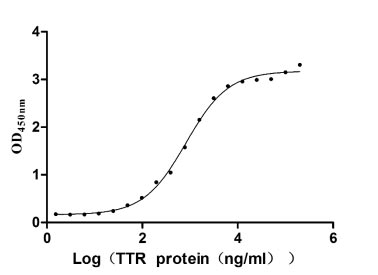
Recombinant Human Retinol-binding protein 4 (RBP4) (Active)
Express system: Mammalian cell
Species: Homo sapiens (Human)
-
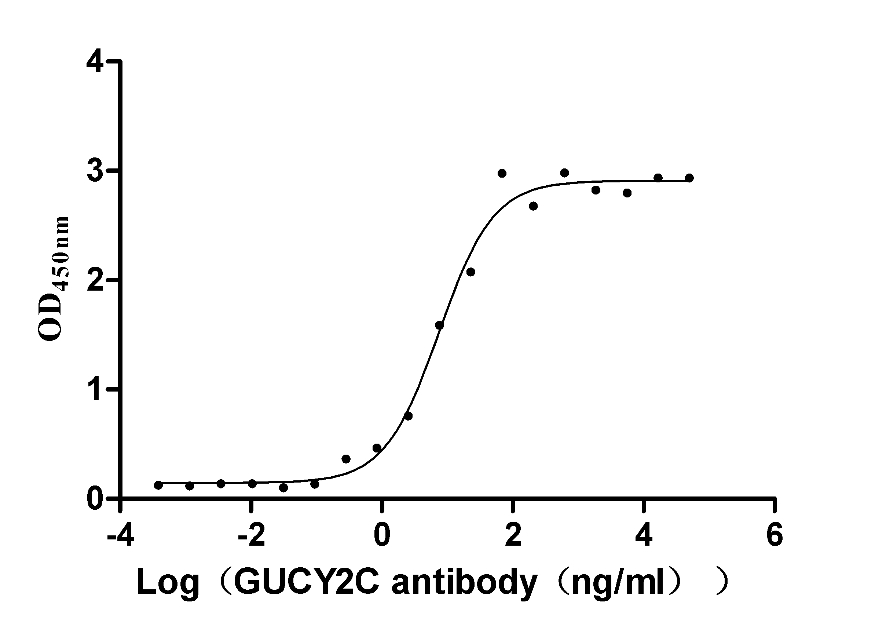
Recombinant Human Heat-stable enterotoxin receptor (GUCY2C), partial (Active)
Express system: Mammalian cell
Species: Homo sapiens (Human)
-
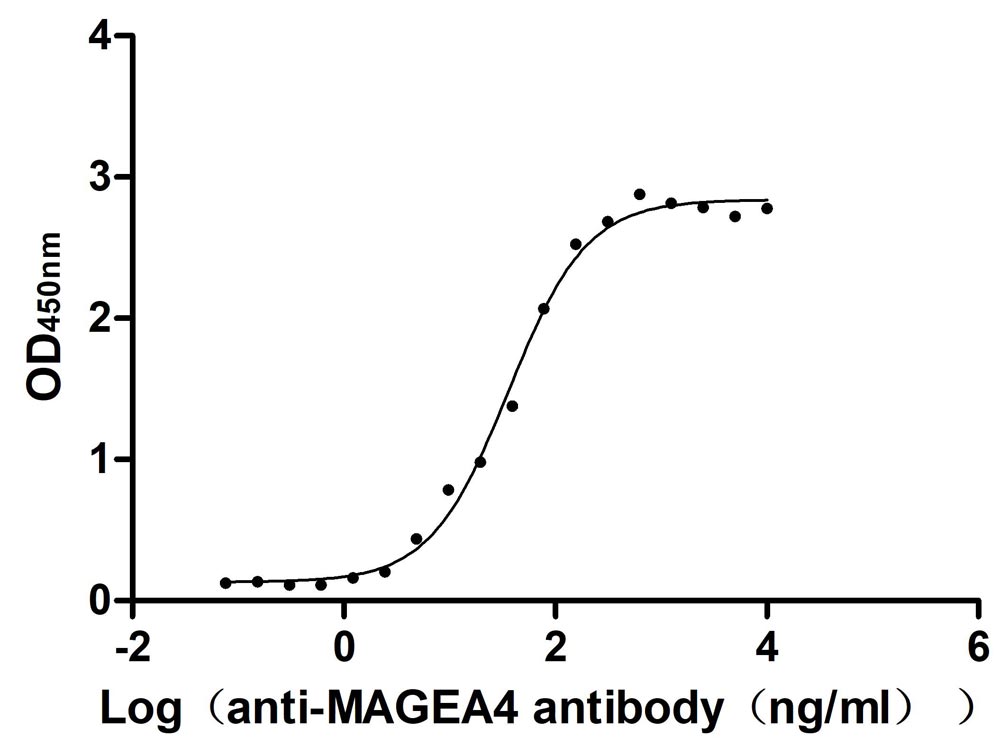
Recombinant Human Melanoma-associated antigen 4 (MAGEA4) (Active)
Express system: Mammalian cell
Species: Homo sapiens (Human)
-

Recombinant Rat Intestinal-type alkaline phosphatase 1 (Alpi) (Active)
Express system: Mammalian cell
Species: Rattus norvegicus (Rat)
-
-AC1.jpg)
Recombinant Human Dickkopf-related protein 1 (DKK1) (Active)
Express system: Mammalian cell
Species: Homo sapiens (Human)
-
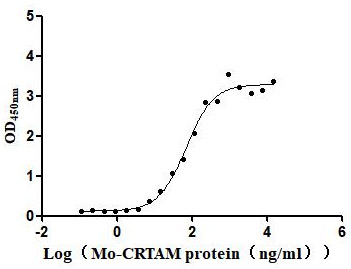
Recombinant Mouse Cell adhesion molecule 1 (Cadm1), partial (Active)
Express system: Mammalian cell
Species: Mus musculus (Mouse)
-
Recombinant Human Interleukin-2 receptor subunit alpha (IL2RA), partial (Active)
Express system: Mammalian cell
Species: Homo sapiens (Human)
-
Express system: Mammalian cell
Species: Homo sapiens (Human)