KLK14 Antibody
-
中文名稱:KLK14兔多克隆抗體
-
貨號:CSB-PA147162
-
規格:¥1100
-
圖片:
-
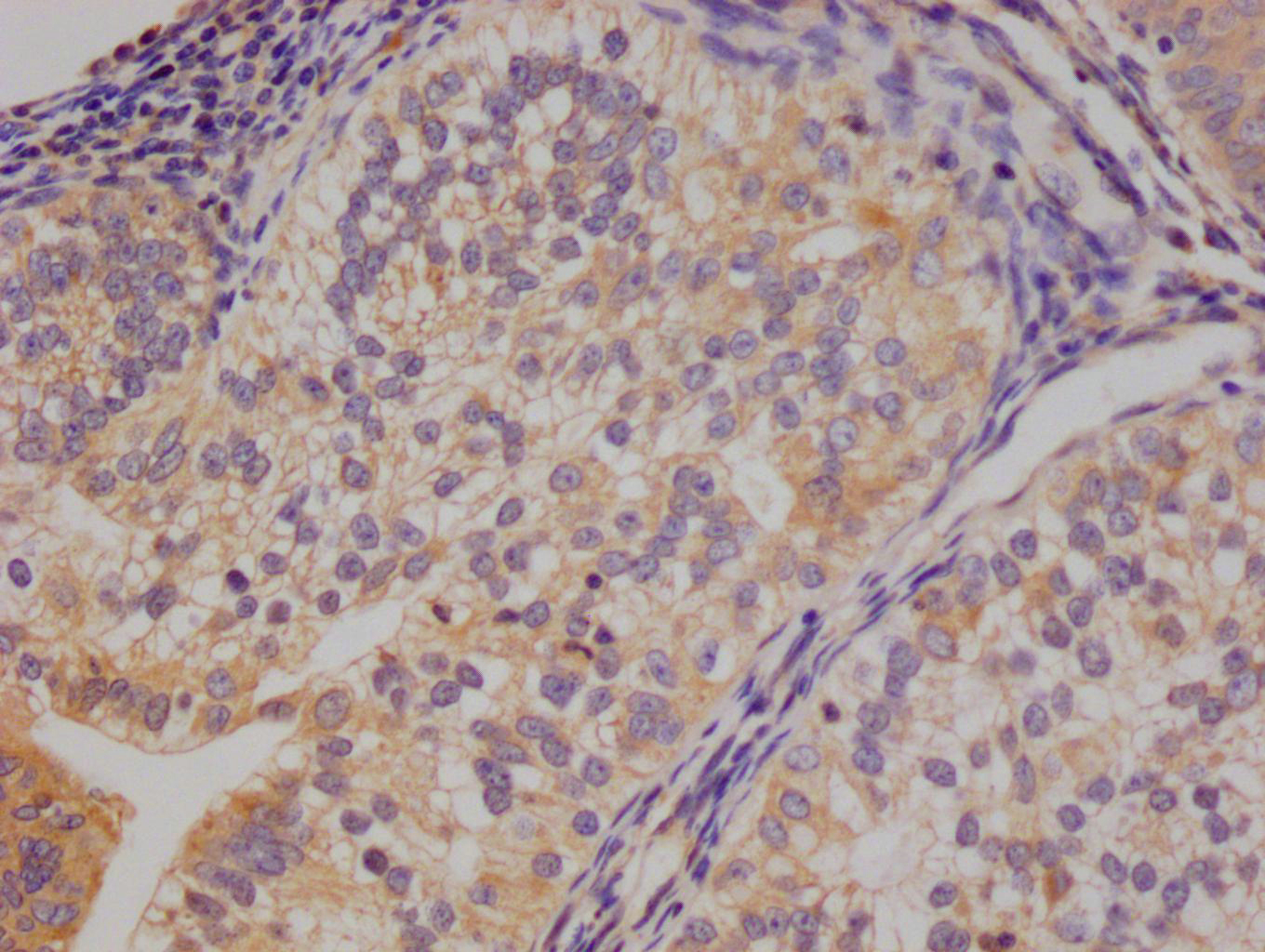
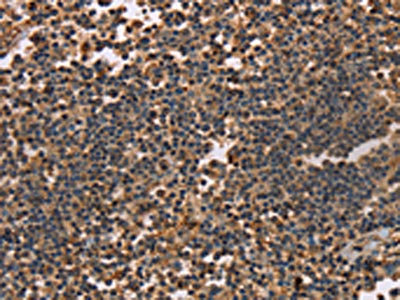 The image on the left is immunohistochemistry of paraffin-embedded Human tonsil tissue using CSB-PA147162(KLK14 Antibody) at dilution 1/40, on the right is treated with synthetic peptide. (Original magnification: ×200)
 -
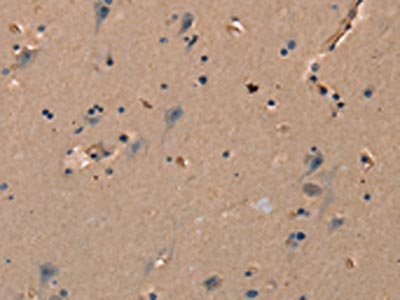 The image on the left is immunohistochemistry of paraffin-embedded Human brain tissue using CSB-PA147162(KLK14 Antibody) at dilution 1/40, on the right is treated with synthetic peptide. (Original magnification: ×200)
 -
 Gel: 10%SDS-PAGE, Lysate: 40 μg, Lane: PC3 cells, Primary antibody: CSB-PA147162(KLK14 Antibody) at dilution 1/200, Secondary antibody: Goat anti rabbit IgG at 1/8000 dilution, Exposure time: 2 minutes
-
-
其他:
產品詳情
-
Uniprot No.:
-
基因名:KLK14
-
別名:hK14 antibody; Kallikrein 14 antibody; Kallikrein like protein 6 antibody; Kallikrein-14 antibody; Kallikrein-like protein 6 antibody; KLK L6 antibody; KLK-L6 antibody; KLK14 antibody; KLK14_HUMAN antibody
-
宿主:Rabbit
-
反應種屬:Human
-
免疫原:Synthetic peptide of Human KLK14
-
免疫原種屬:Homo sapiens (Human)
-
標記方式:Non-conjugated
-
抗體亞型:IgG
-
純化方式:Antigen affinity purification
-
濃度:It differs from different batches. Please contact us to confirm it.
-
保存緩沖液:-20°C, pH7.4 PBS, 0.05% NaN3, 40% Glycerol
-
產品提供形式:Liquid
-
應用范圍:ELISA,WB,IHC
-
推薦稀釋比:
Application Recommended Dilution ELISA 1:1000-1:2000 WB 1:200-1:1000 IHC 1:50-1:200 -
Protocols:
-
儲存條件:Upon receipt, store at -20°C or -80°C. Avoid repeated freeze.
-
貨期:Basically, we can dispatch the products out in 1-3 working days after receiving your orders. Delivery time maybe differs from different purchasing way or location, please kindly consult your local distributors for specific delivery time.
-
用途:For Research Use Only. Not for use in diagnostic or therapeutic procedures.
產品評價

相關產品
靶點詳情
-
功能:Serine-type endopeptidase with a dual trypsin-like and chymotrypsin-like substrate specificity. May activate/inactivate the proteinase-activated receptors F2R, F2RL1 and F2RL3 and other kallikreins including KLK1, KLK3, KLK5 and KLK11. May function in seminal clot liquefaction through direct cleavage of the semenogelin SEMG1 and SEMG2 and activation of KLK3. May function through desmoglein DSG1 cleavage in epidermal desquamation a process by which the most superficial corneocytes are shed from the skin surface. May be involved in several aspects of tumor progression including growth, invasion and angiogenesis.
-
基因功能參考文獻:
- There was no significant association of KLK13 and KLK14 mRNA expression with the clinical factors ascitic fluid volume or residual tumor mass. High KLK14 mRNA levels were significantly associated with prolonged PFS (HR = 0.44, P = 0.017) and showed a trend towards significance for OS (HR = 0.55, P = 0.070). PMID: 29546479
- increased KLK14 activity could contribute at multiple levels to HGF/Met-mediated processes in prostate and other cancers PMID: 27533117
- KLK7 and KLK14 gene expression can be regarded as markers of poor prognosis for colorectal cancer patients with discriminating power between CC and adenoma patients. PMID: 23224034
- genetic variants in the KLK14 locus are associated with risk and/or aggressiveness of prostate cancer PMID: 22505522
- KLK14, acting via PAR-2, represents an autocrine/paracrine regulator of colon tumorigenesis PMID: 22505523
- KLK14 gene expression could be evaluated as a putative independent diagnostic biomarker in breast tumour biopsies. PMID: 21057706
- The differences in the levels of KLK14 suggest that KLKs may aid in the differential diagnosis of salivary gland tumors. The coexpression of KLKs suggests their possible involvement in an enzymatic pathway activated in salivary gland. PMID: 20155713
- KLK14 overexpression was found to be a significant predictor of decreased disease-free survival and overall survival in breast cancer patients PMID: 12439719
- KLK14 expression upregulated in advanced and more aggressive prostate tumors; may play role in tumor spread and may be new marker for prostate cancer diagnosis and prognosis PMID: 12858357
- may be part of a protease cascade in the stratum corneum, and that the observed pH effects may have physiological relevance. PMID: 15654974
- hK14 has dual activity, trypsin- and chymotrypsin-like, with a preference for cleavage after arginine residues PMID: 15843175
- KLK14 is clearly overexpressed in breast cancer in comparison to normal breast tissues and is positively associated with conventional parameters of tumour aggressiveness PMID: 16434994
- The majority of KLK14 in the plantar stratum corneum is present in its catalytically active form. KLK14 could be immunohistochemically detected in sweat ducts, preferentially in the intraepidermal parts (the acrosyringium), and in sweat glands. PMID: 16800737
- KLK14 may be implicated in several facets of tumor progression, including growth, invasion, and angiogenesis, as well as in arthritic disease via deterioration of cartilage PMID: 17110383
- KLK14 may participate in epidermal desquamation through cleavage of desmoglein 1 and regulation by lympho-epithelial Kazal-type-related inhibitor (LEKTI). PMID: 17158887
- KLK14 is a new activator component of the KLK proteolytic cascade with a possible role in seminal plasma and skin PMID: 18056261
- semenogelins I and II were directly cleaved by KLK14. Semenogelins were also able to reverse KLK14 inhibition by Zn2+, providing a novel regulatory mechanism for KLK14 activity. PMID: 18482984
- Expression of the KLK14 protein correlated with the pathological tumor status in prostate cancer and was associated with disease progression defined by prostate-specific antigen relapse in univariate Kaplan-Meier analysis. PMID: 18497543
- positive staining was significantly associated with NSCLC adenocarcinoma histotype (KLK13, p=0.014) and tumor size (KLK14, p=0.048) PMID: 18627302
- KLK4 is only expressed in breast and prostate cancers that express the progesterone receptor (PR) and androgen receptor (AR), respectively. PMID: 19147544
顯示更多
收起更多
-
亞細胞定位:Secreted, extracellular space.
-
蛋白家族:Peptidase S1 family, Kallikrein subfamily
-
組織特異性:Highly expressed in CNS, bone marrow and fetal liver. Also expressed in breast, thyroid, kidney, colon, pancreas, spleen, prostate, uterus, small intestine, placenta and skeletal muscle. Among 40 tissues tested, the highest expression is detected in skin
-
數據庫鏈接:
Most popular with customers
-
-
YWHAB Recombinant Monoclonal Antibody
Applications: ELISA, WB, IHC, IF, FC
Species Reactivity: Human, Mouse, Rat
-
Phospho-YAP1 (S127) Recombinant Monoclonal Antibody
Applications: ELISA, WB, IHC
Species Reactivity: Human
-
-
-
-
-