Recombinant Mouse Nuclear factor erythroid 2-related factor 1 (Nfe2l1), partial
-
中文名稱:小鼠Nfe2l1重組蛋白
-
貨號:CSB-EP737050MO-B
-
說明書:
-
規格:
-
來源:E.coli
-
共軛:Avi-tag Biotinylated
E. coli biotin ligase (BirA) is highly specific in covalently attaching biotin to the 15 amino acid AviTag peptide. This recombinant protein was biotinylated in vivo by AviTag-BirA technology, which method is BriA catalyzes amide linkage between the biotin and the specific lysine of the AviTag.
-
其他:
產品詳情
-
純度:>85% (SDS-PAGE)
-
基因名:Nfe2l1
-
Uniprot No.:
-
別名:Nfe2l1; Nrf1; Endoplasmic reticulum membrane sensor NFE2L1; Locus control region-factor 1; LCR-F1; Nuclear factor erythroid 2-related factor 1; NF-E2-related factor 1; NFE2-related factor 1; Nuclear factor; erythroid derived 2; like 1) [Cleaved into: Transcription factor NRF1]
-
種屬:Mus musculus (Mouse)
-
蛋白長度:Partial
-
蛋白標簽:Tag?type?will?be?determined?during?the?manufacturing?process.
The tag type will be determined during production process. If you have specified tag type, please tell us and we will develop the specified tag preferentially. -
產品提供形式:Lyophilized powder Warning: in_array() expects parameter 2 to be array, null given in /www/web/cusabio_cn/public_html/caches/caches_template/default/content/show_product_protein.php on line 662
Note: We will preferentially ship the format that we have in stock, however, if you have any special requirement for the format, please remark your requirement when placing the order, we will prepare according to your demand. -
復溶:We recommend that this vial be briefly centrifuged prior to opening to bring the contents to the bottom. Please reconstitute protein in deionized sterile water to a concentration of 0.1-1.0 mg/mL.We recommend to add 5-50% of glycerol (final concentration) and aliquot for long-term storage at -20℃/-80℃. Our default final concentration of glycerol is 50%. Customers could use it as reference.
-
儲存條件:Store at -20°C/-80°C upon receipt, aliquoting is necessary for mutiple use. Avoid repeated freeze-thaw cycles.
-
保質期:The shelf life is related to many factors, storage state, buffer ingredients, storage temperature and the stability of the protein itself.
Generally, the shelf life of liquid form is 6 months at -20°C/-80°C. The shelf life of lyophilized form is 12 months at -20°C/-80°C. -
貨期:Delivery time may differ from different purchasing way or location, please kindly consult your local distributors for specific delivery time.Note: All of our proteins are default shipped with normal blue ice packs, if you request to ship with dry ice, please communicate with us in advance and extra fees will be charged.
-
注意事項:Repeated freezing and thawing is not recommended. Store working aliquots at 4°C for up to one week.
-
Datasheet :Please contact us to get it.
產品評價

靶點詳情
-
功能:Endoplasmic reticulum membrane sensor that translocates into the nucleus in response to various stresses to act as a transcription factor. Constitutes a precursor of the transcription factor NRF1. Able to detect various cellular stresses, such as cholesterol excess, oxidative stress or proteasome inhibition. In response to stress, it is released from the endoplasmic reticulum membrane following cleavage by the protease DDI2 and translocates into the nucleus to form the transcription factor NRF1. Acts as a key sensor of cholesterol excess: in excess cholesterol conditions, the endoplasmic reticulum membrane form of the protein directly binds cholesterol via its CRAC motif, preventing cleavage and release of the transcription factor NRF1, thereby allowing expression of genes promoting cholesterol removal, such as CD36. Involved in proteasome homeostasis: in response to proteasome inhibition, it is released from the endoplasmic reticulum membrane, translocates to the nucleus and activates expression of genes encoding proteasome subunits.; CNC-type bZIP family transcription factor that translocates to the nucleus and regulates expression of target genes in response to various stresses. Heterodimerizes with small-Maf proteins (MAFF, MAFG or MAFK) and binds DNA motifs including the antioxidant response elements (AREs), which regulate expression of genes involved in oxidative stress response. Activates or represses expression of target genes, depending on the context. Plays a key role in cholesterol homeostasis by acting as a sensor of cholesterol excess: in low cholesterol conditions, translocates into the nucleus and represses expression of genes involved in defense against cholesterol excess, such as CD36. In excess cholesterol conditions, the endoplasmic reticulum membrane form of the protein directly binds cholesterol via its CRAC motif, preventing cleavage and release of the transcription factor NRF1, thereby allowing expression of genes promoting cholesterol removal. Critical for redox balance in response to oxidative stress: acts by binding the AREs motifs on promoters and mediating activation of oxidative stress response genes, such as GCLC, GCLM, GSS, MT1 and MT2. Plays an essential role during fetal liver hematopoiesis: probably has a protective function against oxidative stress and is involved in lipid homeostasis in the liver. Involved in proteasome homeostasis: in response to proteasome inhibition, mediates the 'bounce-back' of proteasome subunits by translocating into the nucleus and activating expression of genes encoding proteasome subunits. Also involved in regulating glucose flux. Together with CEBPB; represses expression of DSPP during odontoblast differentiation. In response to ascorbic acid induction, activates expression of SP7/Osterix in osteoblasts.; Transcription factor that binds the antioxidant response elements (ARE) consensus sequence on promoters and activates their expression.; Transcription factor that binds the extended kappa 3 site of the TNF-alpha promoter after Fc gamma RIII stimulation and participates in the induction of this cytokine.
-
基因功能參考文獻:
- Mechanistic studies revealed that Nfe2l1 deficiency may disturb the expression of lipolytic genes in adipocytes, leading to adipocyte hypertrophy followed by inflammation, pyroptosis, and insulin resistance. PMID: 29935181
- our investigation shows that the ER membrane protein TCF11/Nrf1 is an essential component of the cellular stress response mechanism. In response to cytotoxic stress, TCF11/Nrf1 is retrotranslocated and transferred to the nucleus where it induces proteasome subunit expression via binding to the ARE region of the relevant promoter. PMID: 27345029
- Deficiency of long isoforms of Nfe2l1 in pancreatic beta-cells increased susceptibility to acute arsenite-induced cytotoxicity by promoting arsenic biotransformation and intracellular MMA levels. PMID: 28549828
- Nrf1 is negatively regulated by its O-GlcNAcylation status that depends on the glucose concentrations PMID: 26231763
- Denervation induced proteasomal activation via NFE2L1 nuclear translocation in control mice PMID: 24451648
- This stduy identify the bZIP transcription factor Nfe2l1 and demonstrate that it promotes glial fate under direct Sox9 regulatory control. PMID: 23840004
- The study identifies casein kinase 2 as an NRF1-binding protein and finds that the knockdown of casein kinase 2 enhances the Nrf1-dependent expression of the proteasome subunit genes. PMID: 23816881
- Nrf1 plays an integral role in the maintenance of proteasome function in hepatocytes and in the prevention of liver steatosis development. PMID: 23702335
- findings suggest that nuclear-related factor erythroid 2 transcription factor (Nrf1) may play a role in maintaining genomic integrity, and that Nrf1 dysregulation may induce tumorigenesis PMID: 22971132
- The transcription factor, TCF11, is at the crossroads of oxidative stress and the ubiquitin proteasome system. PMID: 21412055
- Data show that nuclear factor erythroid-derived 2-related factor 1 (Nrf1), but not the related Nrf2, is necessary for induced proteasome gene transcription in mouse embryonic fibroblasts. PMID: 20385086
- the first in vivo experimental evidence that NFE2L1 produced by osteoblasts is involved in regulating osterix expression, osteoblast differentiation, and bone formation PMID: 19887580
- may promote cell survival by maintaining redox balance and protecting embryonic hepatocytes from TNF-mediated apoptosis during development PMID: 12808106
- the physical interaction between Nrf1 and C/EBPbeta provide a novel mechanism for the transcriptional regulation of DSPP in odontoblasts. PMID: 15308669
- Nrf1 is normally targeted to the endoplasmic reticulum membrane, and endoplasmic reticulum stress may play a role in modulating Nrf1 function as a transcriptional activator PMID: 16687406
- Activation of ARE-driven genes by Nrf1 was negatively controlled by the 155-AA N-terminal domain through its ability to direct Nrf1 to the endoplasmic reticulum. PMID: 16872277
- Arachidonic acid modulated osterix expression by a mechanism involving Nrf1 nuclear translocation and Nrf1 binding to oxidant response elements to activate genes in cell differentiation. PMID: 17510056
- The amino- and carboxyl-terminal regions are required for correct membrane orientation of Nrf1, as deletion of residues 2-10 or 23-30 greatly increase its association with the endoplasmic reticulum and the extent to which it is glycosylated. PMID: 17705787
顯示更多
收起更多
-
亞細胞定位:[Endoplasmic reticulum membrane sensor NFE2L1]: Endoplasmic reticulum membrane; Single-pass type II membrane protein. Endoplasmic reticulum membrane; Single-pass type III membrane protein.; [Transcription factor NRF1]: Nucleus.; [Isoform 2]: Cytoplasm. Nucleus.
-
蛋白家族:BZIP family, CNC subfamily
-
組織特異性:Isoform 1: Widely expressed including kidney, brown fat, white fat, large intestine, small intestine, stomach, lung, brain and liver. Isoform 1: Expressed in mouse embryonic fibroblasts (MEF). Isoform 2: Widely expressed including kidney, brown fat, white
-
數據庫鏈接:
Most popular with customers
-
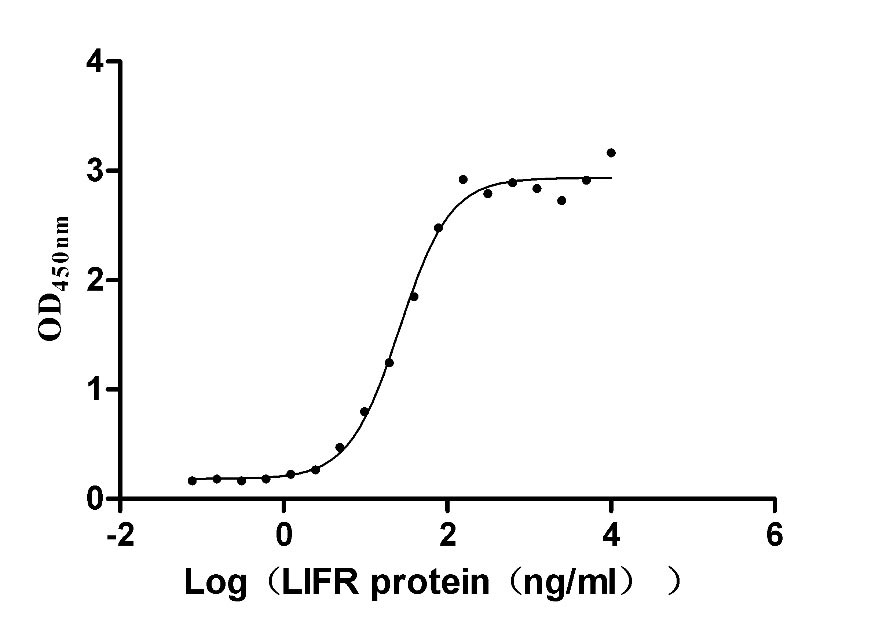
Recombinant Human Leukemia inhibitory factor (LIF) (Active)
Express system: Mammalian cell
Species: Homo sapiens (Human)
-
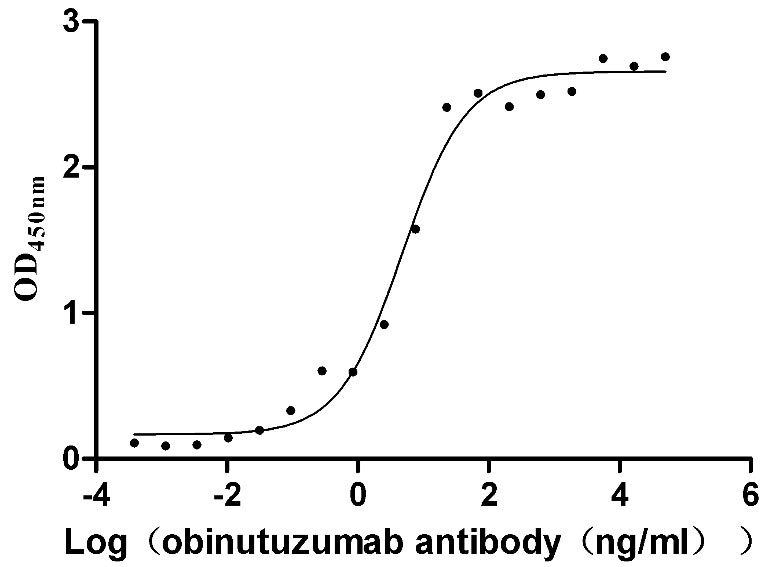
Recombinant Human B-lymphocyte antigen CD20 (MS4A1)-VLPs (Active)
Express system: Mammalian cell
Species: Homo sapiens (Human)
-
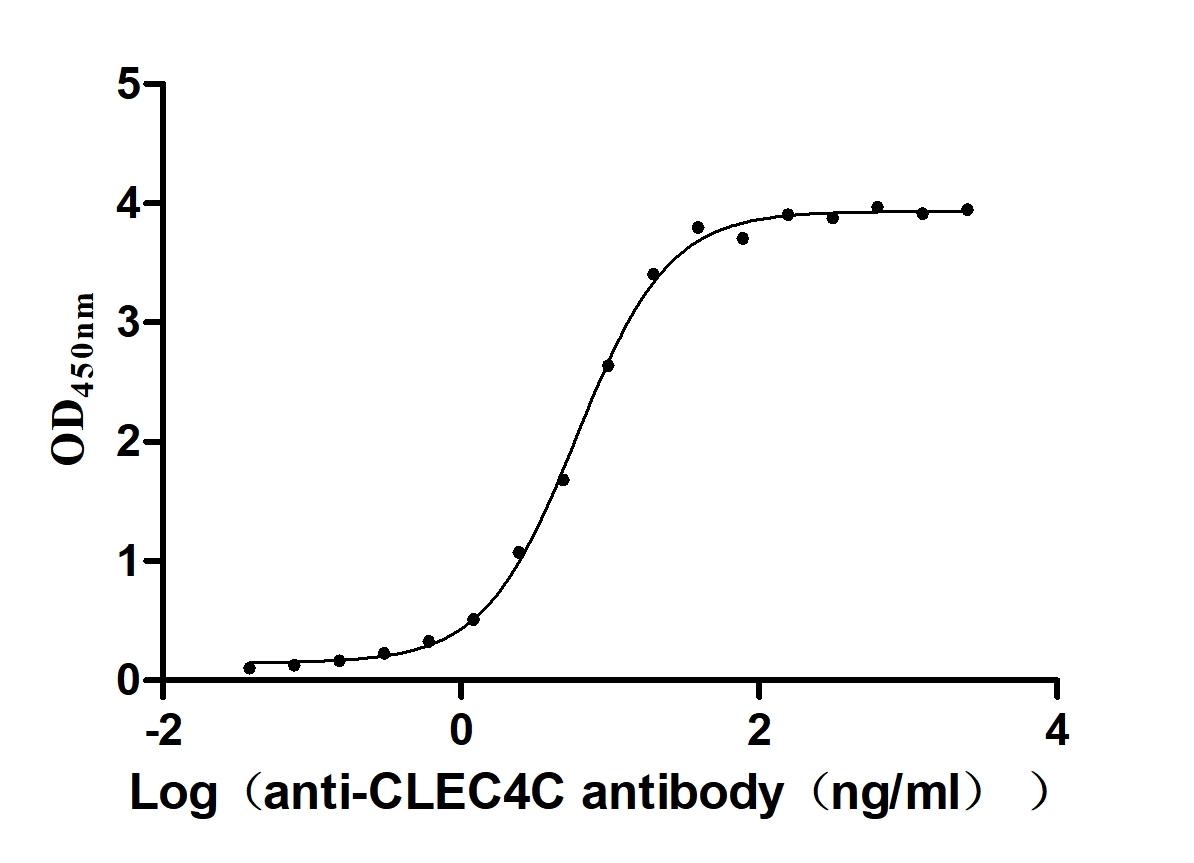
Recombinant Macaca fascicularis C-type lectin domain family 4 member C(CLEC4C), partial (Active)
Express system: Mammalian cell
Species: Macaca fascicularis (Crab-eating macaque) (Cynomolgus monkey)
-
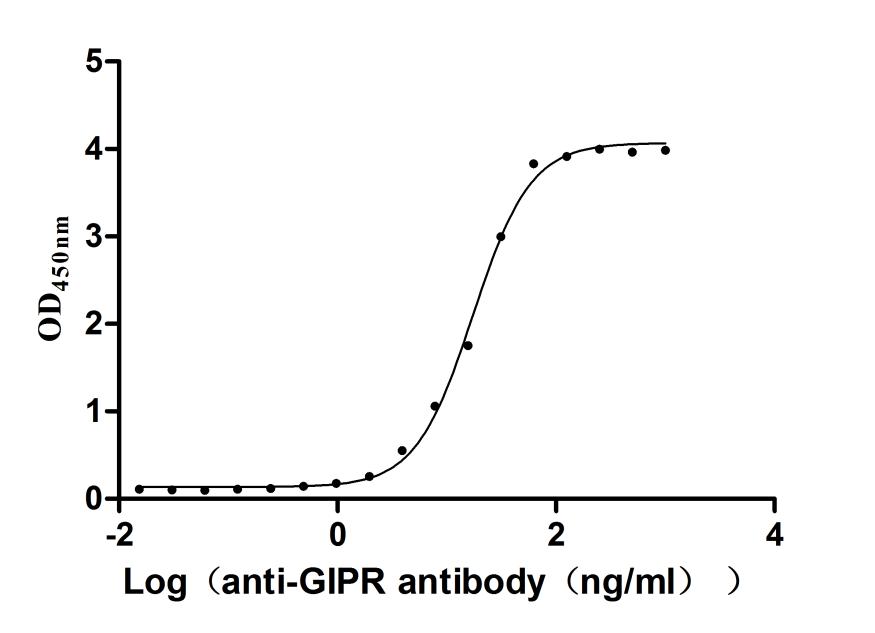
Recombinant Human Gastric inhibitory polypeptide receptor(GIPR),partial (Active)
Express system: Mammalian cell
Species: Homo sapiens (Human)
-
-AC1.jpg)
Recombinant Human Tumor necrosis factor ligand superfamily member 15(TNFSF15) (Active)
Express system: Mammalian cell
Species: Homo sapiens (Human)