Recombinant Mouse Monocarboxylate transporter 1 (Slc16a1), partial
-
中文名稱:小鼠Slc16a1重組蛋白
-
貨號:CSB-YP021403MO
-
規格:
-
來源:Yeast
-
其他:
-
中文名稱:小鼠Slc16a1重組蛋白
-
貨號:CSB-EP021403MO
-
規格:
-
來源:E.coli
-
其他:
-
中文名稱:小鼠Slc16a1重組蛋白
-
貨號:CSB-EP021403MO-B
-
規格:
-
來源:E.coli
-
共軛:Avi-tag Biotinylated
E. coli biotin ligase (BirA) is highly specific in covalently attaching biotin to the 15 amino acid AviTag peptide. This recombinant protein was biotinylated in vivo by AviTag-BirA technology, which method is BriA catalyzes amide linkage between the biotin and the specific lysine of the AviTag.
-
其他:
-
中文名稱:小鼠Slc16a1重組蛋白
-
貨號:CSB-BP021403MO
-
規格:
-
來源:Baculovirus
-
其他:
-
中文名稱:小鼠Slc16a1重組蛋白
-
貨號:CSB-MP021403MO
-
規格:
-
來源:Mammalian cell
-
其他:
產品詳情
-
純度:>85% (SDS-PAGE)
-
基因名:Slc16a1
-
Uniprot No.:
-
別名:Slc16a1; Mct1; Monocarboxylate transporter 1; MCT 1; Solute carrier family 16 member 1
-
種屬:Mus musculus (Mouse)
-
蛋白長度:Partial
-
蛋白標簽:Tag?type?will?be?determined?during?the?manufacturing?process.
The tag type will be determined during production process. If you have specified tag type, please tell us and we will develop the specified tag preferentially. -
產品提供形式:Lyophilized powder
Note: We will preferentially ship the format that we have in stock, however, if you have any special requirement for the format, please remark your requirement when placing the order, we will prepare according to your demand. -
復溶:We recommend that this vial be briefly centrifuged prior to opening to bring the contents to the bottom. Please reconstitute protein in deionized sterile water to a concentration of 0.1-1.0 mg/mL.We recommend to add 5-50% of glycerol (final concentration) and aliquot for long-term storage at -20℃/-80℃. Our default final concentration of glycerol is 50%. Customers could use it as reference.
-
儲存條件:Store at -20°C/-80°C upon receipt, aliquoting is necessary for mutiple use. Avoid repeated freeze-thaw cycles.
-
保質期:The shelf life is related to many factors, storage state, buffer ingredients, storage temperature and the stability of the protein itself.
Generally, the shelf life of liquid form is 6 months at -20°C/-80°C. The shelf life of lyophilized form is 12 months at -20°C/-80°C. -
貨期:Delivery time may differ from different purchasing way or location, please kindly consult your local distributors for specific delivery time.Note: All of our proteins are default shipped with normal blue ice packs, if you request to ship with dry ice, please communicate with us in advance and extra fees will be charged.
-
注意事項:Repeated freezing and thawing is not recommended. Store working aliquots at 4°C for up to one week.
-
Datasheet :Please contact us to get it.
產品評價

靶點詳情
-
功能:Proton-coupled monocarboxylate transporter. Catalyzes the rapid transport across the plasma membrane of many monocarboxylates such as lactate, pyruvate, branched-chain oxo acids derived from leucine, valine and isoleucine, and the ketone bodies acetoacetate, beta-hydroxybutyrate and acetate. Depending on the tissue and on cicumstances, mediates the import or export of lactic acid and ketone bodies. Required for normal nutrient assimilation, increase of white adipose tissue and body weight gain when on a high-fat diet. Plays a role in cellular responses to a high-fat diet by modulating the cellular levels of lactate and pyruvate, small molecules that contribute to the regulation of central metabolic pathways and insulin secretion, with concomitant effects on plasma insulin levels and blood glucose homeostasis.
-
基因功能參考文獻:
- Silencing or genetic deletion of MCT1 in vivo inhibited migration, invasion, and spontaneous metastasis. PMID: 28827372
- It was concluded that both MCT1 and CAII are involved in the homeostatic control of pH in skeletal muscle, both at rest and at the onset of exercise. The improved muscle function and resistance to fatigue in MCT1(+/-) mice remain unexplained. PMID: 28254758
- Exercise-induced changes in tumour LDH-B and MCT1 expression are modulated by oestrogen-related receptor alpha in breast cancer-bearing BALB/c mice PMID: 25907793
- Chronic lactate administration after exercise increases MCT1 protein expression, which can be involved in the regulation of the observed increase in muscle glycogen storage after exercise training. PMID: 25866305
- This study showed that mouse MCT1, MCT2, and MCT4 are expressed in the PNS. While DRG neurons express MCT1, myelinating Schwann cells. PMID: 25762662
- These data for the first time demonstrate that MCT1 is critical for regeneration of both sensory and motor axons in mice following sciatic nerve crush PMID: 25447940
- in Parkinson's disease, the levels of MCT1, MCT2 and GLUT1 is not changed following dopaminergic neurodegeneration PMID: 23963315
- results suggest that a reduction in mitochondria is a result, rather than the cause, of the metabolic deficiency observed in Basigin-null mice, and likely occurs because of reduced metabolic activity in the absence of MCT1 expression. PMID: 23906756
- miR-29a, miR-29b selectively target MCT1 3'UTR ; the miR-29 isoforms are highly expressed in islets and contribute to silencing Mct1 in beta cells; miR-29 isoforms contribute to beta-cell-specific silencing of the MCT1 transporter and may affect insulin release PMID: 21646425
- monocarboxylate transporter 1 (MCT1), is highly enriched within oligodendroglia and disruption of this transporter produces axon damage and neuron loss in animal and cell culture models; in addition, this same transporter is reduced in patients with, and in mouse models of, amyotrophic lateral sclerosis, suggesting a role for oligodendroglial MCT1 in pathogenesis PMID: 22801498
- It was shown that forced overexpression of MSlc16a1 in beta-cells replicates the key features of exercise-induced hyperinsulinism and highlights the importance of this transporter's absence from these cells for the normal control of insulin secretion. PMID: 22522610
- MCT1 and MCT4 protein expression increased by 92 and 61%, respectively, after 12 days of functional overload (p < 0.05). PMID: 21826525
- Data suggest that basigin interacts with MCT1 and MCT2 to locate them properly in the membrane of spermatogenic cells and that this may enable sperm to utilize lactate as an energy substrate contributing to cell survival. PMID: 21792931
- MCT-1 contributes to NOX-2 expression via late phase activation of NF-kappaB in a ROS-dependent manner in ATDC5 cells exposed to IL-1beta. PMID: 21372137
- Basigin gene products bind MCT1 with moderate affinity, but L1cam does not bind MCT1. PMID: 20155396
- In situ hybridization survey of MCT subtypes in placenta detected intense mRNA expression of MCT1, MCT4, & MCT9 (gestational day 11.5 through day 18.5); subcellular localization of MCT1 & MCT4 in cell membrane is opposite polarity found in human. PMID: 20022372
- hydrophobic residues at the N- and C-termini of the putative transmembrane domain of Basigin interact with MCT1, but the glutamate plays no role PMID: 19760495
- Results demonstrate beyond doubt that MCT1 is by far the predominant monocarboxylate transporter present in cultured cortical astrocytes from newborn mice. PMID: 12836157
- changes in MCT1 are complex, depending not only the accumulated exercise but also on the stage of training. PMID: 15107415
- These observations suggest that Bsg is required for the proper localization of MCT1 in a wide range of cells but not in every cell type. PMID: 16612830
- Expression of cerebral MCT isoforms can be modulated by alterations of peripheral metabolism, suggesting that the adult brain is sensitive and adapts to new metabolic states. PMID: 17599960
- Monocarboxylate transporter (MCT)-1 is up-regulated by PPARalpha. PMID: 18375207
- Cellular expression of a sodium-dependent monocarboxylate transporter (Slc5a8) and the MCT1/2 in the mouse kidney. PMID: 18751721
- MCT1 plays a pivotal role in the control of basal proton-driven lactate flux in astrocytes PMID: 18761711
- expression of MCT1 mRNA in the mammary gland, Harderian gland, and sebaceous gland. MCT1 was found baso-laterally in acinar cells of the mammary and Harderian glands. Alveolar cells of sebaceous glands in the skin, eyelids, and penis contained MCT1 PMID: 19048272
- Data describe the expression of monocarboxylate transporter (MCT)1 in peripheral nerves of mice, and show that MCT1 immunoreactivity is found in the perineurial sheath and colocalized with GLUT1, while the endoneurial blood vessels express GLUT1 only. PMID: 19129673
- MCT1 was localized in mitochondria, plasma membrane, and intercalated disks PMID: 19604494
顯示更多
收起更多
-
亞細胞定位:Cell membrane; Multi-pass membrane protein.
-
蛋白家族:Major facilitator superfamily, Monocarboxylate porter (TC 2.A.1.13) family
-
組織特異性:Detected in liver, brain, spinal cord, spermatozoa, muscle, white adipose tissue and brown adipose tissue (at protein level). Widely expressed, except in pancreas, where expression is not detectable.
-
數據庫鏈接:
Most popular with customers
-
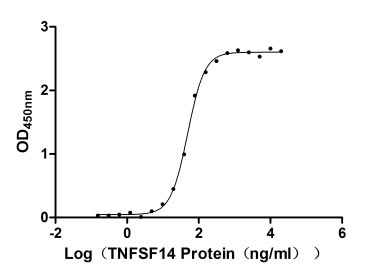
Recombinant Human Tumor necrosis factor ligand superfamily member 14 (TNFSF14), partial (Active)
Express system: Mammalian cell
Species: Homo sapiens (Human)
-
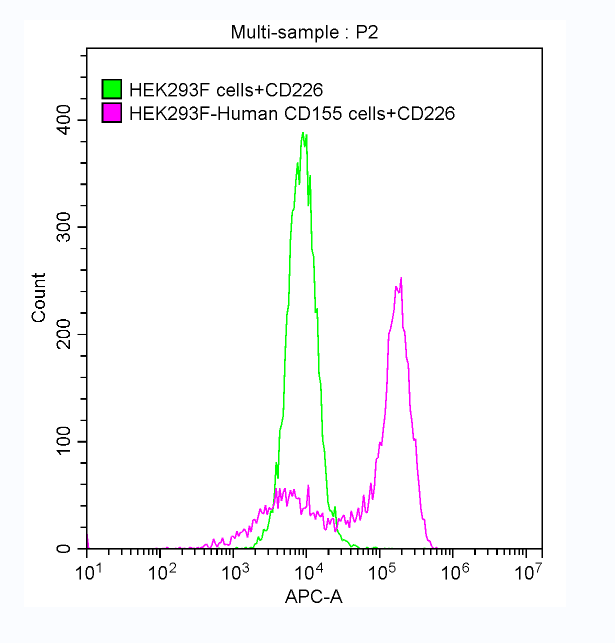
Recombinant Human CD226 antigen (CD226), partial (Active)
Express system: Mammalian cell
Species: Homo sapiens (Human)
-
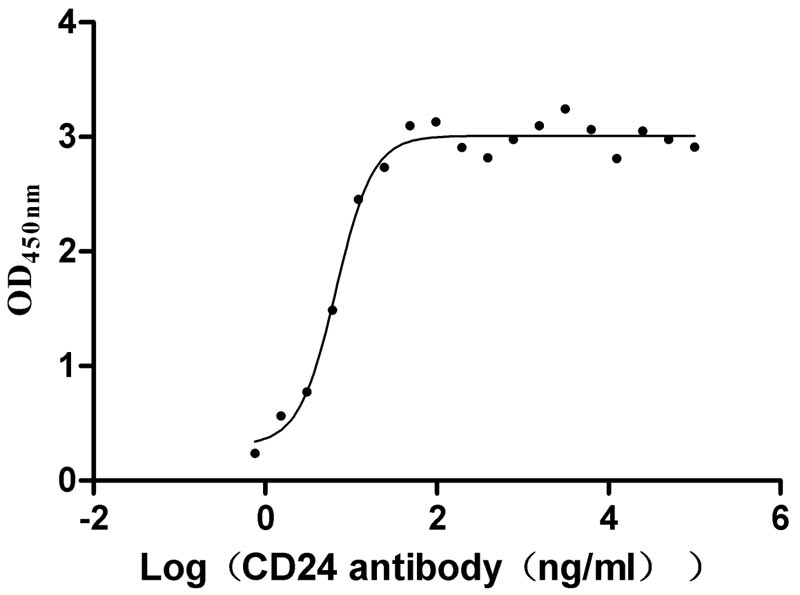
Recombinant Human Signal transducer CD24 (CD24)-Nanoparticle (Active)
Express system: Mammalian cell
Species: Homo sapiens (Human)
-
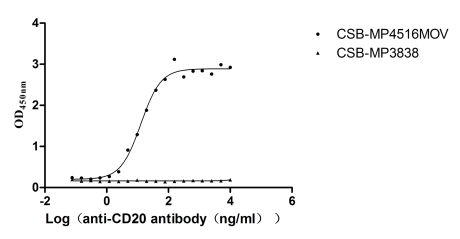
Recombinant Macaca fascicularis Membrane spanning 4-domains A1 (MS4A1)-VLPs (Active)
Express system: Mammalian cell
Species: Macaca fascicularis (Crab-eating macaque) (Cynomolgus monkey)
-
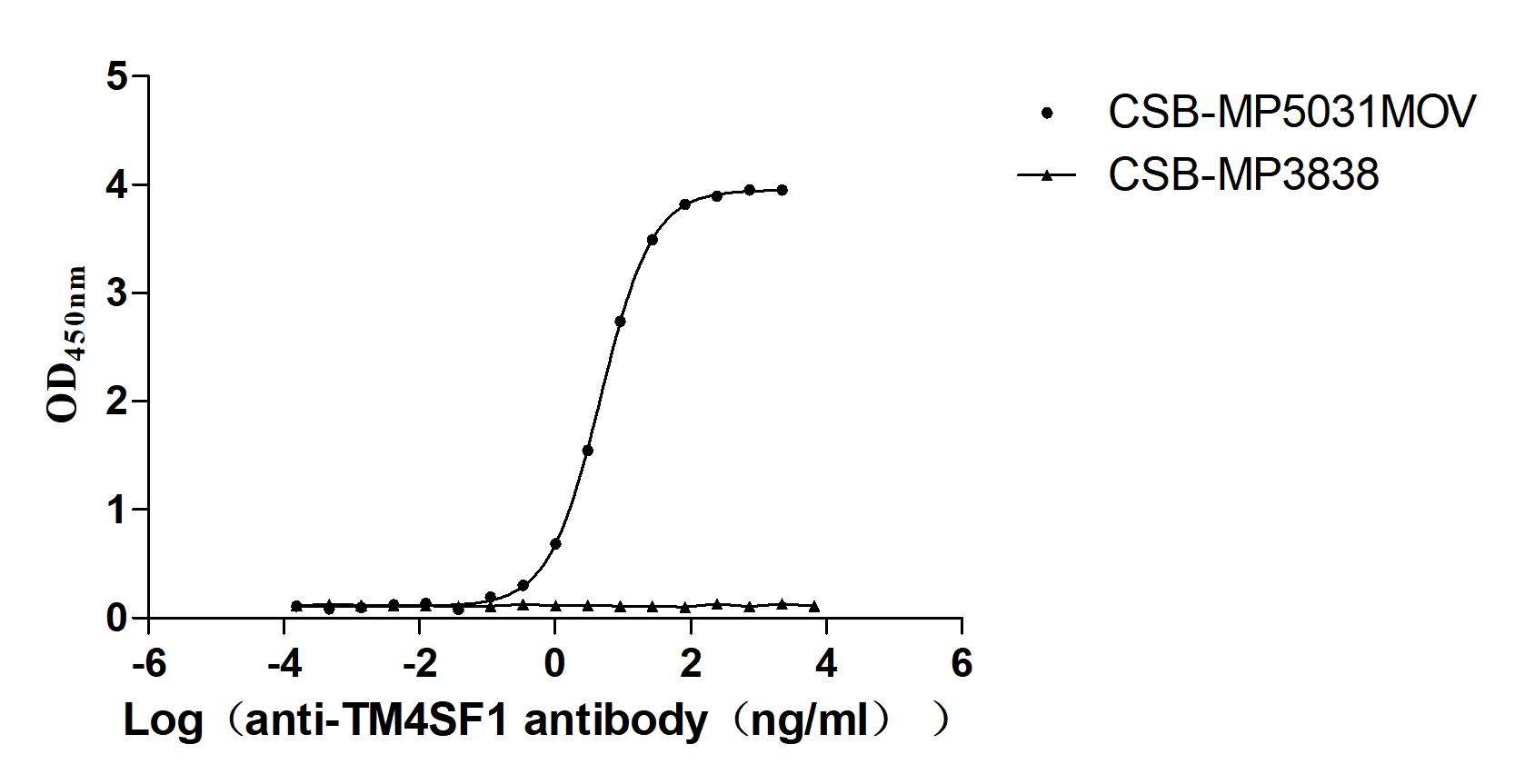
Recombinant Macaca fascicularis Transmembrane 4 L6 family member 1 (TM4SF1)-VLPs (Active)
Express system: Mammalian cell
Species: Macaca fascicularis (Crab-eating macaque) (Cynomolgus monkey)
-
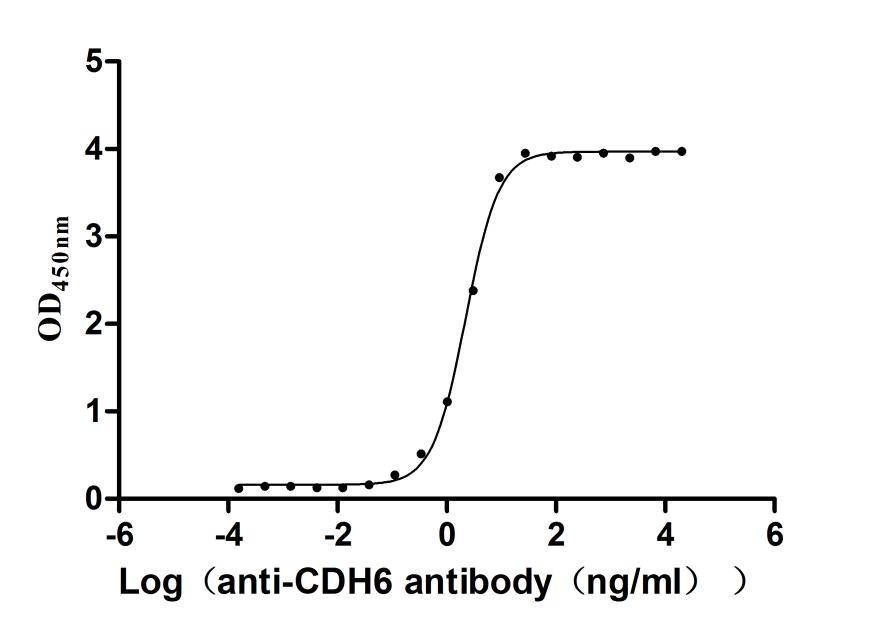
Recombinant Macaca fascicularis Cadherin 6(CDH6),partial (Active)
Express system: Mammalian cell
Species: Macaca fascicularis (Crab-eating macaque) (Cynomolgus monkey)
-
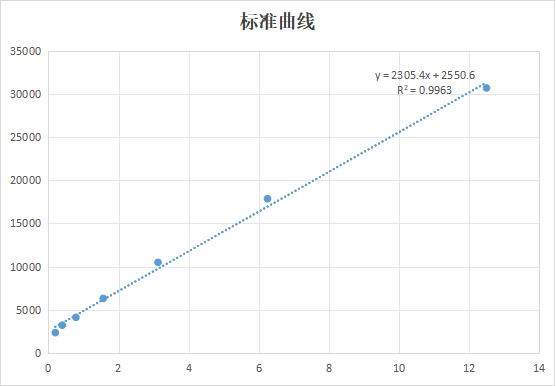
Recombinant Human Urokinase-type plasminogen activator(PLAU) (Active)
Express system: Mammalian cell
Species: Homo sapiens (Human)