Recombinant Human rhinovirus 14 Genome polyprotein
-
中文名稱:Recombinant Human rhinovirus 14 Genome polyprotein
-
貨號:CSB-YP365902HPZ
-
規格:
-
來源:Yeast
-
其他:
-
中文名稱:Recombinant Human rhinovirus 14 Genome polyprotein
-
貨號:CSB-EP365902HPZ
-
規格:
-
來源:E.coli
-
其他:
-
中文名稱:Recombinant Human rhinovirus 14 Genome polyprotein
-
貨號:CSB-EP365902HPZ-B
-
規格:
-
來源:E.coli
-
共軛:Avi-tag Biotinylated
E. coli biotin ligase (BirA) is highly specific in covalently attaching biotin to the 15 amino acid AviTag peptide. This recombinant protein was biotinylated in vivo by AviTag-BirA technology, which method is BriA catalyzes amide linkage between the biotin and the specific lysine of the AviTag.
-
其他:
-
中文名稱:Recombinant Human rhinovirus 14 Genome polyprotein
-
貨號:CSB-BP365902HPZ
-
規格:
-
來源:Baculovirus
-
其他:
-
中文名稱:Recombinant Human rhinovirus 14 Genome polyprotein
-
貨號:CSB-MP365902HPZ
-
規格:
-
來源:Mammalian cell
-
其他:
產品詳情
-
純度:>85% (SDS-PAGE)
-
基因名:N/A
-
Uniprot No.:
-
別名:Genome polyprotein [Cleaved into: P1; Capsid protein VP0; VP4-VP2); Capsid protein VP4; P1A; Virion protein 4); Capsid protein VP2; P1B; Virion protein 2); Capsid protein VP3; P1C; Virion protein 3); Capsid protein VP1; P1D; Virion protein 1); P2; Protease 2A; P2A; EC 3.4.22.29; Picornain 2A; Protein 2A); Protein 2B; P2B); Protein 2C; P2C; EC 3.6.1.15); P3; Protein 3AB; Protein 3A; P3A); Viral protein genome-linked; VPg; Protein 3B; P3B); Protein 3CD; EC 3.4.22.28); Protease 3C; EC 3.4.22.28; Picornain 3C; P3C); RNA-directed RNA polymerase; RdRp; EC 2.7.7.48; 3D polymerase; 3Dpol; Protein 3D; 3D)]
-
種屬:Human rhinovirus 14 (HRV-14)
-
蛋白長度:Full Length of Mature Protein
-
表達區域:2-331
-
氨基酸序列GAQVSTQKS GSHENQNILT NGSNQTFTVI NYYKDAASTS SAGQSLSMDP SKFTEPVKDL MLKGAPALNS PNVEACGYSD RVQQITLGNS TITTQEAANA VVCYAEWPEY LPDVDASDVN KTSKPDTSVC RFYTLDSKTW TTGSKGWCWK LPDALKDMGV FGQNMFFHSL GRSGYTVHVQ CNATKFHSGC LLVVVIPEHQ LASHEGGNVS VKYTFTHPGE RGIDLSSANE VGGPVKDVIY NMNGTLLGNL LIFPHQFINL RTNNTATIVI PYINSVPIDS MTRHNNVSLM VIPIAPLTVP TGATPSLPIT VTIAPMCTEF SGIRSKSIVP Q
-
蛋白標簽:Tag?type?will?be?determined?during?the?manufacturing?process.
The tag type will be determined during production process. If you have specified tag type, please tell us and we will develop the specified tag preferentially. -
產品提供形式:Lyophilized powder
Note: We will preferentially ship the format that we have in stock, however, if you have any special requirement for the format, please remark your requirement when placing the order, we will prepare according to your demand. -
復溶:We recommend that this vial be briefly centrifuged prior to opening to bring the contents to the bottom. Please reconstitute protein in deionized sterile water to a concentration of 0.1-1.0 mg/mL.We recommend to add 5-50% of glycerol (final concentration) and aliquot for long-term storage at -20℃/-80℃. Our default final concentration of glycerol is 50%. Customers could use it as reference.
-
儲存條件:Store at -20°C/-80°C upon receipt, aliquoting is necessary for mutiple use. Avoid repeated freeze-thaw cycles.
-
保質期:The shelf life is related to many factors, storage state, buffer ingredients, storage temperature and the stability of the protein itself.
Generally, the shelf life of liquid form is 6 months at -20°C/-80°C. The shelf life of lyophilized form is 12 months at -20°C/-80°C. -
貨期:Delivery time may differ from different purchasing way or location, please kindly consult your local distributors for specific delivery time.Note: All of our proteins are default shipped with normal blue ice packs, if you request to ship with dry ice, please communicate with us in advance and extra fees will be charged.
-
注意事項:Repeated freezing and thawing is not recommended. Store working aliquots at 4°C for up to one week.
-
Datasheet :Please contact us to get it.
產品評價

靶點詳情
-
功能:Forms an icosahedral capsid of pseudo T=3 symmetry with capsid proteins VP2 and VP3. The capsid is 300 Angstroms in diameter, composed of 60 copies of each capsid protein and enclosing the viral positive strand RNA genome. Capsid protein VP1 mainly forms the vertices of the capsid. Capsid protein VP1 interacts with host ICAM1 to provide virion attachment to target host cells. This attachment induces virion internalization. Tyrosine kinases are probably involved in the entry process. After binding to its receptor, the capsid undergoes conformational changes. Capsid protein VP1 N-terminus (that contains an amphipathic alpha-helix) and capsid protein VP4 are externalized (Probable). Together, they shape a pore in the host membrane through which viral genome is translocated to host cell cytoplasm. After genome has been released, the channel shrinks.; Forms an icosahedral capsid of pseudo T=3 symmetry with capsid proteins VP2 and VP3. The capsid is 300 Angstroms in diameter, composed of 60 copies of each capsid protein and enclosing the viral positive strand RNA genome.; Forms an icosahedral capsid of pseudo T=3 symmetry with capsid proteins VP2 and VP3. The capsid is 300 Angstroms in diameter, composed of 60 copies of each capsid protein and enclosing the viral positive strand RNA genome.; Lies on the inner surface of the capsid shell. After binding to the host receptor, the capsid undergoes conformational changes. Capsid protein VP4 is released, Capsid protein VP1 N-terminus is externalized, and together, they shape a pore in the host membrane through which the viral genome is translocated into the host cell cytoplasm.; Component of immature procapsids, which is cleaved into capsid proteins VP4 and VP2 after maturation. Allows the capsid to remain inactive before the maturation step.; Cysteine protease that cleaves viral polyprotein and specific host proteins. It is responsible for the autocatalytic cleavage between the P1 and P2 regions, which is the first cleavage occurring in the polyprotein. Cleaves also the host translation initiation factor EIF4G1, in order to shut down the capped cellular mRNA translation. Inhibits the host nucleus-cytoplasm protein and RNA trafficking by cleaving host members of the nuclear pores including NUP62 and NUP153 (Probable). Counteracts stress granule formation probably by antagonizing its assembly or promoting its dissassembly.; Plays an essential role in the virus replication cycle by acting as a viroporin. Creates a pore in the host reticulum endoplasmic and as a consequence releases Ca2+ in the cytoplasm of infected cell. In turn, high levels of cytoplasmic calcium may trigger membrane trafficking and transport of viral ER-associated proteins to viroplasms, sites of viral genome replication.; Induces and associates with structural rearrangements of intracellular membranes. Displays RNA-binding, nucleotide binding and NTPase activities. May play a role in virion morphogenesis and viral RNA encapsidation by interacting with the capsid protein VP3.; Localizes the viral replication complex to the surface of membranous vesicles. Together with protein 3CD binds the Cis-Active RNA Element (CRE) which is involved in RNA synthesis initiation. Acts as a cofactor to stimulate the activity of 3D polymerase, maybe through a nucleid acid chaperone activity.; Localizes the viral replication complex to the surface of membranous vesicles. It inhibits host cell endoplasmic reticulum-to-Golgi apparatus transport and causes the disassembly of the Golgi complex, possibly through GBF1 interaction. This would result in depletion of MHC, trail receptors and IFN receptors at the host cell surface. Plays an essential role in viral RNA replication by recruiting ACBD3 and PI4KB at the viral replication sites, thereby allowing the formation of the rearranged membranous structures where viral replication takes place (Probable).; Acts as a primer for viral RNA replication and remains covalently bound to viral genomic RNA. VPg is uridylylated prior to priming replication into VPg-pUpU. The oriI viral genomic sequence may act as a template for this. The VPg-pUpU is then used as primer on the genomic RNA poly(A) by the RNA-dependent RNA polymerase to replicate the viral genome. Following genome release from the infecting virion in the cytoplasm, the VPg-RNA linkage is probably removed by host TDP2. During the late stage of the replication cycle, host TDP2 is excluded from sites of viral RNA synthesis and encapsidation, allowing for the generation of progeny virions.; Involved in the viral replication complex and viral polypeptide maturation. It exhibits protease activity with a specificity and catalytic efficiency that is different from protease 3C. Protein 3CD lacks polymerase activity. Protein 3CD binds to the 5'UTR of the viral genome.; Major viral protease that mediates proteolytic processing of the polyprotein. Cleaves host EIF5B, contributing to host translation shutoff. Cleaves also host PABPC1, contributing to host translation shutoff. Cleaves host NLRP1, triggers host N-glycine-mediated degradation of the autoinhibitory NLRP1 N-terminal fragment.; Replicates the viral genomic RNA on the surface of intracellular membranes. May form linear arrays of subunits that propagate along a strong head-to-tail interaction called interface-I. Covalently attaches UMP to a tyrosine of VPg, which is used to prime RNA synthesis. The positive stranded RNA genome is first replicated at virus induced membranous vesicles, creating a dsRNA genomic replication form. This dsRNA is then used as template to synthesize positive stranded RNA genomes. ss(+)RNA genomes are either translated, replicated or encapsidated.
-
基因功能參考文獻:
- The selective removal of Nup FG repeat domains by Enterovirus 2a(pro) leads to increased nuclear pore complex permeability and the inhibition of certain transport pathways. PMID: 26311873
- Epitope mapping of the N-terminal 30 residues of VP4 suggests that it adopts a nonlinear conformation. PMID: 19403680
-
亞細胞定位:[Capsid protein VP0]: Virion. Host cytoplasm.; [Capsid protein VP4]: Virion.; [Capsid protein VP2]: Virion. Host cytoplasm.; [Capsid protein VP3]: Virion. Host cytoplasm.; [Capsid protein VP1]: Virion. Host cytoplasm.; [Protein 2B]: Host cytoplasmic vesicle membrane; Peripheral membrane protein; Cytoplasmic side. Note=Probably localizes to the surface of intracellular membrane vesicles that are induced after virus infection as the site for viral RNA replication. These vesicles are derived from the endoplasmic reticulum.; [Protein 2C]: Host cytoplasmic vesicle membrane; Peripheral membrane protein; Cytoplasmic side. Note=Probably localizes to the surface of intracellular membrane vesicles that are induced after virus infection as the site for viral RNA replication. These vesicles are derived from the endoplasmic reticulum.; [Protein 3A]: Host cytoplasmic vesicle membrane; Peripheral membrane protein; Cytoplasmic side. Note=Probably localizes to the surface of intracellular membrane vesicles that are induced after virus infection as the site for viral RNA replication. These vesicles are derived from the endoplasmic reticulum.; [Protein 3AB]: Host cytoplasmic vesicle membrane; Peripheral membrane protein; Cytoplasmic side. Note=Probably localizes to the surface of intracellular membrane vesicles that are induced after virus infection as the site for viral RNA replication. These vesicles are derived from the endoplasmic reticulum.; [Viral protein genome-linked]: Virion. Host cytoplasm.; [Protease 3C]: Host cytoplasm.; [Protein 3CD]: Host nucleus. Host cytoplasm. Host cytoplasmic vesicle membrane; Peripheral membrane protein; Cytoplasmic side. Note=Probably localizes to the surface of intracellular membrane vesicles that are induced after virus infection as the site for viral RNA replication. These vesicles are derived from the endoplasmic reticulum.; [RNA-directed RNA polymerase]: Host cytoplasmic vesicle membrane; Peripheral membrane protein; Cytoplasmic side. Note=Probably localizes to the surface of intracellular membrane vesicles that are induced after virus infection as the site for viral RNA replication. These vesicles are derived from the endoplasmic reticulum.
-
蛋白家族:Picornaviruses polyprotein family
-
數據庫鏈接:
KEGG: vg:1461213
Most popular with customers
-
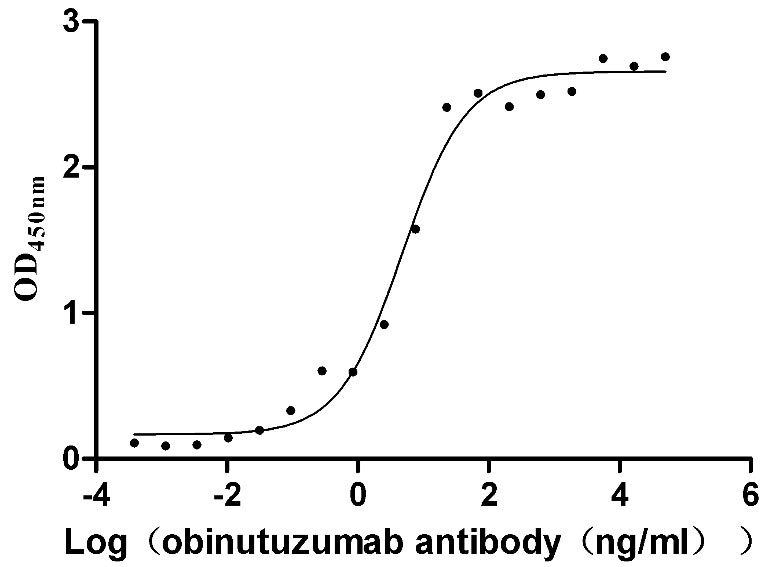
Recombinant Human B-lymphocyte antigen CD20 (MS4A1)-VLPs (Active)
Express system: Mammalian cell
Species: Homo sapiens (Human)
-
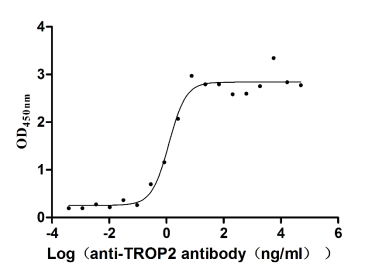
Recombinant Human Tumor-associated calcium signal transducer 2 (TACSTD2), partial (Active)
Express system: Mammalian cell
Species: Homo sapiens (Human)
-
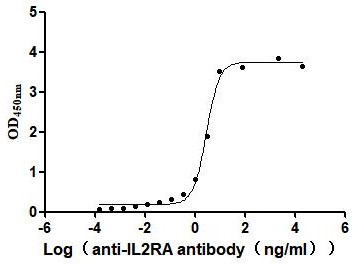
Recombinant Human Interleukin-2 receptor subunit alpha (IL2RA), partial (Active)
Express system: Mammalian cell
Species: Homo sapiens (Human)
-
Express system: Mammalian cell
Species: Homo sapiens (Human)