Recombinant Human immunodeficiency virus type 1 group M subtype K Protein Tat
-
中文名稱:Recombinant Human immunodeficiency virus type 1 group M subtype K Protein Tat
-
貨號:CSB-YP314255HLP
-
說明書:
-
規格:
-
來源:Yeast
-
其他:
-
中文名稱:Recombinant Human immunodeficiency virus type 1 group M subtype K Protein Tat
-
貨號:CSB-EP314255HLP
-
說明書:
-
規格:
-
來源:E.coli
-
其他:
-
中文名稱:Recombinant Human immunodeficiency virus type 1 group M subtype K Protein Tat
-
貨號:CSB-EP314255HLP-B
-
說明書:
-
規格:
-
來源:E.coli
-
共軛:Avi-tag Biotinylated
E. coli biotin ligase (BirA) is highly specific in covalently attaching biotin to the 15 amino acid AviTag peptide. This recombinant protein was biotinylated in vivo by AviTag-BirA technology, which method is BriA catalyzes amide linkage between the biotin and the specific lysine of the AviTag.
-
其他:
-
中文名稱:Recombinant Human immunodeficiency virus type 1 group M subtype K Protein Tat
-
貨號:CSB-BP314255HLP
-
說明書:
-
規格:
-
來源:Baculovirus
-
其他:
產品詳情
-
純度:>85% (SDS-PAGE)
-
基因名:tat
-
Uniprot No.:
-
別名:tat; Protein Tat; Transactivating regulatory protein
-
種屬:Human immunodeficiency virus type 1 group M subtype K (isolate 96CM-MP535) (HIV-1)
-
蛋白長度:full length protein
-
表達區域:1-101
-
氨基酸序列MDPVDPNIEP WNQPGSQPKT ACNQCYCKRC CYHCQICFLK KGLGISNGRK KRRPRRTTPY NSENHQDPLR KQPLSQPRGE QTDPKESKKK VESKTKTDQF D
-
蛋白標簽:Tag?type?will?be?determined?during?the?manufacturing?process.
The tag type will be determined during production process. If you have specified tag type, please tell us and we will develop the specified tag preferentially. -
產品提供形式:Lyophilized powder Warning: in_array() expects parameter 2 to be array, null given in /www/web/cusabio_cn/public_html/caches/caches_template/default/content/show_product_protein.php on line 662
Note: We will preferentially ship the format that we have in stock, however, if you have any special requirement for the format, please remark your requirement when placing the order, we will prepare according to your demand. -
復溶:We recommend that this vial be briefly centrifuged prior to opening to bring the contents to the bottom. Please reconstitute protein in deionized sterile water to a concentration of 0.1-1.0 mg/mL.We recommend to add 5-50% of glycerol (final concentration) and aliquot for long-term storage at -20℃/-80℃. Our default final concentration of glycerol is 50%. Customers could use it as reference.
-
儲存條件:Store at -20°C/-80°C upon receipt, aliquoting is necessary for mutiple use. Avoid repeated freeze-thaw cycles.
-
保質期:The shelf life is related to many factors, storage state, buffer ingredients, storage temperature and the stability of the protein itself.
Generally, the shelf life of liquid form is 6 months at -20°C/-80°C. The shelf life of lyophilized form is 12 months at -20°C/-80°C. -
貨期:Delivery time may differ from different purchasing way or location, please kindly consult your local distributors for specific delivery time.Note: All of our proteins are default shipped with normal blue ice packs, if you request to ship with dry ice, please communicate with us in advance and extra fees will be charged.
-
注意事項:Repeated freezing and thawing is not recommended. Store working aliquots at 4°C for up to one week.
-
Datasheet :Please contact us to get it.
產品評價

靶點詳情
-
功能:Nuclear transcriptional activator of viral gene expression, that is essential for viral transcription from the LTR promoter and replication. Acts as a sequence-specific molecular adapter, directing components of the cellular transcription machinery to the viral RNA to promote processive transcription elongation by the RNA polymerase II (RNA pol II) complex, thereby increasing the level of full-length transcripts. In the absence of Tat, the RNA Pol II generates short or non-processive transcripts that terminate at approximately 60 bp from the initiation site. Tat associates with the CCNT1/cyclin-T1 component of the P-TEFb complex (CDK9 and CCNT1), which promotes RNA chain elongation. This binding increases Tat's affinity for a hairpin structure at the 5'-end of all nascent viral mRNAs referred to as the transactivation responsive RNA element (TAR RNA) and allows Tat/P-TEFb complex to bind cooperatively to TAR RNA. The CDK9 component of P-TEFb and other Tat-activated kinases hyperphosphorylate the C-terminus of RNA Pol II that becomes stabilized and much more processive. Other factors such as HTATSF1/Tat-SF1, SUPT5H/SPT5, and HTATIP2 are also important for Tat's function. Besides its effect on RNA Pol II processivity, Tat induces chromatin remodeling of proviral genes by recruiting the histone acetyltransferases (HATs) CREBBP, EP300 and PCAF to the chromatin. This also contributes to the increase in proviral transcription rate, especially when the provirus integrates in transcriptionally silent region of the host genome. To ensure maximal activation of the LTR, Tat mediates nuclear translocation of NF-kappa-B by interacting with host RELA. Through its interaction with host TBP, Tat may also modulate transcription initiation. Tat can reactivate a latently infected cell by penetrating in it and transactivating its LTR promoter. In the cytoplasm, Tat is thought to act as a translational activator of HIV-1 mRNAs.; Extracellular circulating Tat can be endocytosed by surrounding uninfected cells via the binding to several surface receptors such as CD26, CXCR4, heparan sulfate proteoglycans (HSPG) or LDLR. Neurons are rarely infected, but they internalize Tat via their LDLR. Through its interaction with nuclear HATs, Tat is potentially able to control the acetylation-dependent cellular gene expression. Modulates the expression of many cellular genes involved in cell survival, proliferation or in coding for cytokines or cytokine receptors. Tat plays a role in T-cell and neurons apoptosis. Tat induced neurotoxicity and apoptosis probably contribute to neuroAIDS. Circulating Tat also acts as a chemokine-like and/or growth factor-like molecule that binds to specific receptors on the surface of the cells, affecting many cellular pathways. In the vascular system, Tat binds to ITGAV/ITGB3 and ITGA5/ITGB1 integrins dimers at the surface of endothelial cells and competes with bFGF for heparin-binding sites, leading to an excess of soluble bFGF.
-
亞細胞定位:Host nucleus, host nucleolus. Host cytoplasm. Secreted.
-
蛋白家族:Lentiviruses Tat family
Most popular with customers
-
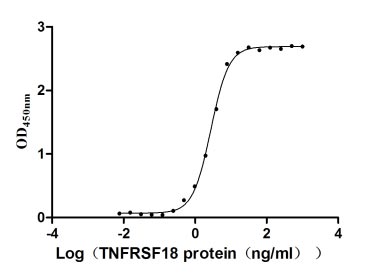
Recombinant Human Tumor necrosis factor receptor superfamily member 18 (TNFRSF18), partial (Active)
Express system: Mammalian cell
Species: Homo sapiens (Human)
-
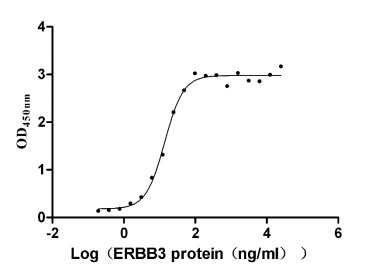
Recombinant Human Receptor tyrosine-protein kinase erbB-3 (ERBB3), partial (Active)
Express system: Mammalian cell
Species: Homo sapiens (Human)
-
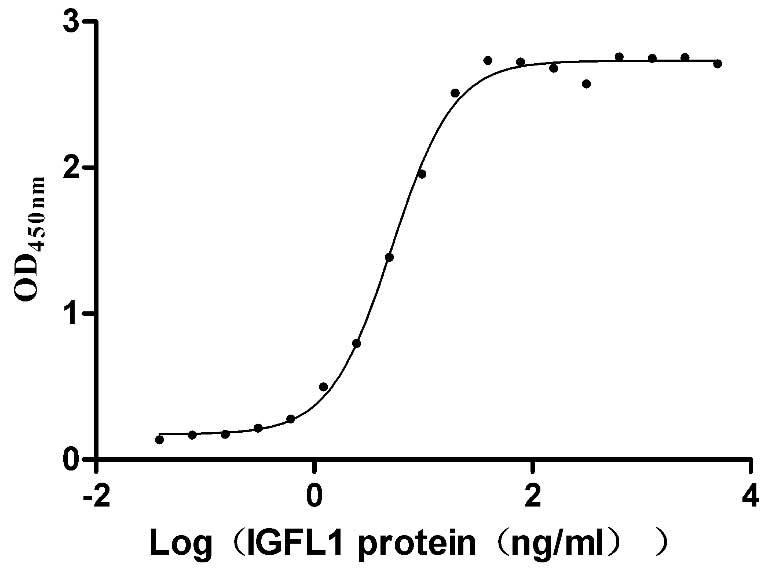
Recombinant Human IGF-like family receptor 1 (IGFLR1), partial (Active)
Express system: Mammalian cell
Species: Homo sapiens (Human)
-
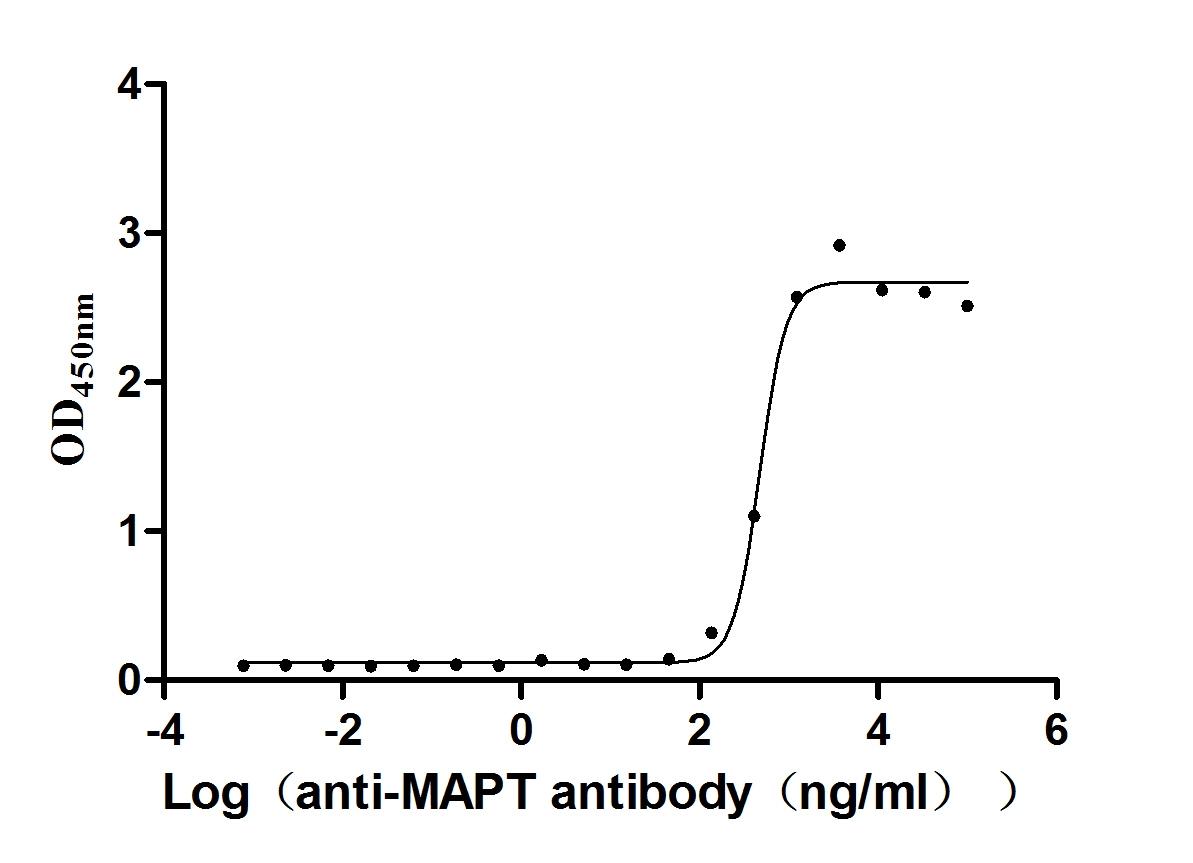
Recombinant Mouse Microtubule-associated protein tau (Mapt) (Active)
Express system: Mammalian cell
Species: Mus musculus (Mouse)
-
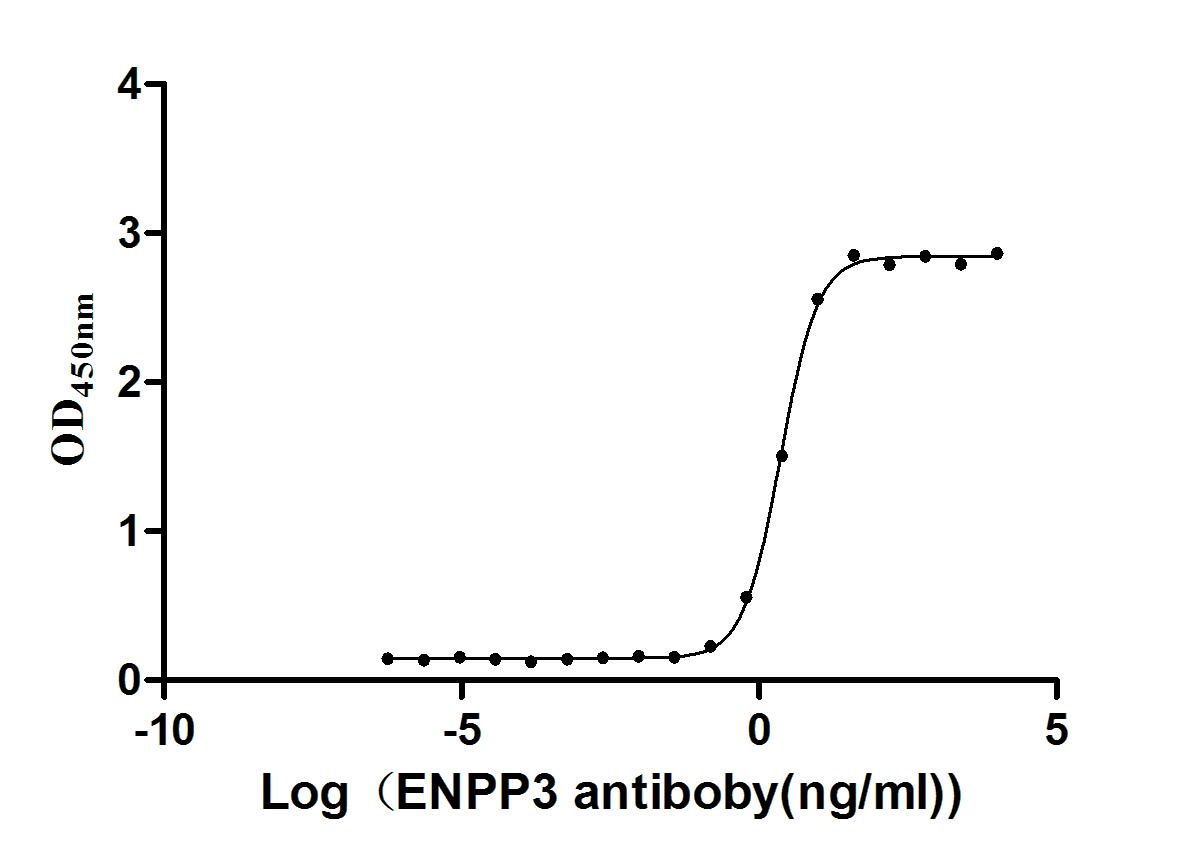
Express system: Mammalian cell
Species: Homo sapiens (Human)
-
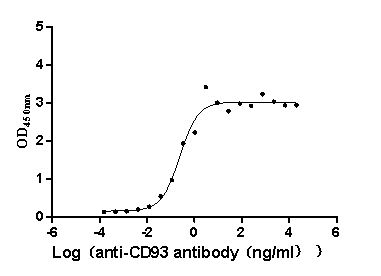
Recombinant Macaca fascicularis CD93 molecule (CD93), partial (Active)
Express system: Mammalian cell
Species: Macaca fascicularis (Crab-eating macaque) (Cynomolgus monkey)
-
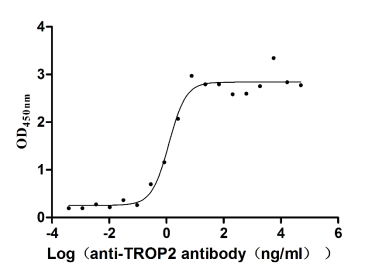
Recombinant Human Tumor-associated calcium signal transducer 2 (TACSTD2), partial (Active)
Express system: Mammalian cell
Species: Homo sapiens (Human)
-
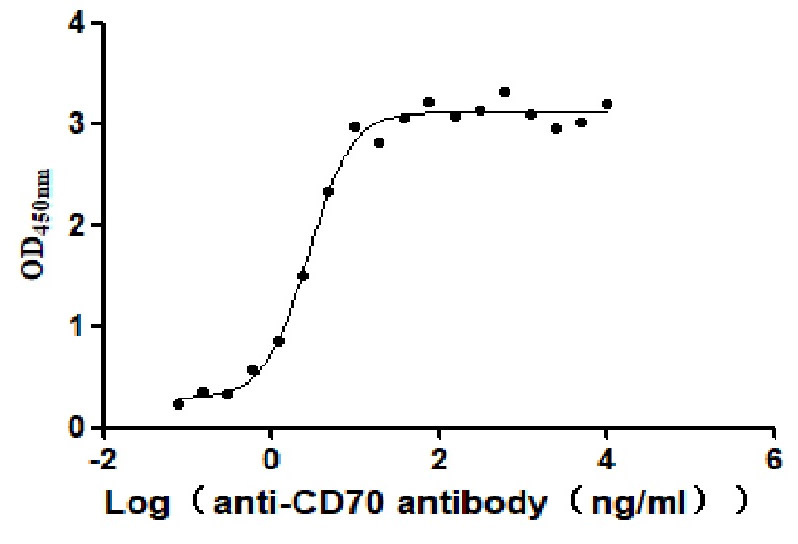
Recombinant Human CD70 antigen (CD70), partial (Active)
Express system: Mammalian cell
Species: Homo sapiens (Human)