Recombinant Human Thiamine transporter 2 (SLC19A3), partial
In Stock-
中文名稱:人SLC19A3重組蛋白
-
貨號:CSB-EP866333HU
-
規(guī)格:¥1836
-
圖片:
-
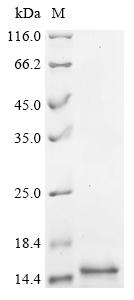 (Tris-Glycine gel) Discontinuous SDS-PAGE (reduced) with 5% enrichment gel and 15% separation gel.
-
-
其他:
產(chǎn)品詳情
-
純度:Greater than 90% as determined by SDS-PAGE.
-
基因名:SLC19A3
-
Uniprot No.:
-
種屬:Homo sapiens (Human)
-
蛋白長度:Partial
-
來源:E.coli
-
分子量:11.4 kDa
-
表達(dá)區(qū)域:208-273aa
-
氨基酸序列KKSSSVNPVLEETHEGEAPGCEEQKPTSEILSTSGKLNKGQLNSLKPSNVTVDVFVQWFQDLKECY
Note: The complete sequence may include tag sequence, target protein sequence, linker sequence and extra sequence that is translated with the protein sequence for the purpose(s) of secretion, stability, solubility, etc.
If the exact amino acid sequence of this recombinant protein is critical to your application, please explicitly request the full and complete sequence of this protein before ordering. -
蛋白標(biāo)簽:N-terminal 6xHis-tagged
-
產(chǎn)品提供形式:Liquid or Lyophilized powder
Note: We will preferentially ship the format that we have in stock, however, if you have any special requirement for the format, please remark your requirement when placing the order, we will prepare according to your demand. -
緩沖液:If the delivery form is liquid, the default storage buffer is Tris/PBS-based buffer, 5%-50% glycerol. If the delivery form is lyophilized powder, the buffer before lyophilization is Tris/PBS-based buffer, 6% Trehalose.
-
復(fù)溶:We recommend that this vial be briefly centrifuged prior to opening to bring the contents to the bottom. Please reconstitute protein in deionized sterile water to a concentration of 0.1-1.0 mg/mL.We recommend to add 5-50% of glycerol (final concentration) and aliquot for long-term storage at -20℃/-80℃. Our default final concentration of glycerol is 50%. Customers could use it as reference.
-
儲存條件:Store at -20°C/-80°C upon receipt, aliquoting is necessary for mutiple use. Avoid repeated freeze-thaw cycles.
-
保質(zhì)期:The shelf life is related to many factors, storage state, buffer ingredients, storage temperature and the stability of the protein itself.
Generally, the shelf life of liquid form is 6 months at -20°C/-80°C. The shelf life of lyophilized form is 12 months at -20°C/-80°C. -
貨期:3-7 business days
-
注意事項:Repeated freezing and thawing is not recommended. Store working aliquots at 4°C for up to one week.
-
Datasheet & COA:Please contact us to get it.
產(chǎn)品評價

相關(guān)產(chǎn)品
靶點詳情
-
功能:Mediates high affinity thiamine uptake, probably via a proton anti-port mechanism. Has no folate transport activity.
-
基因功能參考文獻:
- two siblings who received a refined diagnosis of BTBGD following whole-genome sequencing. Both children inherited compound heterozygous mutations from unaffected parents; a missense single-nucleotide variant (p.G23V) in the first transmembrane domain of the protein, and a 4808-bp deletion in exon 1 encompassing the 5' UTR and minimal promoter region. PMID: 28696212
- Using aggregated exome sequencing data, we calculate the carrier frequency of mutations in SLC19A3 as 1 in 232 individuals in the general population, for an estimated prevalence of the disease of approximately 1 in 215,000 individuals. The disease is thus more frequent than previously recognized PMID: 28402605
- Genetic variations in SLC19A3 play an important role in the pathogenesis of severe diabetic retinopathy and nephropathy and may explain why some individuals with type 1 diabetes are less prone than others to develop microvascular complications. PMID: 26718501
- Genetic screening of SLC19A3 mutation is crucial to diagnosis autosomal recessive biotin-thiamine-responsive basal ganglia disease in asymptomatic relatives presenting with unexplained subacute encephalopathy and abnormal movements. PMID: 27749535
- The direct binding and activation of SLC19A3 expression by HIF-1alpha during hypoxic stress PMID: 27743994
- The mutation of SLC19A3 is related to Biotin-thiamine-responsive basal ganglia disease. PMID: 27905264
- Species differences in the substrate specificity of THTR-2 between human and mouse orthologues were observed. PMID: 26528626
- large genomic deletions occur in the regulatory region of SLC19A3 in Biotin-Thiamine-Responsive Basal Ganglia Encephalopathy PMID: 26863430
- Genetic variation in the SLC19A3 thiamine transporter at 2:228563818T/C may make a modest contribution towards the genetic susceptibility to alcohol dependence syndrome. PMID: 24667528
- This study provided evidence that biotin-thiamine-responsive basal ganglia disease is the result of SLC19A2 mutation. PMID: 24372704
- TM4SF4 interacts with hTHTR-2 and influences the physiological function of the thiamine transporter in human intestinal epithelial cells. PMID: 24282057
- These studies demonstrate that the human intestinal thiamine uptake is adaptively regulated by the extracellular substrate level via transcriptional regulation of the THTR-2 system, and that SP1 transcriptional factor is involved in this regulation. PMID: 23989004
- Glucose-induced decreased expression of thiamine transporters in the tubular epithelium may mediate renal mishandling of thiamine in diabetes. PMID: 23285265
- A new, severe phenotype of SLC19A3 is identified in early-infantile, lethal encephalopathy characterized by subtotal brain degeneration. PMID: 23482991
- Our data shows that SLC19A3 is a new candidate for mutation screening in patients with Leigh syndrome PMID: 23423671
- Two Spanish siblings with a biotin-responsive basal ganglia disease phenotype and mutations in SLC19A3 presented with acute episodes of generalized dystonia PMID: 22777947
- These results suggested that aberrant SLC19A3 promoter hypermethylation in plasma may be a novel biomarker for breast and gastric cancer diagnosis. PMID: 21789241
- The attenuated increase in SLC19A3 expression after HIF-1alpha knockdown suggests a role for HIF-1alpha mediated pathways regulating SLC19A3 gene expression. PMID: 20930543
- these cases broaden the phenotypic spectrum of disorders associated with SLC19A3 mutations and highlight the potential benefit of biotin and/or thiamin treatments and the need to assess the clinical efficacy of these treatments. PMID: 21176162
- Results suggest that methylation of SLC19A3 promoter could be a novel biomarker for early gastric cancer development. PMID: 19816091
- thiamine transporter THTR2 gene expression is down-regulated in breast cancer PMID: 12861052
- characterization of the SLC19A3 promoter in vitro and in vivo and demonstrate the importance of an SP1 cis-regulatory element in regulating promoter activity of this important human gene. PMID: 15217784
- One of the genes up-regulated by SLC19A3 protein (THTR2) transfection was down-regulated by thiamine depletion (CYP4B1) PMID: 15328374
- Expression of SLC19A3 in leukocytes is a relatively sensitive indicator of marginal biotin deficiency. PMID: 15623830
- In this segment, each family displayed one of two different missense mutations that altered the coding sequence of SLC19A3, the gene for a transporter related to the reduced-folate (encoded by SLC19A1) and thiamin (encoded by SLC19A2) transporters. PMID: 15871139
- differentiation of intestinal epithelial cells is associated with an up-regulation in thiamin uptake process which is mediated via transcriptional regulatory mechanisms that involve the SLC19A2 and SLC19A3 genes PMID: 16055442
- analysis of targeting and trafficking of hTHTR1 and hTHTR2 in epithelial cells PMID: 16371350
- Thiamine uptake by HEK-293 cells is mediated via a specific pH-dependent process, which involves both the hTHTR-1 and hTHTR-2. PMID: 16705148
- hTHTR2 mutants (G23V, T422A) both abrogate thiamine transport activity rather than targeting of hTHTR2 to the cell surface. PMID: 16790503
- THTR2 is involved in thiamine transport by reginal pigment epithelium. PMID: 17463047
- Pancreatic beta cells and islets take up thiamine by a regulated THTR1/2-mediated process. PMID: 19423748
顯示更多
收起更多
-
相關(guān)疾病:Thiamine metabolism dysfunction syndrome 2, biotin- or thiamine-responsive type (THMD2)
-
亞細(xì)胞定位:Membrane; Multi-pass membrane protein.
-
蛋白家族:Reduced folate carrier (RFC) transporter (TC 2.A.48) family
-
組織特異性:Widely expressed but most abundant in placenta, kidney and liver.
-
數(shù)據(jù)庫鏈接:
Most popular with customers
-
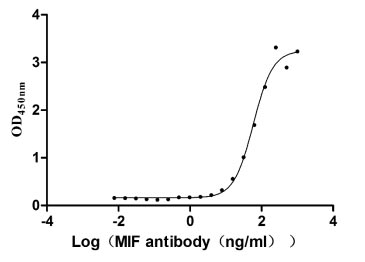
Recombinant Human Macrophage migration inhibitory factor (MIF) (Active)
Express system: Mammalian cell
Species: Homo sapiens (Human)
-
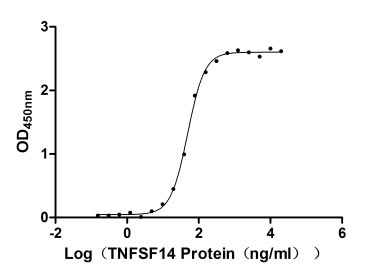
Recombinant Human Tumor necrosis factor ligand superfamily member 14 (TNFSF14), partial (Active)
Express system: Mammalian cell
Species: Homo sapiens (Human)
-
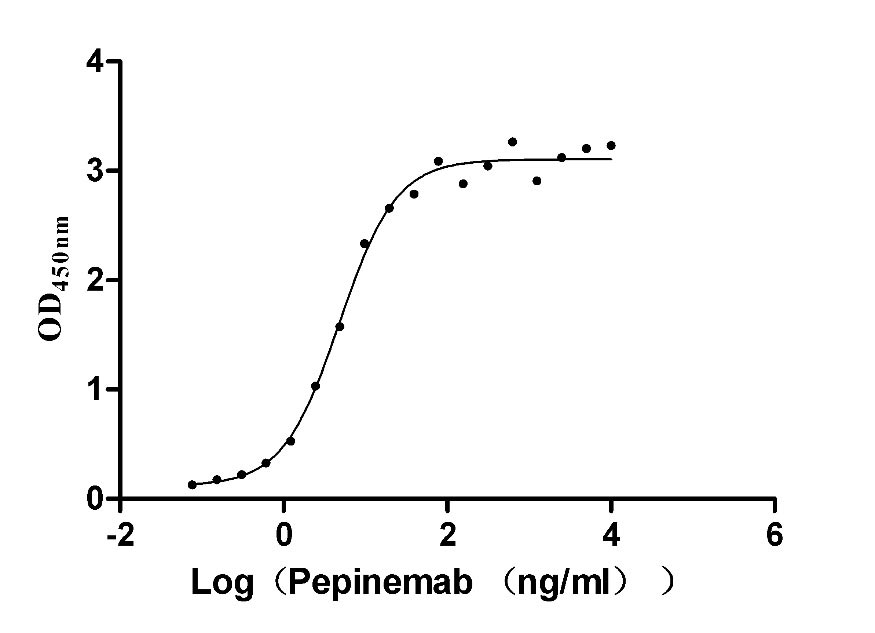
Recombinant Human Semaphorin-4D (SEMA4D), partial (Active)
Express system: Mammalian cell
Species: Homo sapiens (Human)
-
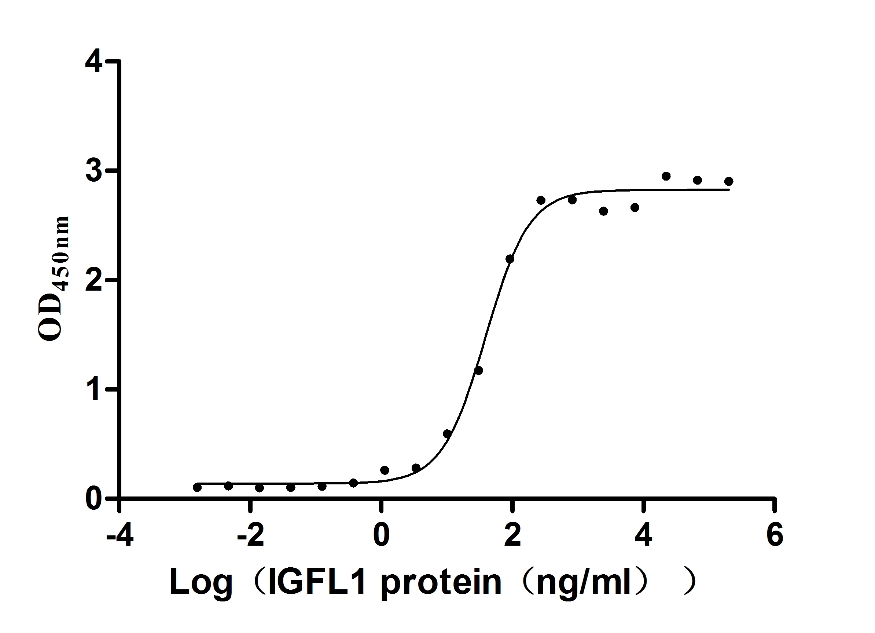
Recombinant Human Insulin growth factor-like family member 1 (IGFL1) (Active)
Express system: Mammalian cell
Species: Homo sapiens (Human)
-
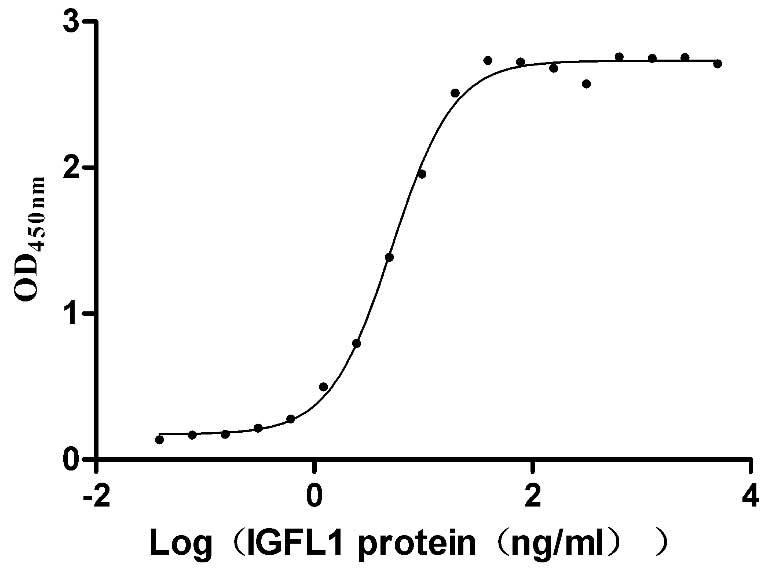
Recombinant Human IGF-like family receptor 1 (IGFLR1), partial (Active)
Express system: Mammalian cell
Species: Homo sapiens (Human)
-
-AC1.jpg)
Recombinant Mouse Claudin-18.2 (Cldn18.2)-VLPs (Active)
Express system: Mammalian cell
Species: Mus musculus (Mouse)
-
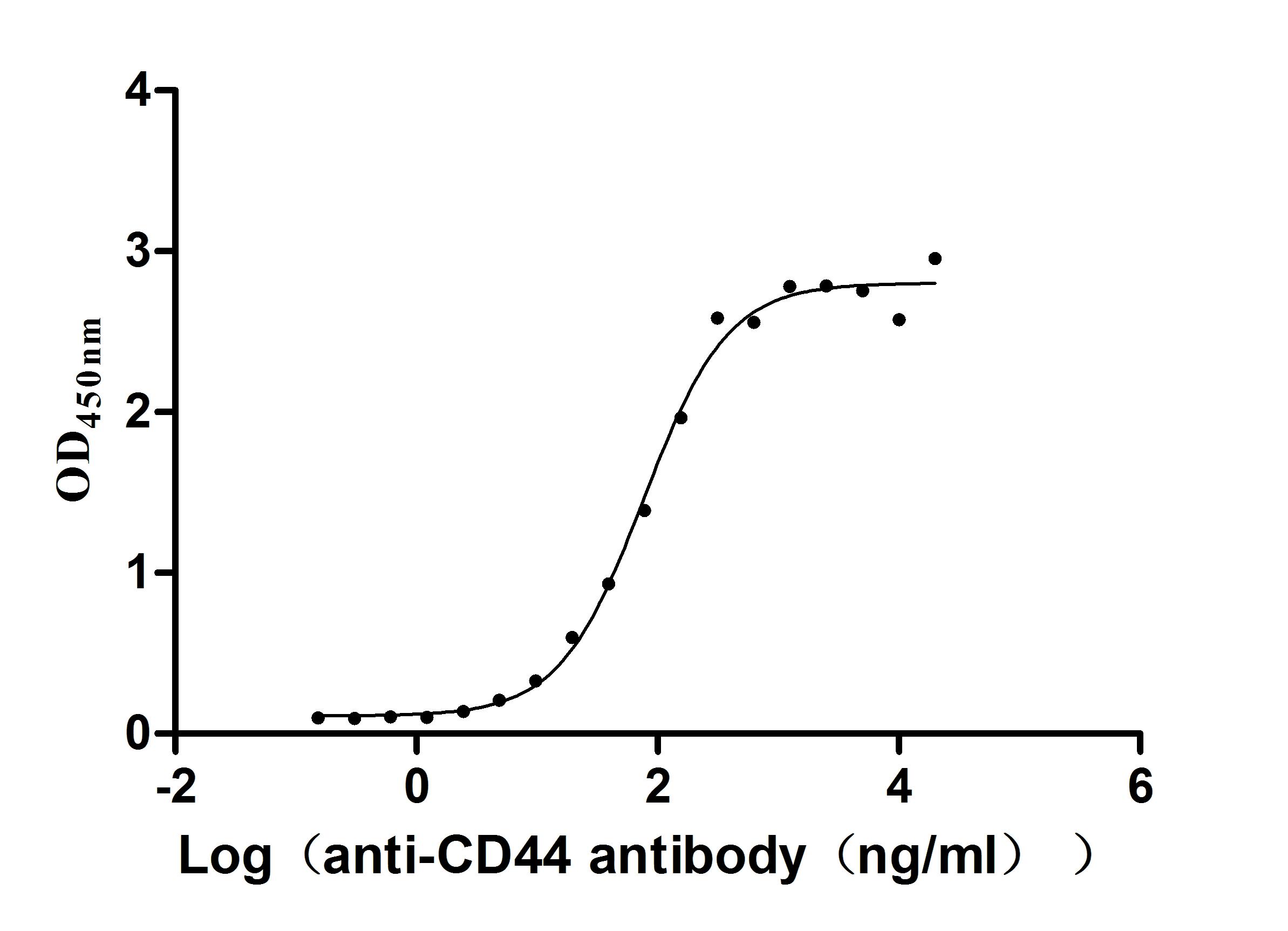
Recombinant Macaca fascicularis CD44 antigen (CD44), partial (Active)
Express system: Mammalian cell
Species: Macaca fascicularis (Crab-eating macaque) (Cynomolgus monkey)
-
Recombinant Human Tomoregulin-2 (TMEFF2), partial (Active)
Express system: Mammalian cell
Species: Homo sapiens (Human)