Recombinant Clostridium botulinum D phage Botulinum neurotoxin type D (botD), partial
-
中文名稱:Recombinant Clostridium botulinum D phage Botulinum neurotoxin type D(botD) ,partial
-
品名簡稱:Recombinant Clostridium botulinum botD protein, partial
-
貨號:CSB-YP323098CLQ
-
說明書:
-
規(guī)格:¥2616
-
圖片:
-
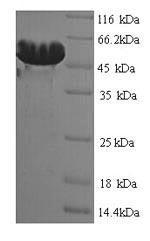 (Tris-Glycine gel) Discontinuous SDS-PAGE (reduced) with 5% enrichment gel and 15% separation gel.
-
-
其他:
產(chǎn)品詳情
-
純度:Greater than 90% as determined by SDS-PAGE.
-
基因名:botD
-
Uniprot No.:
-
別名:botD; Botulinum neurotoxin type D; BoNT/D; Bontoxilysin-D) [Cleaved into: Botulinum neurotoxin D light chain; LC; EC 3.4.24.69); Botulinum neurotoxin D heavy chain; HC)]
-
種屬:Clostridium botulinum
-
蛋白長度:Partial
-
來源:Yeast
-
分子量:52.5kDa
-
表達(dá)區(qū)域:1-442aa
-
氨基酸序列MTWPVKDFNYSDPVNDNDILYLRIPQNKLITTPVKAFMITQNIWVIPERFSSDTNPSLSKPPRPTSKYQSYYDPSYLSTDEQKDTFLKGIIKLFKRINERDIGKKLINYLVVGSPFMGDSSTPEDTFDFTRHTTNIAVEKFENGSWKVTNIITPSVLIFGPLPNILDYTASLTLQGQQSNPSFEGFGTLSILKVAPEFLLTFSDVTSNQSSAVLGKSIFCMDPVIALMHELTHSLHQLYGINIPSDKRIRPQVSEGFFSQDGPNVQFEELYTFGGLDVEIIPQIERSQLREKALGHYKDIAKRLNNINKTIPSSWISNIDKYKKIFSEKYNFDKDNTGNFVVNIDKFNSLYSDLTNVMSEVVYSSQYNVKNRTHYFSRHYLPVFANILDDNIYTIRDGFNLTNKGFNIENSGQNIERNPALQKLSSESVVDLFTKVCLRLTK
Note: The complete sequence may include tag sequence, target protein sequence, linker sequence and extra sequence that is translated with the protein sequence for the purpose(s) of secretion, stability, solubility, etc.
If the exact amino acid sequence of this recombinant protein is critical to your application, please explicitly request the full and complete sequence of this protein before ordering. -
蛋白標(biāo)簽:N-terminal 6xHis-tagged
-
產(chǎn)品提供形式:Liquid or Lyophilized powder
Note: We will preferentially ship the format that we have in stock, however, if you have any special requirement for the format, please remark your requirement when placing the order, we will prepare according to your demand. -
緩沖液:If the delivery form is liquid, the default storage buffer is Tris/PBS-based buffer, 5%-50% glycerol.
Note: If you have any special requirement for the glycerol content, please remark when you place the order.
If the delivery form is lyophilized powder, the buffer before lyophilization is Tris/PBS-based buffer, 6% Trehalose. -
儲存條件:Store at -20°C/-80°C upon receipt, aliquoting is necessary for mutiple use. Avoid repeated freeze-thaw cycles.
-
保質(zhì)期:The shelf life is related to many factors, storage state, buffer ingredients, storage temperature and the stability of the protein itself.
Generally, the shelf life of liquid form is 6 months at -20°C/-80°C. The shelf life of lyophilized form is 12 months at -20°C/-80°C. -
貨期:Basically, we can dispatch the products out in 1-3 working days after receiving your orders. Delivery time may differ from different purchasing way or location, please kindly consult your local distributors for specific delivery time.Note: All of our proteins are default shipped with normal blue ice packs, if you request to ship with dry ice, please communicate with us in advance and extra fees will be charged.
-
注意事項(xiàng):Repeated freezing and thawing is not recommended. Store working aliquots at 4°C for up to one week.
-
Datasheet & COA:Please contact us to get it.
產(chǎn)品評價

相關(guān)產(chǎn)品
靶點(diǎn)詳情
-
功能:Botulinum toxin causes flaccid paralysis by inhibiting neurotransmitter (acetylcholine) release from the presynaptic membranes of nerve terminals of the eukaryotic host skeletal and autonomic nervous system, with frequent heart or respiratory failure. Precursor of botulinum neurotoxin D for which a proteinaceous coreceptor is controversial. In double SV2A/SV2B knockout mice this toxin does not degrade its synaptobrevin target; introducing SV2A, SV2B or SV2C restores target cleavage. Recognition of SV2 by this toxin does not occur via SV2 glycosylation or its large extracellular loop 4. Another group does not find a convincing interaction with SV2. Thus a protein receptor for this BoNT serotype has yet to be definitively proven. Recognizes at least 1 complex polysialylated ganglioside found on neural tissue. Electrical stimulation increases uptake of toxin in an ex vivo assay, presumably by transiently exposing a receptor usually found in eukaryotic target synaptic vesicles. Upon synaptic vesicle recycling the toxin is taken up via the endocytic pathway; when the pH of the toxin-containing endosome drops a structural rearrangement occurs so that the N-terminus of the heavy chain (HC) forms pores that allows the light chain (LC) to translocate into the cytosol. Once in the cytosol the disulfide bond linking the 2 subunits is reduced and LC cleaves its target protein on synaptic vesicles, preventing their fusion with the cytoplasmic membrane and thus neurotransmitter release. Requires complex eukaryotic host polysialogangliosides for full neurotoxicity and for binding to neurons.; Has proteolytic activity. After translocation into the eukaryotic host cytosol, inhibits neurotransmitter release by acting as a zinc endopeptidase that cleaves the '61-Lys-|-Leu-62' bond of synaptobrevin-1 (VAMP1), and the equivalent 'Lys-|-Leu' sites in VAMP2 and VAMP3. Cleaves the '49-Lys-|-Ile-50' bond of A.californica synaptobrevin (AC P35589). This chain probably has to be partially unfolded to translocate into the eukaryotic host cell cytosol.; Responsible for host epithelial cell transcytosis, host nerve cell targeting and translocation of light chain (LC) into eukaryotic host cell cytosol. Composed of 3 subdomains; the translocation domain (TD), and N-terminus and C-terminus of the receptor-binding domain (RBD). The RBD is responsible for the adherence of the toxin to the eukaryotic target cell surface. The N-terminus of the TD wraps an extended belt around the perimeter of the LC, protecting Zn(2+) in the active site; it may also prevent premature LC dissociation from the translocation channel and protect toxin prior to translocation. The TD inserts into synaptic vesicle membrane to allow translocation into the host cytosol. The RBD binds eukaryotic host phosphatidylethanolamine, which may serve as toxin receptor. Treatment of synaptosomes with proteinase K does not reduce HC binding, suggesting there is no protein receptor or it is protected from extracellular proteases. HC significantly decreases uptake and toxicity of whole BoNT/D. HC also interferes with uptake of tetanus toxin. Has 2 closely located carbohydrate-binding receptor sites and binds at least 1 GT1b ganglioside. Bind gangliosides in the order GD2 > GT1b > GD1b. Interacts with eukaryotic target protein SV2B (synaptic vesicle glycoprotein 2B). Expression of SV2A, SV2B or SV2C in mice knocked-out for the SV2 proteins restores entry of BoNT/D and cleavage of VAMP2, suggesting SV2 acts as its receptor. Unlike BoNT/A and BoNT/E, toxin uptake is not mediated by large extracellular loop 4 of SV2. Another group finds very poor interaction with SV2 proteins, suggesting the possible protein receptor may not have been identified.
-
亞細(xì)胞定位:[Botulinum neurotoxin type D]: Secreted.; [Botulinum neurotoxin D light chain]: Secreted.; [Botulinum neurotoxin D heavy chain]: Secreted.
-
蛋白家族:Peptidase M27 family
Most popular with customers
-
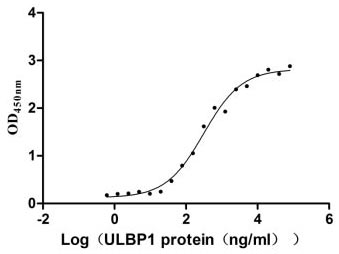
Recombinant Human UL16-binding protein 1 (ULBP1) (Active)
Express system: Mammalian cell
Species: Homo sapiens (Human)
-
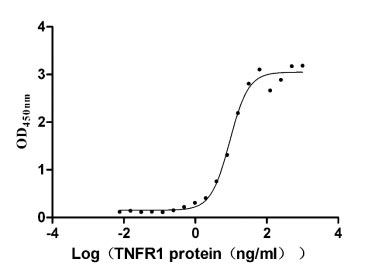
Recombinant Human Tumor necrosis factor receptor superfamily member 1A (TNFRSF1A), partial (Active)
Express system: Mammalian cell
Species: Homo sapiens (Human)
-
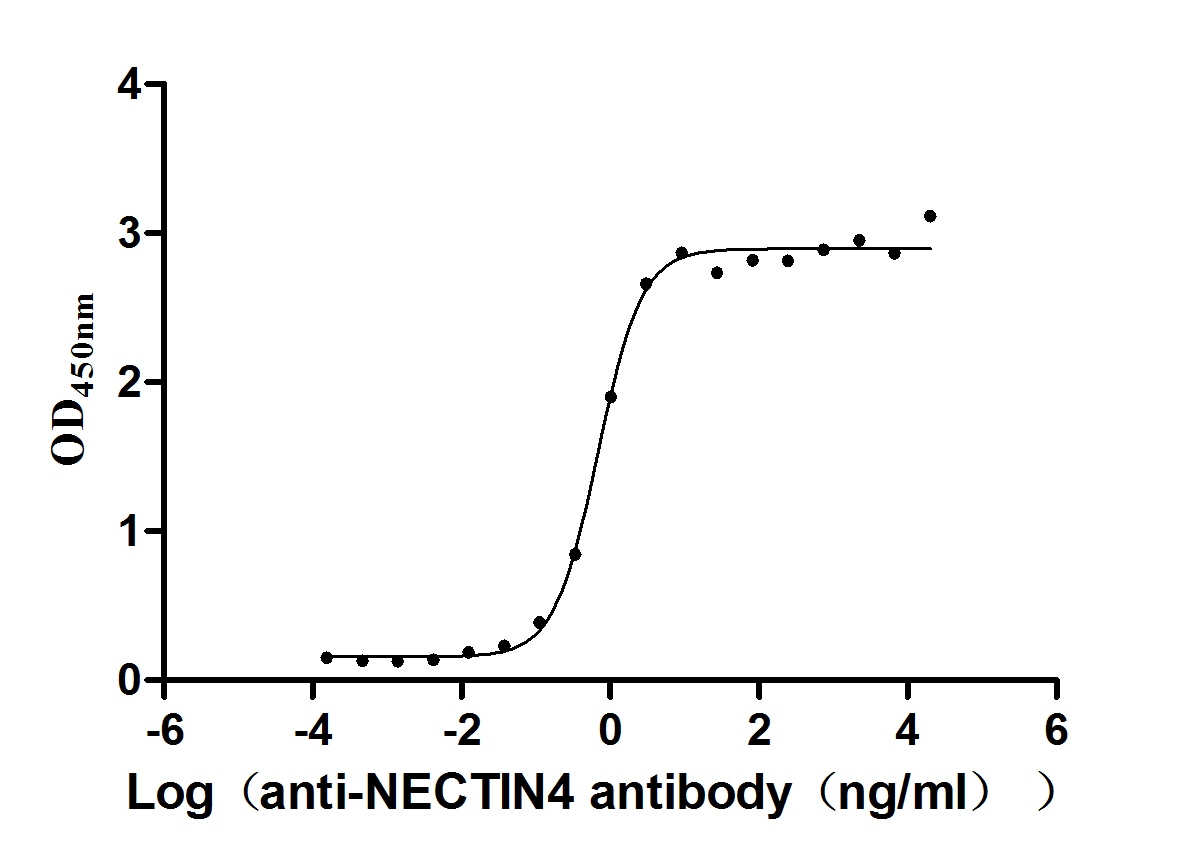
Recombinant Human Nectin-4 (NECTIN4), partial (Active)
Express system: Mammalian cell
Species: Homo sapiens (Human)
-
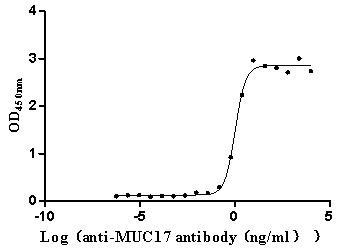
Recombinant Human Mucin-17 (MUC17), partial (Active)
Express system: Mammalian cell
Species: Homo sapiens (Human)
-
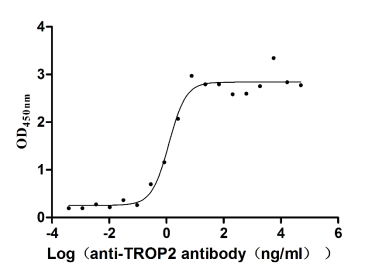
Recombinant Human Tumor-associated calcium signal transducer 2 (TACSTD2), partial (Active)
Express system: Mammalian cell
Species: Homo sapiens (Human)
-
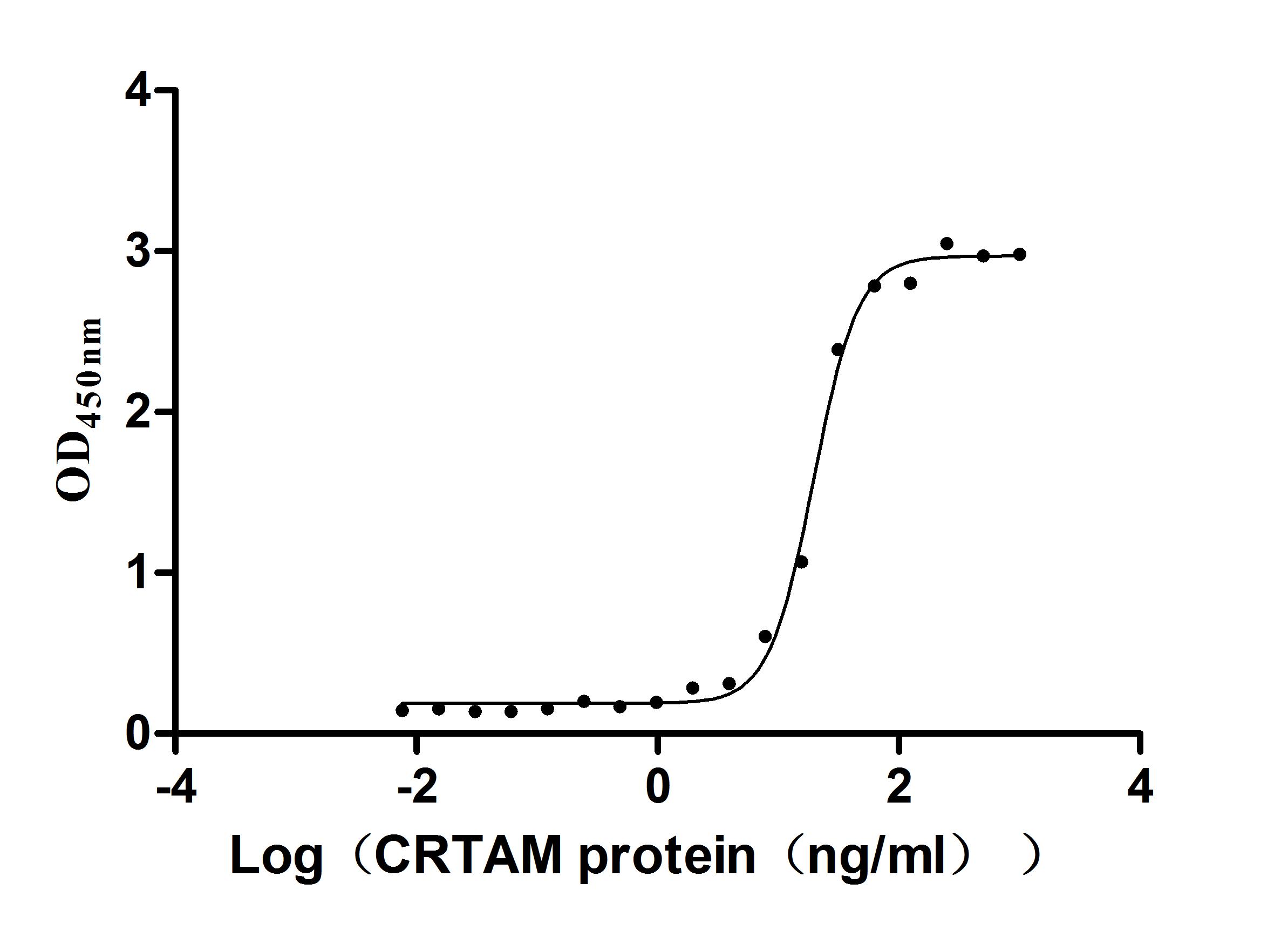
Recombinant Human Cell adhesion molecule 1 (CADM1), partial (Active)
Express system: Mammalian cell
Species: Homo sapiens (Human)
-
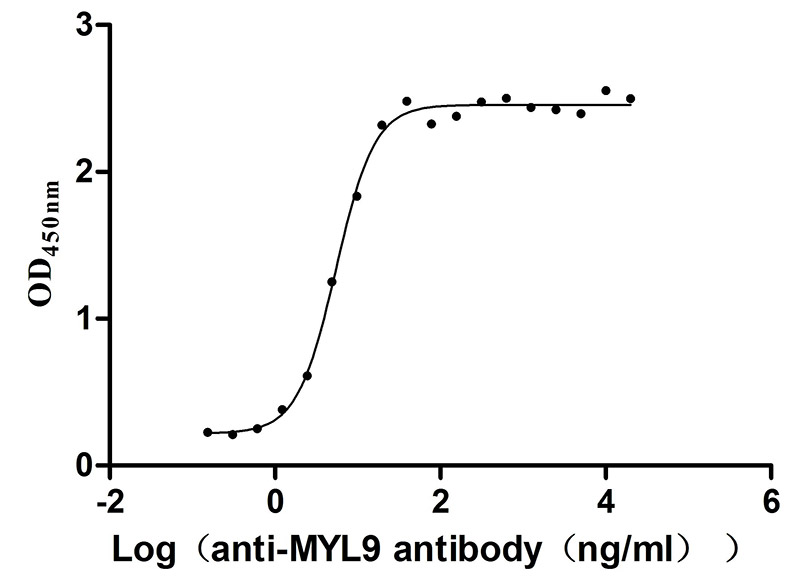
Recombinant Human Myosin regulatory light polypeptide 9 (MYL9) (Active)
Express system: Yeast
Species: Homo sapiens (Human)
-
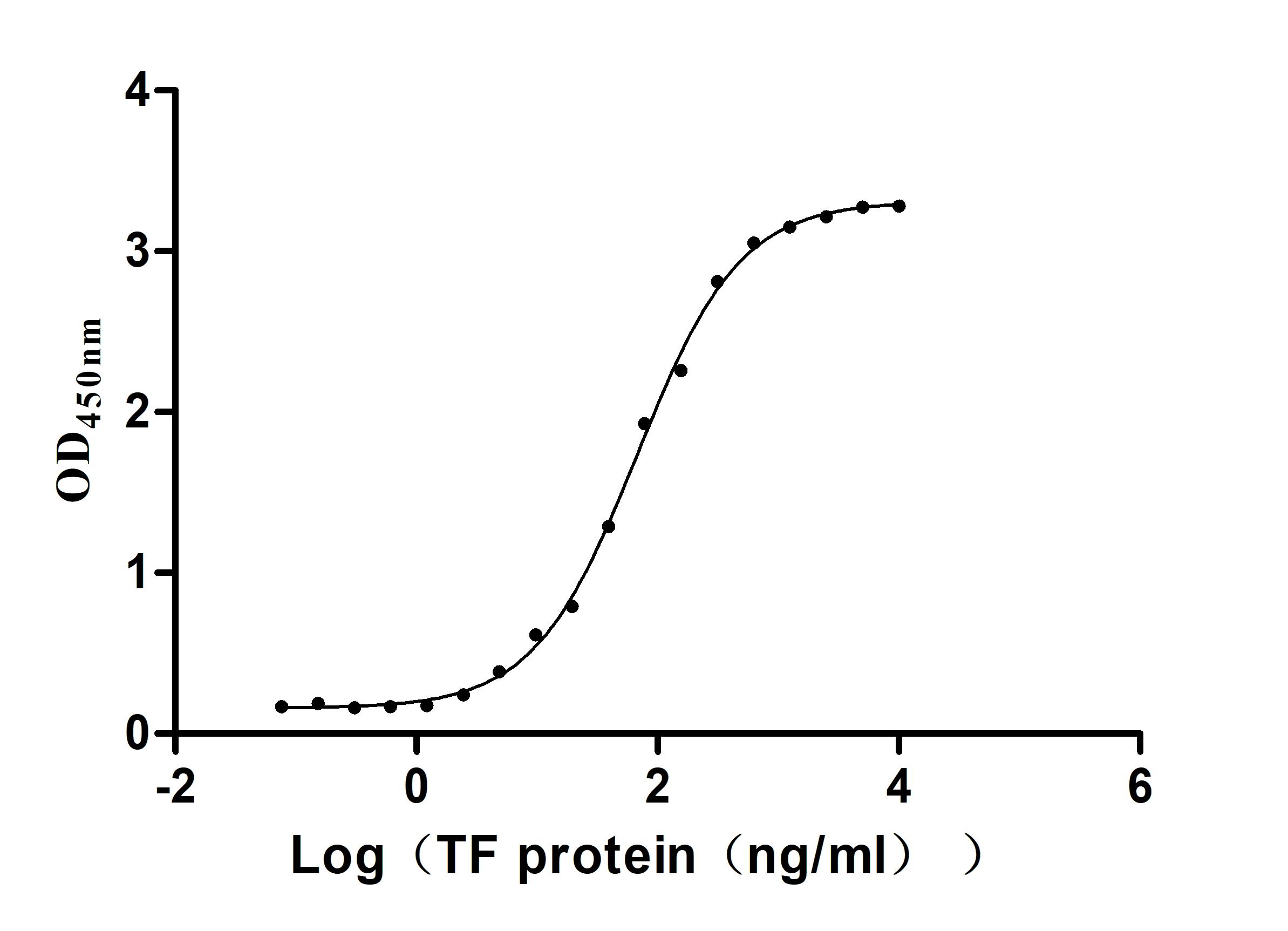
Recombinant Human Serotransferrin(TF) (Active)
Express system: Mammalian cell
Species: Homo sapiens (Human)