FZD6 Antibody
-
中文名稱:FZD6兔多克隆抗體
-
貨號:CSB-PA060238
-
規格:¥1090
-
其他:
產品詳情
-
Uniprot No.:
-
基因名:
-
別名:FZD6; Frizzled-6; Fz-6; hFz6
-
宿主:Rabbit
-
反應種屬:Human
-
免疫原:Synthesized peptide derived from the Internal region of Human Frizzled-6.
-
免疫原種屬:Homo sapiens (Human)
-
標記方式:Non-conjugated
-
抗體亞型:IgG
-
純化方式:The antibody was affinity-purified from rabbit antiserum by affinity-chromatography using epitope-specific immunogen.
-
濃度:It differs from different batches. Please contact us to confirm it.
-
保存緩沖液:Liquid in PBS containing 50% glycerol, 0.5% BSA and 0.02% sodium azide.
-
產品提供形式:Liquid
-
應用范圍:WB, IHC, IF, ELISA
-
推薦稀釋比:
Application Recommended Dilution WB 1:500-1:2000 IHC 1:100-1:300 IF 1:200-1:1000 ELISA 1:5000 -
Protocols:
-
儲存條件:Upon receipt, store at -20°C or -80°C. Avoid repeated freeze.
-
貨期:Basically, we can dispatch the products out in 1-3 working days after receiving your orders. Delivery time maybe differs from different purchasing way or location, please kindly consult your local distributors for specific delivery time.
-
用途:For Research Use Only. Not for use in diagnostic or therapeutic procedures.
產品評價

相關產品
靶點詳情
-
功能:Receptor for Wnt proteins. Most of frizzled receptors are coupled to the beta-catenin canonical signaling pathway, which leads to the activation of disheveled proteins, inhibition of GSK-3 kinase, nuclear accumulation of beta-catenin and activation of Wnt target genes. A second signaling pathway involving PKC and calcium fluxes has been seen for some family members, but it is not yet clear if it represents a distinct pathway or if it can be integrated in the canonical pathway, as PKC seems to be required for Wnt-mediated inactivation of GSK-3 kinase. Both pathways seem to involve interactions with G-proteins. May be involved in transduction and intercellular transmission of polarity information during tissue morphogenesis and/or in differentiated tissues. Together with FZD3, is involved in the neural tube closure and plays a role in the regulation of the establishment of planar cell polarity (PCP), particularly in the orientation of asymmetric bundles of stereocilia on the apical faces of a subset of auditory and vestibular sensory cells located in the inner ear.
-
基因功能參考文獻:
- miR-125b/miR-20b and Wnt signalling have roles in glioblastoma phenotypes in a pathway that involves FZD6 PMID: 27698350
- Study reports a novel pathogenic variant of the FZD6 gene in autosomal recessive nonsyndromic congenital nail disorder in consanguineous Iranian family. PMID: 28545862
- In this paper we report 3 further families with mutations in FZD6 causing Isolated recessive nail dysplasia. PMID: 27786367
- monomeric rather than dimeric form is active signal initiating unit of the receptor complex; constitutive signaling to ERK1/2 can be affected by modulating the dimeric status PMID: 28790300
- the FZD6-fibronectin actin axis identified in our study could be exploited for drug development in highly metastatic forms of breast cancer PMID: 27859262
- we found that FZD6 expression was negatively regulated by miR199a5p PMID: 25772759
- The rs3808553 of FZD6 is obviously associated with neural tube defects in Han population of northern China PMID: 24816679
- It is associated with poor prognosis in glioblastoma patients. PMID: 23748645
- This study confirms our speculation that down-regulation of FZD6 by beta-Carotene is causally related to the observed up-regulation of cancer related genes PMID: 24657404
- DVL is a master regulator of FZD6/G-protein signaling PMID: 24500924
- FZD6 should be screened for pachyonychia congenita as it is a candidate gene for hereditary nail dysplasias. PMID: 23374899
- sequence analysis revealed a novel homozygous missense mutation (c.1266G>A; p.Gly422Asp) located in the transmembrane domain of the protein FZD6 in individuals of a consanguineous family exhibiting features of nail dysplasia PMID: 22861124
- The present results emphasize the role of FZD6 mutation in Wnt pathways in nail development. PMID: 22211385
- When transplanted into immunodeficient mice, neuroblastoma cells expressing the Fzd6 marker grow more aggressively than their Fzd6 negative counterparts. Fzd6 is a new surface marker of aggressive neuroblastoma cells with stem cell-like features. PMID: 22249030
- This study demonstrates that rare nonsynonymous variants in FZD6 may contribute to NTDs in humans and enlarges the spectrum of mutations that link PCP pathway to Neural tube defects (NTDs). PMID: 22045688
- The current study provides insight into the global changes in gene transcription mediated by chr-ECS and suggests that Fzd6 signaling could represent a novel target for development of novel antidepressants. PMID: 21937024
- Mutations in this gene cause nail dysplasia. Review. PMID: 22078044
- FZD6 mutations can result in severe defects in nail and claw formation through reduced or abolished membranous FZD(6) levels and several nonfunctional WNT-FZD pathways. PMID: 21665003
- Frizzled 6 (HFz6) has a role as a negative regulator of the canonical Wnt. beta-catenin signaling cascade PMID: 14747478
- These results suggested that activation of Wnt4/Fzd6 signaling through a "beta-catenin-independent" pathway played a role in proliferation and survival of the pituitary adenoma cells. PMID: 19034702
- No significant association between C345A or A664C SNPs in the FZD6 gene and bone meineral density at skeletal sites measured or circulating levels of bone turnover markers were noted. PMID: 19543507
顯示更多
收起更多
-
相關疾病:Nail disorder, non-syndromic congenital, 10 (NDNC10)
-
亞細胞定位:Membrane; Multi-pass membrane protein. Cell membrane; Multi-pass membrane protein. Cell surface. Apical cell membrane; Multi-pass membrane protein. Cytoplasmic vesicle membrane; Multi-pass membrane protein. Endoplasmic reticulum membrane; Multi-pass membrane protein.
-
蛋白家族:G-protein coupled receptor Fz/Smo family
-
組織特異性:Detected in adult heart, brain, placenta, lung, liver, skeletal muscle, kidney, pancreas, thymus, prostate, testis, ovary, small intestine and colon. In the fetus, expressed in brain, lung, liver and kidney.
-
數據庫鏈接:
Most popular with customers
-
-
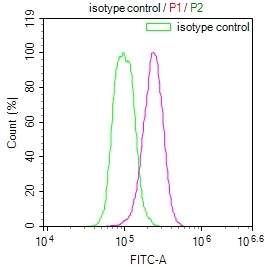
YWHAB Recombinant Monoclonal Antibody
Applications: ELISA, WB, IHC, IF, FC
Species Reactivity: Human, Mouse, Rat
-
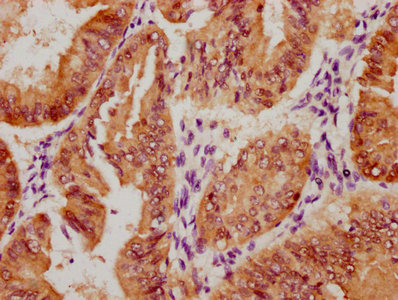
Phospho-YAP1 (S127) Recombinant Monoclonal Antibody
Applications: ELISA, WB, IHC
Species Reactivity: Human
-
-
-
-
-