ADRM1 Antibody
-
中文名稱:ADRM1兔多克隆抗體
-
貨號:CSB-PA001396GA01HU
-
規格:¥3,900
-
其他:
產品詳情
-
Uniprot No.:
-
基因名:ADRM1
-
別名:110 kDa cell membrane glycoprotein antibody; adhesion regulating molecule 1 antibody; Adhesion-regulating molecule 1 antibody; ADRM 1 antibody; Adrm1 antibody; ADRM1_HUMAN antibody; ARM 1 antibody; ARM-1 antibody; ARM1 antibody; Gp110 antibody; hRpn13 antibody; M(r) 110,000 surface antigen antibody; Proteasomal ubiquitin receptor ADRM1 antibody; proteasome regulatory particle non ATPase 13 antibody; Proteasome regulatory particle non-ATPase 13 antibody; Regulatory particle non ATPase 13 antibody; Rpn13 antibody; Rpn13 homolog antibody
-
宿主:Rabbit
-
反應種屬:Human,Mouse,Rat
-
免疫原:Human ADRM1
-
免疫原種屬:Homo sapiens (Human)
-
抗體亞型:IgG
-
純化方式:Antigen Affinity Purified
-
濃度:It differs from different batches. Please contact us to confirm it.
-
保存緩沖液:PBS with 0.1% Sodium Azide, 50% Glycerol, pH 7.3. -20°C, Avoid freeze / thaw cycles.
-
產品提供形式:Liquid
-
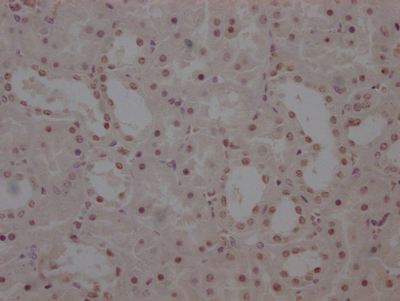
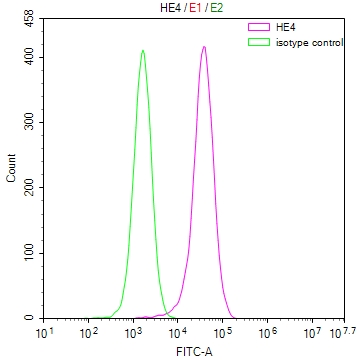
應用范圍:ELISA,WB,IHC,IF
-
Protocols:
-
儲存條件:Upon receipt, store at -20°C or -80°C. Avoid repeated freeze.
-
貨期:Basically, we can dispatch the products out in 1-3 working days after receiving your orders. Delivery time maybe differs from different purchasing way or location, please kindly consult your local distributors for specific delivery time.
-
用途:For Research Use Only. Not for use in diagnostic or therapeutic procedures.
產品評價

相關產品
靶點詳情
-
功能:Component of the 26S proteasome, a multiprotein complex involved in the ATP-dependent degradation of ubiquitinated proteins. This complex plays a key role in the maintenance of protein homeostasis by removing misfolded or damaged proteins, which could impair cellular functions, and by removing proteins whose functions are no longer required. Therefore, the proteasome participates in numerous cellular processes, including cell cycle progression, apoptosis, or DNA damage repair. Within the complex, functions as a proteasomal ubiquitin receptor. Engages and activates 19S-associated deubiquitinases UCHL5 and PSMD14 during protein degradation. UCHL5 reversibly associate with the 19S regulatory particle whereas PSMD14 is an intrinsic subunit of the proteasome lid subcomplex.
-
基因功能參考文獻:
- Rpn13-Rpn2 complex structural analysis shows that RA190 targets hRpn13 and Uch37 through parallel mechanisms and at proteasomes, RA190-inactivated Uch37 cannot disassemble hRpn13-bound ubiquitin chains PMID: 28598414
- findings indicate that up-regulated ADRM1 was involved in intrahepatic cholangiocarcinoma (ICC) progression and suggest the potential clinical application of ADRM1 inhibitors (e.g., RA190 and KDT-11) for ICC treatment. PMID: 29913454
- We show that ADRM1 mRNA overexpression is an early event in high grade serous carcinoma of the ovary. This is associated with TP53 mutation and increased burden of misfolded proteins in carcinomas that likely renders the cancer cells particularly sensitive to RPN13 inhibitors. PMID: 28784174
- evidence that the interaction can mediate the association of Rpn13 and SGTA in a cellular context. PMID: 27827410
- The structures of proteasome substrate receptor complexes with the shuttle factors that deliver ubiquitinated proteins to proteasomes have been solved, namely human Rpn13 complexed with PLIC2 and Saccharomyces cerevisiae Rpn1 with Rad23. PMID: 27396824
- RPN13 binds ubiquitin with an affinity similar to that of other proteasome-associated ubiquitin receptors and that RPN2, ubiquitin, and the deubiquitylase UCH37 bind to RPN13 with independent energetics. PMID: 28442575
- regulation of NY-ESO-1 processing by the ubiquitin receptors Rpn10 and Rpn13 as a well as by the standard and immunoproteasome is governed by non-canonical ubiquitination on non-lysine sites. PMID: 26903513
- this work implicates hRpn13 and Uch37 in cell cycle progression, providing a rationale for their function in cellular proliferation and for the apoptotic effect of the hRpn13-targeting molecule RA190. PMID: 26907685
- the binding of SGTA to Rpn13 enables specific polypeptides to escape proteasomal degradation and/or selectively modulates substrate degradation. PMID: 26169395
- Data suggest that ADRM1 is involved in proliferation of acute leukemia cells; expression of ADRM1 is up-regulated in leukemia; knockdown of ADRM1 inhibits cell proliferation at G0/G1 phase of cell cycle but does not affect apoptosis/cell migration. PMID: 25896055
- findings implicate Rpn13 in linking parkin to the 26 S proteasome and regulating the clearance of mitochondrial proteins during mitophagy PMID: 25666615
- Data show that DEUBAD domain in RPN13 (ADRM1) activates ubiquitin thioesterase L5 (UCH-L5), and the related DEUBAD domain in INO80G (NFRKB) inhibits UCH-L5. PMID: 25702870
- Together, our findings suggest that the interaction of Psmd1 with Adrm1 is controlled by SUMOylation in a manner that may alter proteasome composition and function. PMID: 24910440
- ADRM1 is a candidate target gene in the chromosome 20q13.33 amplicon that may possibly be linked to development of gastric cancer PMID: 24968865
- Autoubiquitination of the 26S proteasome on Rpn13 regulates breakdown of ubiquitin conjugates. PMID: 24811749
- Inherent asymmetry in the 26S proteasome is defined by the ubiquitin receptor RPN13. PMID: 24429290
- mRNA and protein levels of ADRM1 were increased in hepatocellular carcinoma tissues and was parallel to the metastatic potential PMID: 22576803
- hRpn13 modulates the influence of osteoblasts on osteoclasts by controlling the stability of regulatory proteins in osteoblasts. PMID: 22057889
- this study provides a possible mechanism of action in ovarian cancer for amplification and overexpression of ADRM1 PMID: 21432940
- In tumor cells non-phosphorylated DeltaNp63alpha failed to form protein complexes with Rpn13, allowing the latter to bind and target LKB1 into a proteasome-dependent degradation pathway, modulating cisplatin-induced autophagy. PMID: 21191146
- Phosphorylated TP63 induces transcription of RPN13, leading to NOS2 protein degradation PMID: 20959455
- Silencing of Adrm1 by RNA interference can significantly suppress proliferation of colorectal cancer cells through inducing apoptosis and arresting the cell cycle. PMID: 20137344
- show that Rpn13 is involved in inducible nitric oxide synthase degradation and is required for iNOS interaction with the deubiquitination protein UCH37. PMID: 20634424
- results suggest that there is different substrate specificity between S5a and hRpn13 at the level of delivery and S5a may be the major docking site for ERAD substrates. PMID: 20417181
- Rpn13 binding to the proteasome scaffolding protein hRpn2/S1 abrogates its interdomain interactions, thus activating hRpn13 for ubiquitin binding. PMID: 20471946
- ARM-1 is a cytosolic protein associated with the plasma membrane. However, no cell surface expression of the protein was observed. These results suggest an indirect role of ARM-1 in adhesion rather than a direct role as an adhesion molecule itself.[ARM-1] PMID: 15819879
- Adrm1 has a specialised role in proteasome function. Identified Adrm1 as a novel component of the regulatory ATPase complex of the 26 S proteasome PMID: 16815440
- Neither Uch37 alone nor the Uch37-Adrm1 or Uch37-Adrm1-S1 complexes can hydrolyse di-ubiquitin efficiently; rather, incorporation into the 19S complex is required to enable processing of polyubiquitin chains. PMID: 16906146
- These results indicate that hRpn13 (Adrm1) is essential for the activity of UCH37. PMID: 16990800
- In human 26S proteasomes, hRpn13 appears to be important for the binding of UCH37 to the 19S complex and for efficient proteolysis. PMID: 17139257
- identification of a new ubiquitin receptor, Rpn13/ARM1, a known component of the proteasome PMID: 18497817
- ADRM1 overexpression was the most highly correlated with amplification and is associated with ovarian cancer. PMID: 18615678
- Adrm1 is potentially oncogenic and may play an important role in colon tumorigenesis PMID: 19148532
- these data suggest that Adrm1, a new Atp6v0d2-interacting protein, plays an important role in osteoclast differentiation, and in particular the fusion of preosteoclasts. PMID: 19818731
顯示更多
收起更多
-
亞細胞定位:Cytoplasm. Nucleus.
-
蛋白家族:ADRM1 family
-
數據庫鏈接:
Most popular with customers
-
-
Phospho-YAP1 (S127) Recombinant Monoclonal Antibody
Applications: ELISA, WB, IHC
Species Reactivity: Human
-
-
-
-
-
-